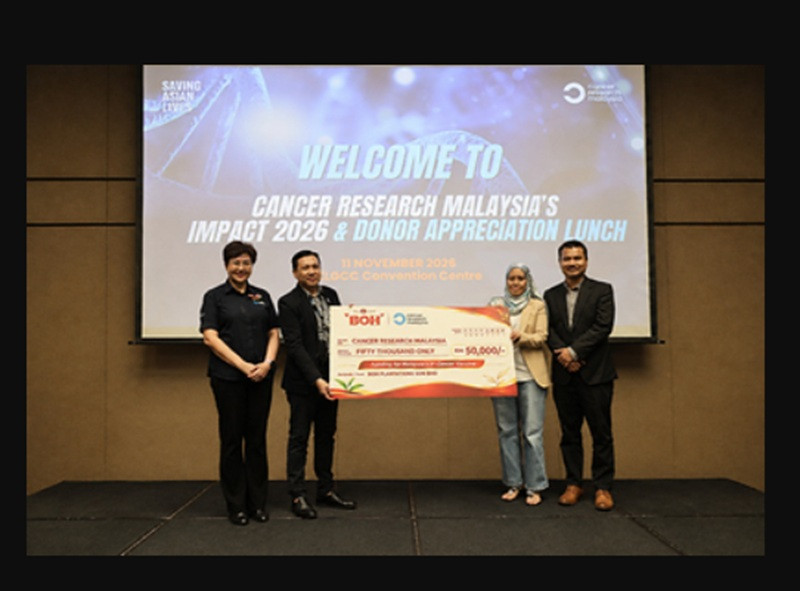
BOH Plantations has contributed RM50,000 to Cancer Research Malaysia (CRMY) to support the development of the country’s first homegrown DNA-based cancer vaccine, which is now ready to move into Phase 1 clinical trials after 14 years of research.
The vaccine candidate, known as CRMY-VAC-100, is being developed by CRMY, an independent non-profit organisation focused on cancer research, prevention and early detection.
The research is aimed at addressing the limited representation of Asian populations in global cancer studies, a gap that could affect how screening guidelines and treatment approaches are developed for communities with different genetic and demographic profiles.
BOH’s contribution was presented by its chief people officer for corporate affairs, Rosnah Zakaria, who said supporting the research was part of the company’s commitment to community wellbeing.
“By supporting Cancer Research Malaysia and its effort to advance Malaysia’s first homegrown cancer vaccine, we are investing in a healthier future for all Malaysians while supporting world-class scientific research developed by Malaysians, for Malaysians,” she said.
Rosnah added that cancer affects families across all walks of life and that supporting locally developed research was one way the company could contribute to addressing the country’s health challenges.
Cancer Research Malaysia chief fundraising officer Fikrie Hashim meanwhile said contributions from corporate partners and donors were important in sustaining research and moving potential medical breakthroughs forward.
“Every breakthrough begins with people who believe change is possible. This milestone is a testament to the generosity of our donors, partners and supporters who continue to invest in hope through research,” he said.
He thanked BOH for its contribution and support for research aimed at improving outcomes for families affected by cancer.
CRMY said Asians account for about 50% of cancer cases and 60% of cancer deaths worldwide, but less than 10% of global cancer research involves Asian populations.
The organisation, which has been conducting cancer research for 26 years, said its work focuses on developing approaches that better reflect the needs of Asian communities, particularly Malaysians.
CRMY-VAC-100 is among its efforts to address that gap.
While reaching Phase 1 trial readiness marks a significant stage in the research, the vaccine candidate must still undergo clinical testing to assess its safety and determine whether it is effective.
BOH said its contribution reflected its commitment to supporting Malaysian scientific research and initiatives aimed at improving public health. - November 24, 2026