Tech

What's stopping drivers from going electric?

Though electric vehicles are the subject of much interest, they have not won over the public in a number of major countries, according to new research

Updated 5 years ago · Published on 23 Mar 2021 6:00PM

What's stopping drivers from going electric?
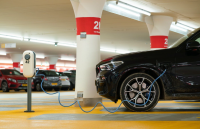
Research suggests that the pandemic could be driving car use as many people try to avoid contact with the public. – Shutterstock pic, March 23, 2021

MANY drivers can't see themselves at the wheel of an electric vehicle in the near future, and the brakes on uptake can vary from country to country. While price is the most discouraging factor in France, for people in Germany and China, it's the lack of charging stations that's particularly offputting.

While electric vehicles are the subject of much interest and curiosity, they haven't completely won over the public, according to research from Continental. With the exception of drivers in China, the majority of people polled couldn't imagine themselves in an electric car in the near future.

People in Germany proved the most dubious about opting for an EV for their personal journeys (59%), followed by drivers in France (57%). A similar trend was seen in Japan and in the US. In China, on the other hand, just 12% of people polled couldn't see themselves in an electric car in the near future.

For people in France, price was the biggest obstacle to going electric. For people in the four other countries surveyed, it was above all the lack of charging stations that proved the main argument against all-electric cars. Note that the limited range of EVs compared to internal combustion engine vehicles also featured as a major discouraging factor for electric mobility in Germany (57%), the US (44%) and in China (59%), but less so in France (28%).

The study also highlights the fact that 16% of drivers in France have been using cars more frequently than before the pandemic began. This is explained by a desire to minimize contact with others and a certain lack of confidence in public transport. The trend is even more pronounced in the other countries studied. It remains to be seen whether this will be a lasting trend.

The Continental study was carried out with the market and social research institute infas, and the Handelsblatt Research Institute in September 2020, polling a representative sample of the population in five countries (Germany, China, USA, France, Japan). – ETX Studio, March 23, 2021

Related News

Malaysia / 2mth

Tourism industry needs to shift to EVs systemically – MATTA

Malaysia / 2mth

NS crisis: Umno-BN Excos told to vacate offices, return official vehicles today

Malaysia / 2mth

EV taxis with battery swapping system introduced to address fuel crisis

Malaysia / 3mth

Heatwave: Public advised to limit outdoor time, stay hydrated - MOH

Malaysia / 3mth

New hire purchase rules to benefit borrowers, minimal impact on banks

Malaysia / 7mth

Hatyai floods: Over 1,000 Malaysian vehicles stranded, submerged in hotel underground parking

Spotlight

Malaysia

Johor state election: MACC receives three reports of alleged corruption

Malaysia

Banks need to do more to help counter rising costs of living – Guan Eng

By Ian McIntyre

Business

BNM holds OPR at 2.75 per cent

Malaysia

MACC: No one off limits in probe into US$13 million luxury property deal

Malaysia

Govt rejects claims Jho Low secretly returned to Malaysia for 1MDB asset talks

Malaysia

School stabbing incident: Suspect claimed she was dissatisfied, allegedly bullied

Places

Four premier hotels in Penang to be restored, open doors soon

By Ian McIntyre

Malaysia

Rosmah demands action against Nga over alleged misleading election poster in Johor polls

Malaysia

Malaysia faces RM51.4b 1MDB burden after recovering RM31.3b in funds and assets

You may be interested

Places

Four premier hotels in Penang to be restored, open doors soon

By Ian McIntyre

Living

Matrix Concepts' home ownership campaign offers over RM30m rewards and prizes

Events

HashMicro rolls out AI-powered manufacturing platform to help firms tackle rising costs, disruptions

By Alfian Z.M. Tahir