Our Planet

How many people in your country regularly travel by air?

Giving up flying has become an environmental act, known as 'flygskam', which is Swedish for 'flight shame'

Updated 5 years ago · Published on 07 Apr 2021 11:00AM

How many people in your country regularly travel by air?
In the United States, only 12% of the population takes 66% of the total annual flights, while in the United Kingdom, only 15% of the population takes 70% of the total flights. – ETX Studio, April 7, 2021

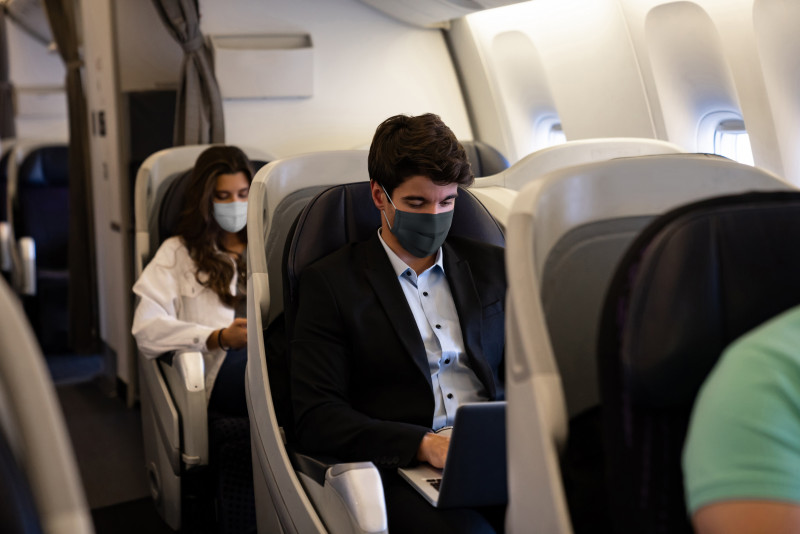
AIR travel emits a significant amount of CO2. However, people who travel regularly by plane represent a small part of the world population. In the United States, just 12% of the population accounts for 66% of all flights taken.

Giving up flying has become an environmental act, better known as "flygskam," a concept from Sweden that means "flight shame," referring to the pollution emitted by air travel. But only a small part of the world's population can actually afford the "luxury" of regular air travel. 

A recent report by UK-based climate charity Possible titled "Elite Status: global inequalities in flying" shows that less than half of the population flies several times a year. According to this survey, in the United States, only 12% of the population takes 66% of the total annual flights, while in the UK, only 15% of the population takes 70% of the total flights. As for France, 50% of the flights were taken by only 2% of the population in 2008.

"This pattern is repeated across the world, in countries including Canada, India, China, and the Netherlands," says the study. 

This report used pre-pandemic data from 26 countries with the world's highest absolute aviation CO2 emissions (Saudi Arabia, Qatar, Russia, and South Africa were not included in the study due to insufficient data). 

In view of these results, the representatives of the NGO Possible plead for the introduction of a "frequent flyer levy."

"Targeting climate policy at the elite minority responsible for most of the environmental damage from flights could help tackle the climate problem from flying without taking away access to the most important and valued services which air travel provides to society," suggests Leo Murray, director of innovation at Possible. 

In November 2020, a study published in the journal Global Environmental Change showed that heavy air travelers make up just 1% of the world's population and were responsible for half of the carbon emissions from aviation in 2018. – ETX Studio, April 7, 2021

Related News

Off beat / 1mth

Tourism Malaysia seeks lower local airfares to boost domestic tourism

Health / 1mth

Tourism players in Penang call for urgent action to overcome haze situation

Malaysia / 2mth

Tajikistan eyes bigger role for Malaysia in Central Asian market

Off beat / 2mth

Time to look beyond manufacturing and tourism sectors, says Penang CM

Places / 2mth

Overwhelming response for Penang’s reopened museum

Malaysia / 2mth

Violence in Thailand: Visitors drop by almost 50 per cent

Spotlight

Business

Ringgit gains as oil prices plunge on hopes of Iran conflict de-escalation

Events

UKM to establish academic research platform named after Dr Wan Azizah

Malaysia

Deepavali preparations destroyed as flash floods inundate Sungai Buloh homes

Malaysia

Melaka polls: Calm campaign puts focus on what parties can offer voters

Malaysia

Anwar challenges Hadi over ‘Dajjal’ label

Malaysia

Shuhaily remains AKPS chief pending official transfer order, says lawyer

Malaysia

Najib's former wife Tengku Puteri Zainah passes away

Malaysia

Matrade exposes scam involving fake procurement orders, advance payment demands

By Alfian Z.M. Tahir

Malaysia

“Don’t panic,” Govt assures stable essential goods supply amid geopolitical tensions, monsoon threat

You may be interested

Events

UKM to establish academic research platform named after Dr Wan Azizah

Events

Focus Point expands into premium eyewear market with new Johor Bahru outlet

By Alfian Z.M. Tahir

Community

Mother’s 30-minute wait for mall lift highlights plight of parents with strollers

By Alfian Z.M. Tahir