SAN JUAN – After months cooped up in coronavirus-hit Manila, Tanya Mariano fled the Philippine capital to work from the beach, joining a growing number of digital nomads helping a devastated tourism industry stay afloat.
A ban on foreign holidaymakers entering the archipelago nation and domestic travel curbs since the pandemic began last year have forced many operators to close and wiped out millions of jobs.
Many digital workers in congested Manila, fearing Covid-19 and fed up with lockdowns and restrictions, are escaping to largely deserted nature hotspots to do their jobs – injecting much-needed money into communities dependent on outside visitors.
Sitting with her laptop on the balcony of the ocean-view apartment she rents with her boyfriend in San Juan, a surf town several hours north of her home, Mariano says the move has been a "big quality of life improvement".
"Being close to the ocean, being close to nature is very calming," said Mariano, 37, a freelance writer and communications specialist.
"When I'm in a meeting, usually Zoom or Google Meet, I try not to use the beach as my background – I just show people the wall so they don't hate me."
There are no official figures on the number of people working remotely from the country's picture-postcard beaches and dive spots, but it is certainly a fraction of the millions of tourists that usually flock to its shores.
The impact of Covid-19 travel restrictions on the sector has been dramatic: US$37 billion (RM153.2 billion) slashed from the economy and the loss of over two million jobs, according to World Travel and Tourism Council data.
Bravo Beach Resort on the southern island of Siargao – a renowned surfing destination – has felt the pain acutely.
Normally packed out with local and international tourists, it now averages around five to 10 guests at any one time – about 10% of its capacity – said general manager Dennis Serrano.
With the resort haemorrhaging as much as 200,000 pesos (RM17,100) a month, he hopes the situation will be "back to normal" by next year.
Even the white-sand resort island of Boracay has been turned into a "ghost town", according Eugene Flores, manager of the La Banca House boutique hotel, where most of the rooms are filled with long-term digital nomads from Manila.
Official figures show arrivals to the island fell to less than 335,000 last year, compared with more than two million in 2019.
"When you go out you can see shops, you can see restaurants, you can see hotels that are really closed. Only a few are open," Flores said.
'You're still bleeding out'
The glacial pace of the country's Covid-19 vaccine rollout is likely to delay the full reopening of the country's beleaguered tourism industry.
For now, digital nomads are a "target market", said the Department of Tourism, encouraging resorts and hotels to cater to the "new breed" of travellers by offering fast internet and wellness activities.
The influx of mobile workers, whose Manila salaries stretch further in the provinces, is keeping businesses like Papa Bear restaurant in San Juan afloat.
"You are not completely bleeding out, you're still bleeding out for sure, but you're at least generating something to offset enough of it," said owner Denny Antonino.
Digital nomads now make up 30-40% of his customers and he hopes the trend continues after the pandemic to even out the seasonal fluctuations.
"They're able to do their work but in between meetings they can surf, they can go hiking, they can go to the falls – there are more things to do," said Antonino.
'I didn't need to worry as much'
Nine months after Carlo Almendral left his "prison" apartment in Manila's financial district for San Juan, the chief executive of an artificial intelligence start-up said he has no plans to leave.
The 43-year-old often starts his day with a dawn bike ride through the countryside or a surf when the waves are up.
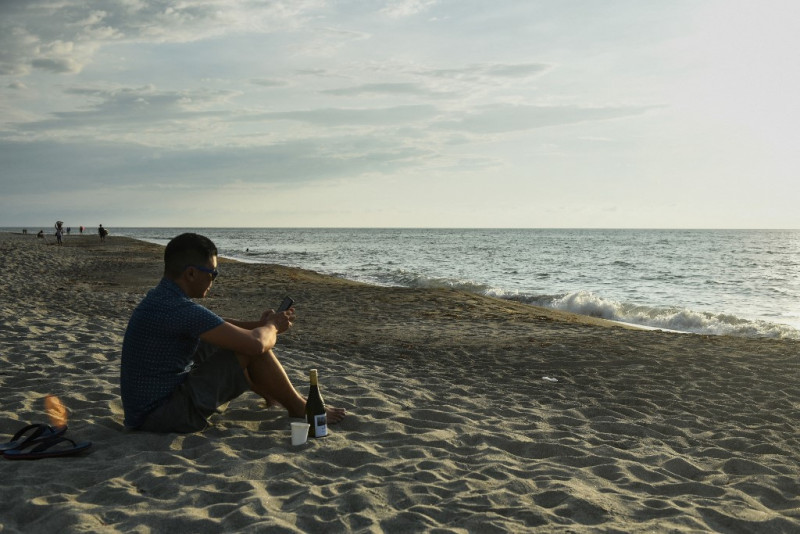
It ends with a business meeting and glass of wine on the beach at sunset, accompanied by his rescue French bulldog Alfred.
"I didn't realise how much time I had spent worrying about the pandemic until I got here," Almendral said from the beachfront resort, where his office is a breezy rooftop studio with a sea view.
"Being here has made me more productive and more creative." – AFP, June 18, 2021