GEORGE TOWN – There were 468 suicide cases in Malaysia as of May this year, almost double the 1.7 rate last year and in 2019, as recorded by the police. In Penang, there is a suicide case recorded every 2.36 days. In light of this situation, the Mental Health Association (MHA) of Penang is requesting for the government to look into subsidising fees for patients who seek help at private mental health service providers.
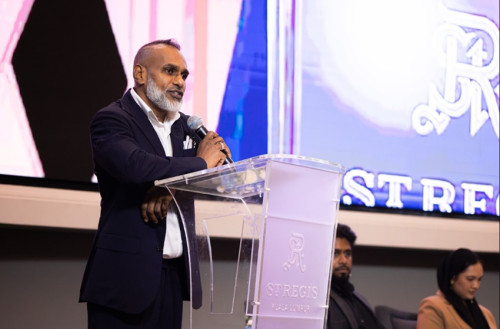
Committee member of MHA Penang, Philip Saw told The Vibes that though mental health hotlines are crucial and great platforms to connect with if a person seeks mental health aid, it is not enough.
“If only one call can elevate the stresses they are facing then, hallelujah.
“But more often than not, this is not the case. It does help, but these people facing mental stresses need much more than that.”
Saw explained that for a highly suicidal person, more help is needed. For hotlines, a person may call more than once, and they might be speaking to a different volunteer. When they talk to a different person, they might have to start telling their story all over again and there are some limitations to how much rapport and trust you can build.
He believes that more must be done for serious cases that extend from hotlines.
“On our part, most of our calls are referred by other mental health NGOs and also non-mental health NGOs. We specialise in people who are highly suicidal, who might need psychiatric treatment. We go to the ground, we go to the clients, talk to them, arrange for them to see psychiatrists,” he said.
He explained that people who need such help has increased due to the pandemic as they get anxious about being locked up in their room or home. Stress levels are also much higher in those who are already suffering from mental stress or those from the B40 group.
“These hotlines and helplines are good as the first line of defence, however, social workers are also important in this case. They are the ones who can go to the person who needs help,” he said.
Psychiatrist and the Vice President of MHA Penang, Dato Dr Lai Fong Hwa, added that though there is a need for qualified social workers, they cannot find employment in Malaysia.
“Some of them that I know have had to go and work as a clerk in a bank.
“However, there is limited space for social workers because no one wants to pay them to help in this area, therefore, they have to find their own jobs and doing other things,” he explained.
Dr Lai also said that with the RM15 million for mental health NGOs under the Pemulih stimulus, he hopes that the government can channel it as a subsidy for those who seek counselling sessions.
“For example, like Penang, if you are distress, you need to see a counsellor, the usual charge is about RM150 per session. So, are you asking someone who has no job or already in distress to come up with another RM150 to see a counsellor? That will be too much.
“That sounds like it is creating a problem from an already existing problem.
“Of course, they can go to see a psychiatrist or counsellor at the general hospital, but there is a long queue, they might have to wait a few months.
“The Australian government has a system where people who need help can go to private counsellors or psychologists, and the government helps to pay part of the fees. It will be very helpful if the government can provide a subsidy to these bills at some of these centres in Malaysia,” he said.
For those who are unsure if they need the help of a counsellor, Dr Lai suggests doing a Patient-Health Questionaire-9 (PHQ-9) that is available online. Family, friends and teachers also play an important role as they are might be able to sense that there is something wrong with someone. They can encourage the person to go and get help or arrange for someone to help them. – The Vibes, July 8, 2021.



.jpeg)