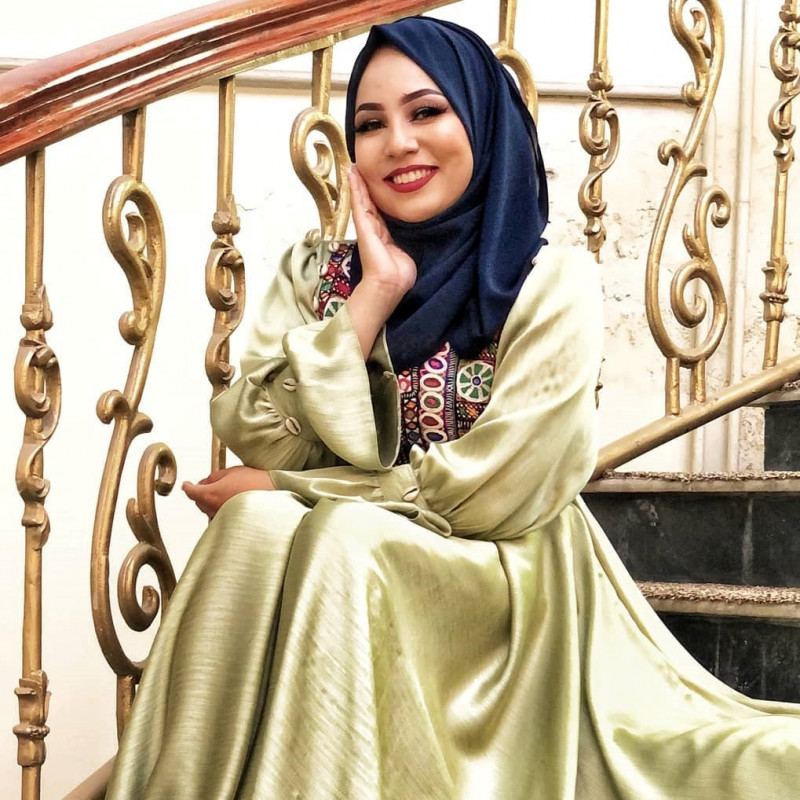
SADIQA Madadgar's social media looked much like any other successful young Afghan influencer's until Taliban militants stormed into Kabul and upended her dreams.
The return of the hardline Islamist group has sent a shockwave through Afghanistan's social media. Prominent influencers have gone dark or fled, while residents and activists are scrambling to scrub their digital lives.
A former contestant on the reality singing competition 'Afghan Star', Madadgar amassed a huge following with her stunning vocals and down to earth, girl next door persona.
A devout Muslim who wears a headscarf, she spent her days uploading videos that transfixed Afghan youngsters, winning her 21,200 subscribers on YouTube and 182,000 followers on Instagram.
In one video, she giggles as she struggles to cut open a watermelon. On another, the 22-year-old is singing a haunting folk tune in a cafe while a friend plays guitar.
On a recent trip to the city of Kandahar – the Taliban's spiritual birthplace – she filmed herself sharing a pizza with girlfriends.
On Saturday, Madadgar posted her first overtly political post on Instagram. "I don't like to express my pain online but I'm sick of this," she wrote. "My heart is in pieces when I look at the soil, my homeland which is being destroyed slowly before my eyes." The following day, Taliban militants seized Kabul, and Madadgar stopped posting.
'No longer safe'
Millions of Afghan youngsters – in particular women and religious minorities – fear that what they once put online could now put their lives in danger.
Few can forget the first time the Taliban imposed their ultra-conservative version of Islamic law on Afghanistan between 1996-2001.
Women were excluded from public life, girls could not attend school, entertainment was banned and brutal punishments were imposed – such as stoning to death for adultery.
Ayeda Shadab was a fashion icon for many young Afghan women with 290,000 followers on Instagram and 400,000 on TikTok. Each day she would model the latest outfits that were stocked in her upscale Kabul boutique.
In one of the most recent videos from her range, she posed in an asymmetrical sheer ball gown as Dua Lipa's infectious dance track 'Levitating' played in the background.
But she had no illusions about what a Taliban regime would mean for fashionable women entrepreneurs like her.
"If the Taliban take Kabul, people like me will no longer be safe," she told German broadcaster ZDF in a recent interview. "Women like me who don't wear a veil, who work, they can't accept them."
She was so terrified of the Taliban's return that she had to flee, telling followers recently that she had relocated to Turkey.
Other prominent celebrities and influencers who remained in the country have scrambled to follow in her footsteps.
Aryana Sayeed, one of Afghanistan's most prominent pop stars, posted a selfie on Wednesday taken on a US military evacuation flight headed to Doha.
"I am well and alive after a couple of unforgettable nights," she wrote. "My heart, my prayers and my thoughts will always be with you."
Digital scrubbing
Others have not been so lucky. Zaki Anwari was a promising footballer who played for Afghanistan's youth team and often posted fashionable self-portraits on social media.
On Thursday, Afghanistan's sports federation confirmed the 19-year-old was one of those who fell to his death after trying to cling to a US plane airlifting people out of Kabul.
Following recommendations from activists, journalists and civil society groups, Facebook announced new security measures allowing users in Afghanistan to quickly lock their accounts.
The company, which also owns WhatsApp and Instagram said it had also set up a special operations centre "to respond to new threats as they emerge".
US advocacy group Human Rights First has published advice in Pashto and Dari on how Afghans can delete their digital histories – something they also offered for activists in Hong Kong and Myanmar.
"What we heard from activists in Afghanistan were similar requests prompted by fears of being targeted when a new power took over the country's security," Brian Dooley, an advisor to the group told AFP.
Raman Chima, from digital rights advocacy group Access Now, which has also published guides, warns even relatively mundane online content could be dangerous given the Taliban's harsh interpretation of sharia law.
"They may be targeted for retribution, for being accused of being infidels, or being un-Islamic in the views of not just the Taliban but other religious extremist groups in the country," he told AFP. – AFP, August 23, 2021