
SANDAKAN – With Bahasa Malaysia and English placed as priorities in our national education system, it is easy for the Kadazandusun language in Sabah to get lost in time.
Even the local Sabah newspaper Daily Express stopped the publication of its Kadazan language insert in June 2020, and with the New Sabah Times ceasing publication in December 2020, Sabah has stopped producing news materials in the Kadazandusun language.
However, the local Kadazandusun community noticed positive changes among the youth, saying that there has been increasing awareness to learn the language, compared to 30 years ago.
A local Dusun Liwan from Kota Kinabalu, Supini Sopiah Jimi, 60, said that back then, the teenagers and children are mainly taught Bahasa Malaysia and English at home, not Kadazandusun, even though their parents are fluent in the language.
Supini, who had three children by the time she was 30, said she also did not teach her children the language and later regretted her decision.
“Back then, raising our children, all we think about is that we want them to be able to fit in in the community and to be able to catch up in schools. Since Kadazandusun was not part of the school examination, we (parents) felt that it was more important for them to learn Bahasa Malaysia and English.
“I was also married to a Chinese man, and my children started learning the Hakka dialect since young. At the time, I felt like introducing another language to my children would put too much burden on them,” she said.
Supini said a lot of parents her age were doing the same, which is why a majority of those aged 20 to 40 now cannot converse in their mother tongue.
But she said things are starting to change with the young people now eager to learn the language even though they are way past school-going age.
“Suddenly, it is like a trend, or that it is ‘cool’ to know how to speak Kadazan or Dusun. My children now in their 30s are actively learning the language now so that they are able to teach their kids.
“I felt guilty for not teaching them when they were young, but at the same time glad that they have the will to honour the Kadazandusun language and tradition,” she said.
The Kadazandusun language are divided into several dialects. Generally, they are divided by districts, such as Dusun Liwan (Ranau, Tambunan, Keningau), Dusun Bundu (Tamparuli, Tuaran, Inanam), Dusun Lotud (Tuaran), Dusun Kimaragang (Kota Marudu), Dusun Rungus (Kudat), Dusun Tatana (Kuala Penyu), Dusun Labuk (Sandakan) and Kadazan (Penampang), among others.
The dialects are very similar to each other with only certain words having different pronunciations, like Mandarin, Cantonese, and Hakka in the Chinese dialects. People could be speaking different dialects when conversing, but they could still understand each other.
Supini said that as the only pure Dusun in her family, she is determined to be the agent to pass down the language and culture to her children and grandchildren.
“I believe being part Dusun is something that my grandchildren can be proud of,” she added.
Supini said that when a Dusun person meets another person of the same race, they would first ask each other if they know how to speak Kadazandusun in Bahasa Malaysia. When they have identified that both parties know the language, they would automatically switch their language to Kadazandusun.
“When we speak Dusun with one another, you instantly feel closer to another person, like you are suddenly friends with them.
“It is like when you meet another Malaysian overseas and you start speaking the language that only you know,” she said.
Staying connected to a shared heritage
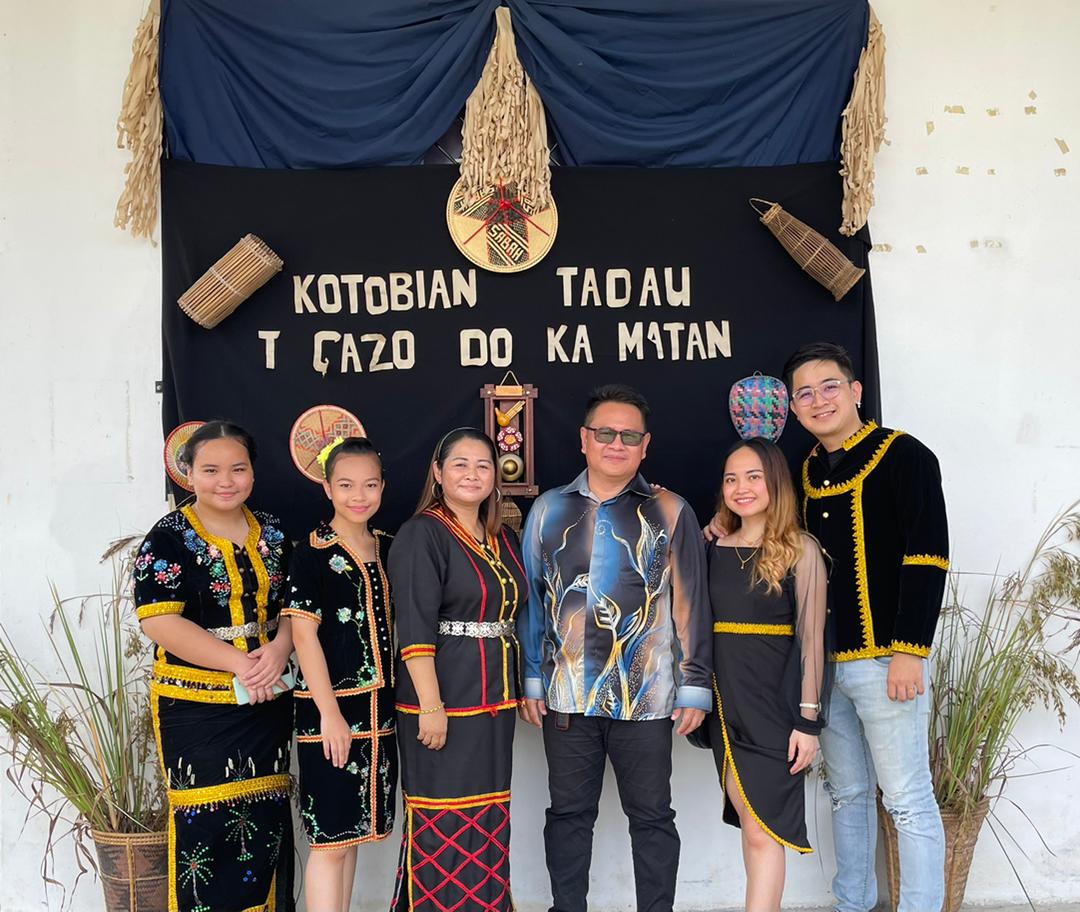
Meanwhile, Livyria Jusmin, 28, a pure Dusun, said that she is able to understand when people speak the Kadazandusun language, but she is unable to speak the language.
“I believe I only know 30% of the language, and my younger brother is worse. I feel like I had missed the advantage of knowing another language despite both my parents being Dusun.
“If I knew the language 100%, I might be able to become a teacher in Kadazandusun language, or I could be a translator, or I could be a news anchor for the Kadazandusun language.
“But I am still learning until today,” she said.
Sainah Longkidau, 57, on the other hand, said that she was glad she maintained her determination to speak the language to her children when they were growing up.
“Surely, it was not easy because everyone around me told me that the language is no use at school and that it was pointless for them to learn yet another language. But at the time, I thought that adding another skill in communication does no harm.
“Today, I believe my children who are in their 30s and are parents themselves are glad to know Kadazandusun. I only wish that they have the same awareness as I did, and pass the language down to their children,” she said, adding that she also speaks Dusun with her husband.
The Kadazandusun is the largest indigenous group in Sabah, comprising 40 sub-groups. According to the census, the Kadazandusun’s population in Sabah has decreased from 32% in 1960 to 17.83% in 2010.
The Kadazandusun Cultural Association Sabah has made a lot of efforts to preserve the language, culture, and tradition of the Kadazandusun community.
These efforts are highlighted during the Kaaamatan Festival, where a beauty pageant, Unduk Ngadau is only open to those who are fluent in the language, Sugandoi (singing competition) that uses only Kadazandusun songs, as well as the Magagung competition that uses the traditional Kadazandusun gongs. The activities also encourage participation from the youth.
With the younger generation’s growing interest to learn the Kadazandusun language, perhaps the language is here to stay. –The Vibes, May 30, 2022