THE climate crisis is affecting natural ecosystems, but also cultural and historical heritage. From heatwaves to heavy rainfall, forest fires, storms and droughts, the increase in frequency and severity of these extreme weather events threatens archaeological remains around the world.
This is the conclusion reached by Jørgen Hollesen, a researcher at the National Museum of Denmark, in a paper recently published in the journal Antiquity. He drew on the work of several of his archaeologist colleagues to assess the global impact of climate change on archeological sites.
The specialist found that the repercussions of this crisis are such that they are affecting the preservation of cultural heritage. "Climate change is accelerating, amplifying existing risks and creating new ones, the consequences of which could be devastating for the global archaeological record," he writes in his research.
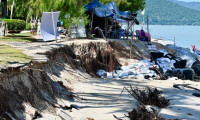
Coastal and underwater archaeology is particularly threatened by rapidly rising temperatures, rising sea levels and coastal erosion. "From Iran to Scotland, Florida to Rapa Nui and beyond, [such] sites are currently being eroded at an increasing rate, often before scientists can record them and assess their value," explains Jørgen Hollesen.
One example is Ravenser Odd. This port town, founded in around 1235 on sandbanks off the east coast of England, disappeared in the 14th century under the waters of the North Sea. For years, the scientific community has nurtured the hope of locating this legendary medieval trading town, often dubbed the 'Atlantis' of Yorkshire.
In addition to the historical aspect of this research, the objective is also to raise awareness of the problem of coastal erosion. "Ravenser Odd is an incredibly evocative story of the impacts of coastal change on entire settlements. I think it is a fantastic way to start conversations with people on the impacts of climate change long in to the future by using these stories from the past," explains Daniel Parsons, a professor in sedimentology at the University of Hull, speaking to The Guardian.
"Difficult decisions"
The melting of glaciers due to climate change is also endangering many historical sites, even if this phenomenon also reveals, in some places, archaeological treasures buried for centuries. In this second scenario, archaeologists must act quickly if they want to preserve the integrity of these frozen remains. "Without swift intervention, much of this material culture quickly degrades and loses its potential to contribute to our understanding of the past," says Jørgen Hollesen.
Faced with the scale of the phenomenon, some archaeologists have begun to put forward solutions to help protect historical sites throughout the world. But they are difficult to put in place because of a lack of means.
"Even if archaeologists and planners in years to come are equipped with tools efficient enough to pinpoint the most vulnerable sites, they will still be faced with difficult decisions: which sites should be saved, and which sites should be allowed to decay?" writes the researcher.
However, he says that the preservation of archaeological remains can push governments and public authorities to act against the effects of the climate crisis. As such, archaeology can play a crucial role in the fight against this global phenomenon. – ETX Daily Up, November 6, 2022














.jpeg)