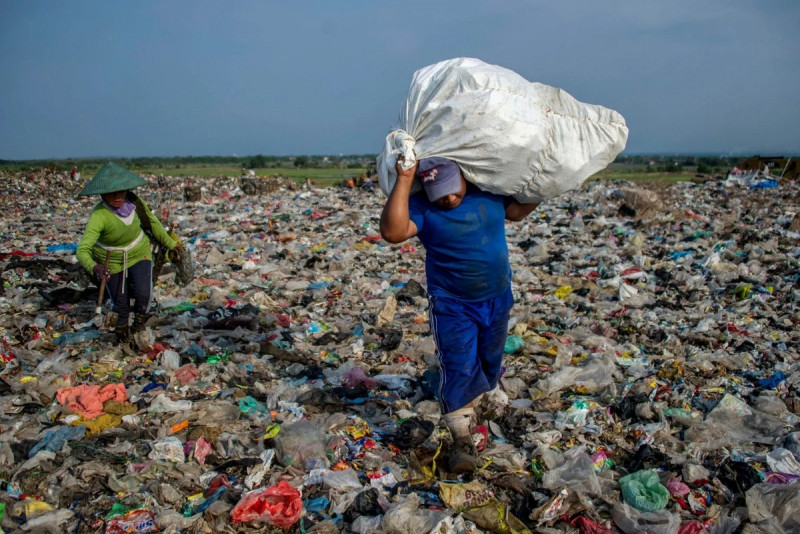

RIVETED by the notion that by 2050, there will be more plastic waste than marine life in the world’s oceans, Penang has begun to embrace the need to fight plastic waste holistically.
In Penang, the authorities have cut down on plastic bag use by 78% between 2020 and 2021, according to state exco Phee Boon Poh, who oversees the environmental portfolio. But it is still inadequate.
"We are moving on to encouraging consumers to bring their own bags and containers when they patronise hawkers and wet markets as well as the retail outlets," said Phee.
Penang is the first state to embrace the ‘No Plastic Day’ campaign and now on most days, retailers of every form and size here do not offer plastic containers unless the customer is willing to pay up to RM2 per bag.
The next step is to curb any syndicated attempt to bring in municipality plastic waste from overseas into the black market here.
Unless sanctioned by the Environment Department, Phee said that Penang and other states had enough of dealing with toxic fumes and the consequences of trying to treat plastic waste, as most of it cannot be recycled and instead becomes harmful to the surrounding environment, including the pristine oceans.
Phee's facial demeanour turns worried when he cites that on top of climate change, the global citizenry needs to fight plastic waste.
"But it is a challenge we cannot back down from," said the grey-haired veteran leader.
His parting remark during a recent meet up, was that nearly all plastic bags end up as part of municipal waste.
"Look at advanced countries like Japan, Australia or Canada. They have even better technologies than us and yet, they export plastic bag waste instead of recycling them," he said, to a need to simply not use the cheap but polluting agent.
Before 2018, Malaysian recyclers were allowed to import plastic waste from such countries and many of the shipments came through Penang Port, but this has since been changed with only recyclable products allowed through.
In Sg Petani, residents used to wake up in the ungodly hours to unload on social media on how they could smell the pungent odour slipping into their homes.
A spokesperson with the Penang Green Council also shared that it is time for consumers to realise that even buying takeaways that come in plastic bags hurts the environment.
Coming up with solutions

Plastic is the world’s third most abundant waste source, with the total volume of plastic increasing in tandem with global population and per capita consumption growth.
Single-use plastics are harmful and endangers not only aquatic life, but also humans who drink from Bisphenol A or BPA-containing plastic bottles, which can cause certain types of cancer and increase the risk of miscarriage, the Penang Green Council shared in an online post.
In a statement, a major mineral water brand Spritzer has decided to collaborate with TudungPeople, a designer of comfortable and beautiful hijabs, to produce a limited-edition shawl made from recycled plastic bottles as part of a sustainability initiative.
TudungPeople, which has over 100 designs and prints, will use eight recycled plastic bottles per shawl with design inspirations from Spritzer’s iconic bottle.
The limited-edition shawl and scrunchie reflect the delicate image of rainforest flora against a background of subtle turquoise gradients. Each shawl comes in a design matching reusable pouch bag, to safely store your one-of-kind tudung.
This initiative encourages people to imagine what else plastic bottles can be used for.
Waste pickers
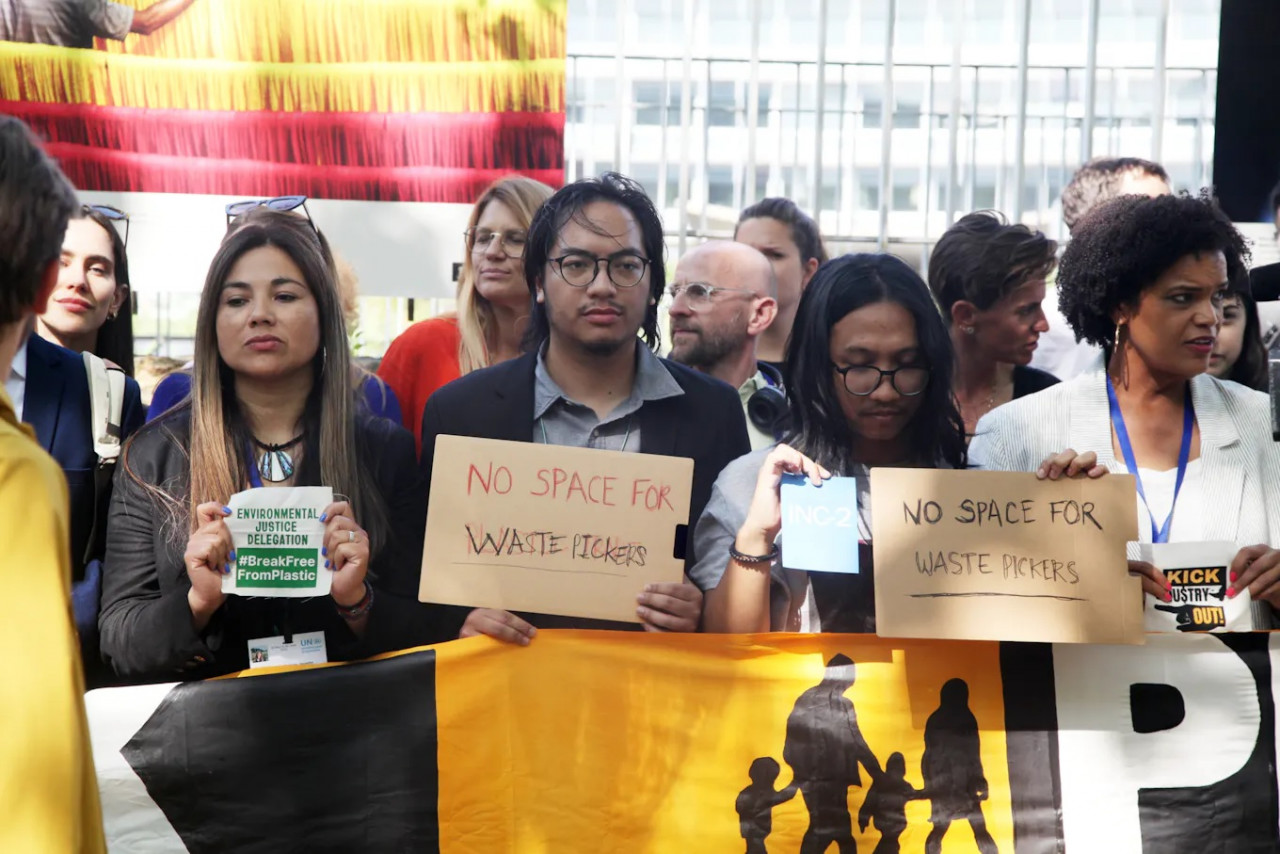
While Spritzer tries to capture the imagination of a sustainable future, regionally and globally, civil society movements are gaining pace to fight plastic pollution after an enforced sabbatical due to the Covid-19 pandemic.
In the Philippines, which has among the highest rates of plastic waste in the world – which eventually pollutes their coastlines – a waste pickers group has formed.
Waste pickers is a secondary form of occupation for the young and old in the country. Their role, which is alien to Malaysia, is to enter waste dumps and speedily segregate recyclable and non-recyclable waste, mostly plastic compounds.
Due to the increase in numbers and the effectiveness of their role, safer and more sustainable livelihoods for the informal waste sector must be part of negotiations for the world’s first ever treaty on plastic pollution, waste picker groups say.
Their plight was shared by the Global Alliance for Incinerator Alternatives (GAIA) regional group to The Vibes.
GAIA said that the second round of talks to develop the United Nations pact to end global plastic pollution should recognise the world’s 20 million waste pickers by providing healthcare, a proper income and better working conditions.
“In any country, waste pickers do not get fair returns for their work. Waste pickers know that there are toxic chemicals in plastic but we still make sure we recover them and save the environment,” said P. Indumathi, who leads the non-profit Hasiru Dala, which is a member of a collective of 35 waste picker organisations in India called Alliance of Indian waste pickers.
“But nobody identifies us as environmentalists… and now with the changing plastic management system, it will be a worse situation; that is the reason we are asking for a just transition,” she said referring to the rise in waste burning, which she says will create a system that will reduce the recovery of resources resulting in fewer jobs for waste pickers.
There are over 10,000 toxic chemicals found in plastics, including bisphenol A (BPA) and Phthalates, which leach out of plastic products over time and into house dust that can be breathed in everyday, studies have found.
Researchers from Resource Futures, an environmental consultancy, and Tearfund, an international Christian charity, found that communities in Cameroon, Nigeria, the Democratic Republic of the Congo (DRC), Ghana, Bangladesh and Indonesia had experienced more severe flooding due to plastic waste blocking drainage systems in the last few years.
In these communities, plastic waste was a ‘risk multiplier’ for flooding, studies found.
Fighting plastic in Malaysia
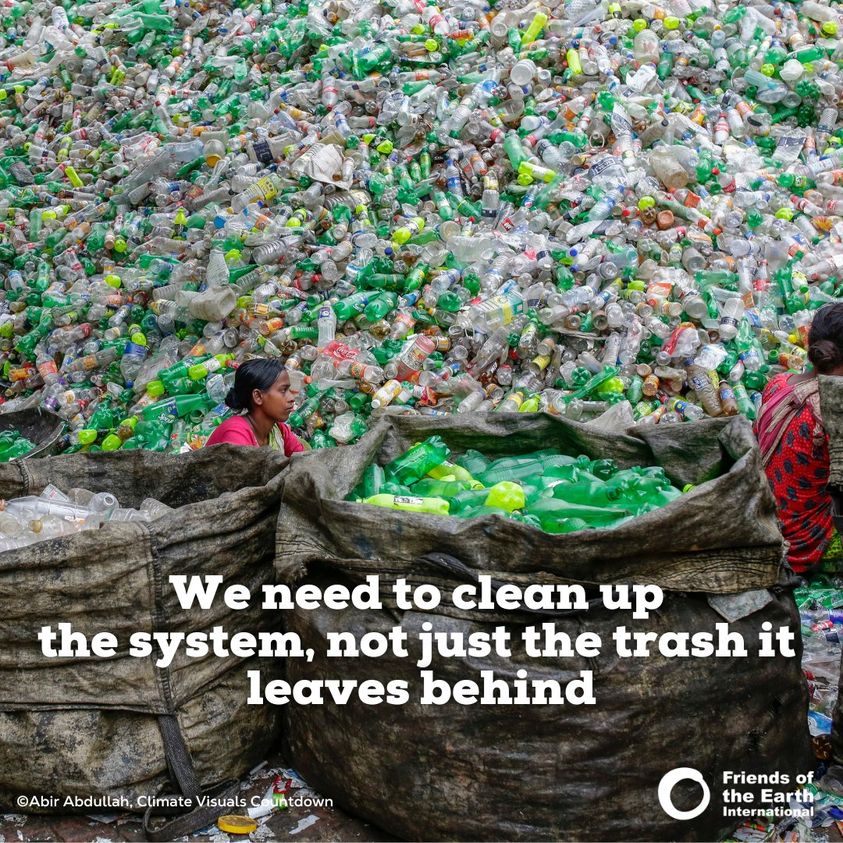
In Malaysia, the fight is real and relevant as the authorities have set an ambitious roadmap to eliminate single use plastic bags by 2030.
But with seven years to the deadline to ban single-use plastics, civil societies say it will be an uphill battle because consumer awareness is not as high as they had envisioned.
Malaysia had set an ambitious roadmap in 2018 to eliminate single-use plastics by 2030.
One weakness of the Roadmap Towards Zero Single-Use Plastics 2018-2030 is that it does not outline a uniform approach to address single-use plastics, other than just providing a policy direction to all stakeholders, including state governments, in taking a unified and collective approach to the issue, they cited.
It was reported that Malaysia is apparently ranked eighth among the top 10 countries with the most mismanaged plastic waste in the world.
One statistic to illustrate this, is that of 0.94 million tonnes or 940 million kg of mismanaged plastic waste, 0.14-0.37 million tonnes may have flowed into the sea.
Sahabat Alam Malaysia (SAM) honorary secretary S. Mageswari predicts that the target may not be attainable because ignorance lords over awareness.
“Despite there being behavioural changes with consumers bringing their own grocery bags, containers and even reusable straws, it is not widespread enough. Plastic bags are freely and rampantly distributed in wet markets, sundry shops and pasar malam. If any ban or restriction is not thorough and all encompassing, we will still see them being used."
She said the irony was that restaurants still provided plastic straws even without customers asking for them.
In a nutshell, there are encouraging signs that society is pivoting towards no plastics, but the momentum must be stronger and sustained before 2030. – The Vibes, June 9, 2023




.jpeg)