SABAH's border economy is poised for significant growth with the identification of nine high-impact sectors, which have been outlined in the Sabah Border Area Economic Development Study.
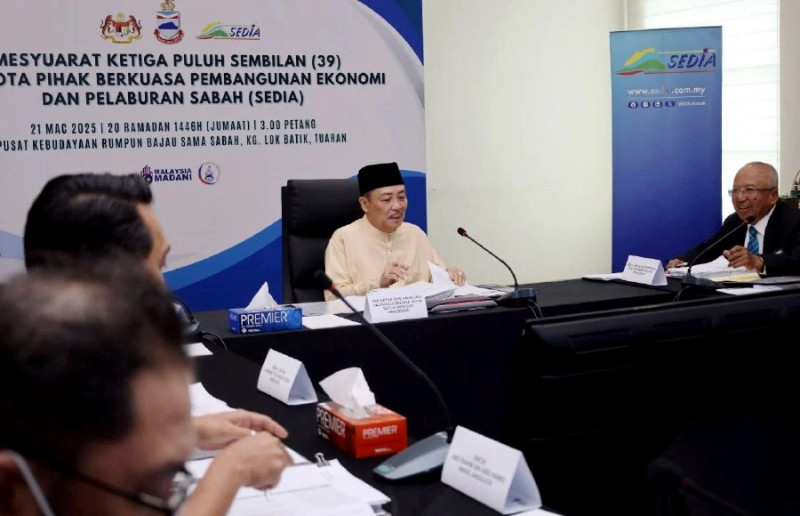
In a statement following a meeting at the Bajau Sama Cultural Centre yesterday, Sabah Chief Minister Datuk Seri Hajiji Noor said the study, conducted by the Sabah Economic Development and Investment Authority (Sedia), focuses on the strategic border districts of Sipitang, Nabawan, Kalabakan, and Tawau.
"The study identifies nine high-potential sectors, including community-based tourism, fishery and aquaculture, the palm oil downstream industry, biochemical, biofuel, and cross-border trade," he said.
Hajiji, who also serves as the chairman of Sedia, explained that the strategic activities outlined in these sectors are expected to boost the Gross Value Added of existing resources by 330 per cent to RM1.6 billion and create 10,660 job opportunities by 2040.
He also noted that the study was funded by the Ministry of Economy.
Since 2009, Sedia has successfully implemented over 1,275 projects with a total allocation of RM3.8 billion, focusing on high-impact, people-centric initiatives aimed at poverty eradication and human capital development, under the Ninth to the Twelfth Malaysia Plans.
For the first Rolling Plan of the 13th Malaysia Plan next year, Sedia has submitted 14 project proposals, including 10 new initiatives, worth RM702 million. – March 22, 2025