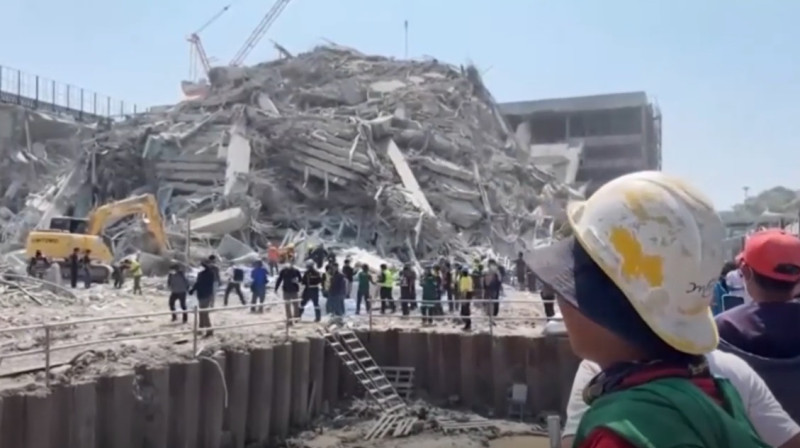
PRIME MINISTER Datuk Seri Anwar Ibrahim has expressed his profound concern following the powerful earthquake that struck central Myanmar and northern Thailand, resulting in tragic loss of life and severe damage in Mandalay, Bangkok, and surrounding areas.
In a Facebook post, Anwar said the reports of collapsed buildings, people trapped under rubble, and the rising death toll were deeply distressing.
"The reports of collapsed buildings, civilians trapped, and the increasing number of casualties are heartbreaking," he said.
"We are also closely monitoring developments in southern Yunnan, China, where tremors were also felt and structural damage has been reported," he added.
On behalf of Malaysia, Anwar offered his condolences to those who have lost loved ones, as well as his thoughts and prayers for those injured and displaced by the disaster.
"Malaysia stands in unwavering solidarity with our neighbouring countries and ASEAN members," he stated. "At the same time, we recognise the state of emergency declared by the authorities in Myanmar and the designation of Bangkok as a disaster area by the Thai government."
"Malaysia is ready to provide assistance and support humanitarian efforts as required," he added.
According to the United States Geological Survey, a powerful earthquake with a magnitude of 7.7 struck Myanmar at a depth of 10 kilometres. Just minutes later, a 6.4 magnitude aftershock hit the same region.
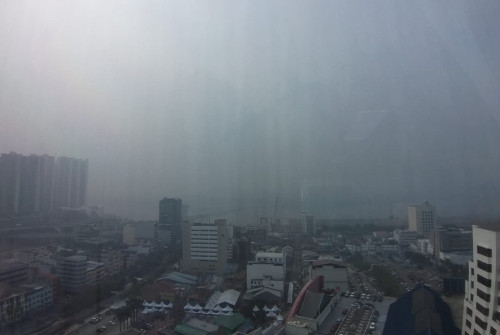
The tremors from both earthquakes were felt in Chiang Mai, Bangkok, and Ho Chi Minh City and even in Penang.
In Myanmar, local media reported that a state of emergency had been declared in the Sagaing, Mandalay, Magway, Bago, and Eastern Shan State regions, as well as the capital Naypyidaw. Authorities are still assessing the extent of the damage.
In Thailand, reports indicated that major transit systems, including the MRT, BTS, and Airport Rail Link in Bangkok, were suspended due to the tremors.
Thailand's Prime Minister, Paetongtarn Shinawatra, has declared a state of emergency in Bangkok, and damage assessments are ongoing.
Meanwhile, Singapore is prepared to send its Operation Lionheart team to assist with urban search and rescue operations and disaster relief efforts in Myanmar following the powerful earthquake that struck the region on Friday, the Ministry of Foreign Affairs (MFA) has announced.
In a statement, an MFA spokesperson confirmed that the deployment would be coordinated through the ASEAN Coordinating Centre for Humanitarian Assistance on Disaster Management.
Operation Lionheart is a 79-member team from the Singapore Civil Defence Force, specifically trained to provide urban search and rescue and humanitarian assistance to countries affected by major disasters.
“The Singapore government is deeply saddened by the loss of life and the widespread damage caused by the earthquake that affected Myanmar and Thailand on 28th March,” the spokesperson said.
“We extend our heartfelt condolences and sympathies to all those impacted, and we stand ready to offer assistance where needed.”
The MFA also issued a travel advisory, urging Singaporeans to defer all non-essential travel to Myanmar in light of the situation. At present, there have been no reports of Singaporean nationals being injured in the earthquake, the Ministry added.
Similarly, the World Health Orgainisation told AFP that it was mobilising its logistics hub in Dubai to prepare trauma injury supplies following the huge earthquake on March 28 in Myanmar and had triggered its emergency management response.
The World Health Organisation is coordinating its earthquake response from its Geneva headquarters “because we see this as a huge event” with “clearly a very, very big threat to life and health”, spokeswoman Margaret Harris told a media briefing.
“We’ve activated our logistics hub to look particularly for trauma supplies and things like external fixators because we expect that there will be many, many injuries that need to be dealt with,” Harris said.
She said the WHO would also be concentrating on getting in essential medicines, while the health infrastructure in Myanmar itself might be damaged. And, due to recent experience with the 2023 Turkey-Syria earthquakes, “we know very well what you need to send in first”.
The UN health agency already has a special cell to deal with Myanmar, which has been rocked by fighting between numerous ethnic rebel groups and the army.
And by chance, the WHO had done an assessment in recent weeks of the best ways to get supplies into Myanmar.
“We are ready to move in – but now we have to know exactly where, what and why. It’s information from the ground that’s really critical right now,” said Harris.
Meanwhile the medical charity Doctors Without Borders (MSF) called for rapid access to affected areas and the timely approval of supplies and personnel.
“MSF medical and humanitarian staff in Myanmar and neighbouring countries are ready to respond at scale to the urgent needs of affected communities, once authorities facilitate swift and unhindered access for teams to do assessments and provide medical care,” it said in a statement.
“The ability to deploy assessment teams – and ideally, surgical teams – is crucial in the first hours and days after an earthquake to deliver life-saving surgical care for the injured.”
The Geneva-based organisation said that given the 7.7 magnitude of the quake, its impact on people “could be devastating”, particularly for those needing immediate help for trauma injuries. – March 29, 2025