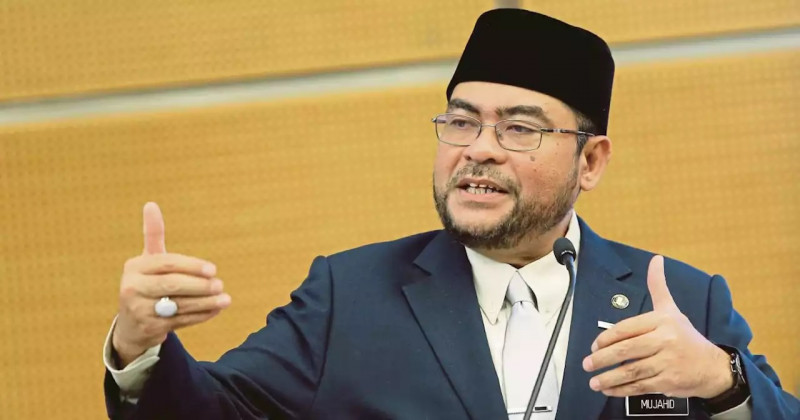
THE Malaysian government and opposition parties must join forces to protect the nation’s economy following the United States’ decision to impose a 24% reciprocal tariff on Malaysian imports, according to Parti Amanah Negara (Amanah) Deputy President Datuk Seri Dr. Mujahid Yusof Rawa.
Mujahid stressed that both political sides need to contribute ideas and practical solutions to navigate this economic challenge, as the country's economic sovereignty is at stake.
He warned that politicising the economic impacts of such challenges would amount to a betrayal of the nation’s interests.
“Economic sovereignty is the dignity of the nation, and to politicise the economic challenges we face is one of the worst forms of betrayal,” Sinar Harian cited Mujahid saying in a statement today.
He added that the key test for Malaysia would be finding a way to unite all sectors of society in supporting a stable and resilient national economy. This, he suggested, could be achieved by achieving a national consensus on economic strategies.
"The leadership of the country will play a critical role in managing the impact of these new tariffs, by continuing to strengthen and maintain the economic fundamentals, both at the micro and macro levels," Mujahid said.
The government’s ability to navigate global trade disruptions, he continued, is strengthened by Malaysia's solid economic foundation, which has historically provided resilience in the face of volatile global trade conditions.
He also highlighted Malaysia's leadership role within ASEAN, noting the importance of regional agreements made in recent years, such as the 2022 agreement between ASEAN and countries including Australia, New Zealand, Japan, China, and South Korea. These agreements, he explained, have bolstered Malaysia's position in regional trade.
The new US tariff was introduced by President Donald Trump as part of broader global trade measures. The US has imposed similarly high tariffs on other nations it trades with, adding pressure on global trade dynamics.
Mujahid also referenced Malaysia’s broader economic strategy, led by Prime Minister Datuk Seri Anwar Ibrahim and the Unity Government. He pointed out that the government had already laid the groundwork for economic adaptability, setting up the "Madani Economy" approach to handle uncertainties. This includes creating a transformative economic strategy focused on sustainability and the welfare of the people.
Among the key components of the Madani Economy is the New Industrial Master Plan (NIMP), which aims to prioritise Malaysia's industrial development. Mujahid explained that NIMP could help buffer the country against the global impacts of tariff policy changes, and that it should be further strengthened.
Looking ahead, Malaysia is also preparing for a transition from fossil fuel-based energy to renewable energy, offering new economic incentives under the green economy package.
This strategic shift, Mujahid suggested, could offer new trade opportunities, especially with countries outside the Western bloc, as technological advancements increasingly move towards nations like India and China.
“Overall, Malaysia’s existing economic infrastructure, coupled with the Madani Economy’s preparedness, will ensure that the nation can face the impact of these new tariffs with confidence,” he concluded. “In fact, we could even see new opportunities emerging from this retaliatory tariff action by President Trump.” – April 5, 2025