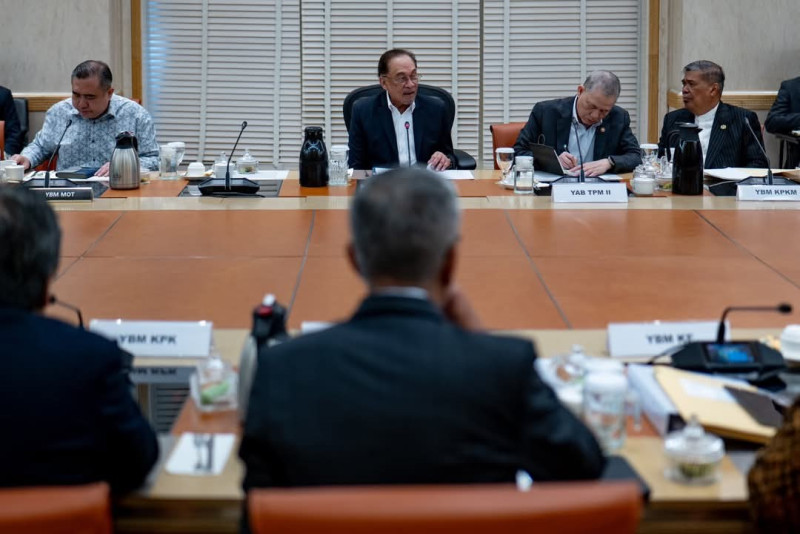
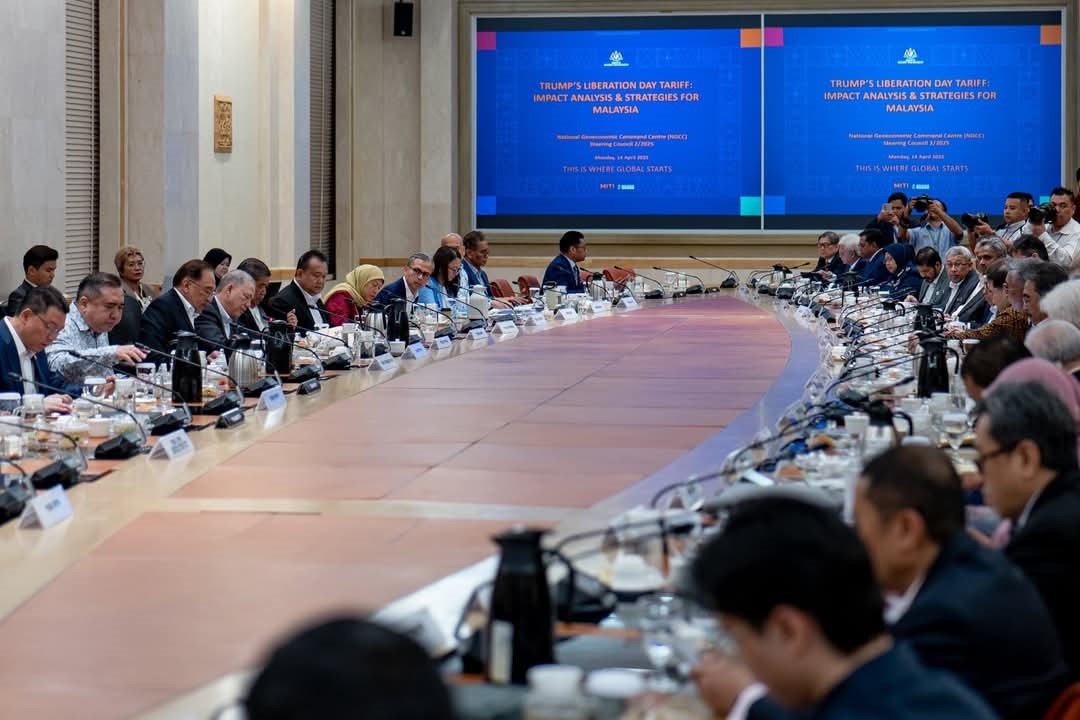
IN a high-level meeting chaired by Prime Minister Datuk Seri Anwar Ibrahim this morning, the National Geoeconomic Command Centre (NGCC) reviewed Malaysia’s strategic response to recent developments regarding reciprocal tariffs imposed by the United States Government.
The Ministry of Investment, Trade and Industry (MITI) presented a detailed analysis of the implications of the US’s 90-day tariff suspension, which was first announced by President Trump on 9 April 2025.
Malaysia is among more than 75 countries that received a temporary reprieve. The government has welcomed the move and plans to use the grace period to actively pursue negotiations with US authorities.
"The government would like to emphasise that Malaysia’s stance remains unchanged—we will not impose retaliatory tariffs on US imports," MITI stated. "Our objective is to reduce overall tariff levels and expand the list of exemptions for Malaysian exports to minimise potential negative impacts on our economy."
The government recognises the volatility of the current geopolitical and economic environment, particularly due to the inconsistent policy direction from Washington.
"The US government’s position seems to fluctuate daily," MITI noted, while affirming that Malaysian agencies are closely monitoring the situation and taking proactive measures to protect the country’s strategic interests.
Despite the ongoing tensions, the United States remains one of Malaysia’s key trading partners. In 2024, trade with the US accounted for 11.3% of Malaysia’s total trade volume. However, MITI highlighted Malaysia’s trade resilience, noting that 88% of its trade is distributed across other global markets.
"We must also understand that global supply chains are intricately connected," MITI added. "A disruption in one market can trigger a domino effect, directly affecting Malaysia’s economic links with other countries, especially in the case of intermediate goods."
While maintaining access to the US market remains important, Malaysia is prioritising mutually beneficial solutions through a broader trade strategy built around three central themes: reform, engage, and diversify.
At the meeting today, MITI present three main strategic pillars, stating, Malaysia will maintain continuous dialogue with the United States at all levels in the near term.
"We are still awaiting confirmation of an appointment with the United States Trade Representative (USTR)," MITI shared. Additional engagements are planned with domestic industries and relevant ministries to coordinate an effective national response.
Efforts are ongoing to expand trade relations with alternative blocs and emerging markets, including BRICS, MERCOSUR, and African nations. Malaysia is targeting export growth in sectors such as electrical and electronic goods, petroleum-based products, processed food, and palm oil.
The strategies involve is to leverage the MATRADE platform and boosting participation in Global Sourcing Programmes.
MITI added, the government is fast-tracking domestic economic reforms under key national frameworks such as the New Industrial Master Plan (NIMP) and the National Energy Transition Roadmap (NETR).
These reforms aim to improve supply chain resilience and enhance the global competitiveness of Malaysian exporters.
Over the past week, MITI has engaged with stakeholders, including exporters and capital market participants, to gauge the impact of the US tariff strategy.
"We are currently reviewing the proposals submitted by industry players, and these have been forwarded to the Ministry of Finance for further consideration," MITI said.
MITI stressed that Malaysia’s economic fundamentals remain solid. The government is responding with urgency, while retaining the flexibility to adapt to global developments.
The key ongoing interventions include:
- Accelerated Market Diversification: Focused on building trade with BRICS, MERCOSUR, and African countries. Priority sectors include high-demand export categories, with outreach reinforced through MATRADE and Global Sourcing initiatives.
- Export Competitiveness Boost: Programmes such as the Market Development Grant (MDG) and Empower Trade Association (ETA) have generated significant returns—RM20 billion in export sales under MDG with an ROI of 1:660, and RM10 billion via ETA in emerging markets like Kenya, South Africa, and Poland. The Global Sourcing Programme is also attracting major buyers, especially in electronics and medical technology.
- Import Surge Controls: To counter the risks of market overflow from redirected exports, Malaysia is ready to activate tools under the Anti-Dumping Duty Act, Countervailing Duties, and safeguard measures.
The government welcomed the announcement from JD.com on 11 April of a 200 billion yuan (US$27.35 billion) fund to support Chinese exporters in the domestic market, which could help alleviate global oversupply.
- Ease of Doing Business Reforms: MITI is committed to improving the business climate through regulatory streamlining and productivity enhancements to uphold Malaysia’s competitiveness.
- Localisation Policies: NIMP2030 outlines plans to increase local sourcing and domestic content in public procurement to strengthen national supply chains.
- NGCC Task Force Activation: The inaugural meeting of the NGCC Task Force will be convened soon. The task force will include representatives from MIDA, MATRADE, industry groups, economists, and policymakers.
Its objective is to fast-track the implementation of NGCC recommendations, with updates to be shared with the public at the right time.
MITI added by affirming that all efforts are aimed at mitigating the impact of US tariffs, particularly on Malaysian SMEs, while helping them diversify and scale into new markets.
The ministry will continue working closely with relevant government bodies—especially those overseeing Foreign Affairs, Finance, Economy, Commodities, and Human Resources—to navigate the evolving global economic landscape. – April 14, 2025