THE upcoming 46th ASEAN Summit in Kuala Lumpur is being viewed by experts as a critical opportunity for Southeast Asia to chart a coordinated path through mounting global trade uncertainties, particularly amid renewed tariff actions by the United States and expanding ties with blocs such as BRICS, the Gulf Cooperation Council (GCC), and China.
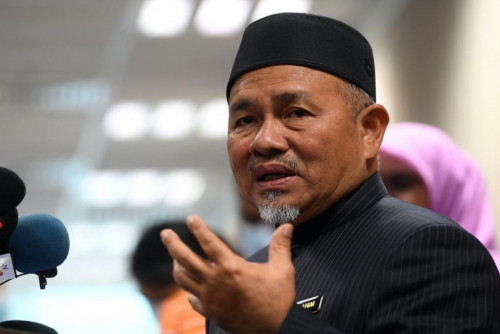
Professor Dr Nuradli Ridzwan Shah Mohd Dali from Universiti Sains Islam Malaysia (USIM) said the summit provides an essential platform for ASEAN to strengthen intra-regional trade while preparing for potential economic fallout from unpredictable US trade policy shifts.
“The Trump-era tariffs in 2018 had short-term impacts on Malaysia, particularly in market sentiment and export volatility, but stabilised within nine months.
“However, with the current 90-day suspension of US reciprocal tariffs, the unpredictability remains. Any escalation could dampen Malaysia’s Gross Domestic Product (GDP) growth, especially in export-reliant sectors,” he said.
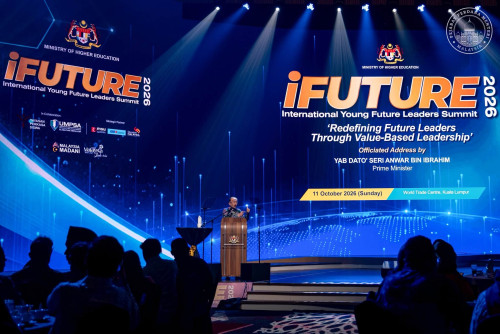
Prime Minister Datuk Seri Anwar Ibrahim had earlier noted that Malaysia’s export performance could be significantly affected if the tariffs are reimposed, though he remained cautiously optimistic due to Malaysia’s ongoing trade diversification.
Nuradli urged ASEAN to capitalise on frameworks such as the Regional Comprehensive Economic Partnership (RCEP) to reduce overreliance on any single trade partner.
“ASEAN has a chance to lead by example through strategic regional integration. Leveraging proximity and existing trade agreements will help cushion member states from external shocks,” he said, adding that Malaysia’s shift toward deeper trade with BRICS, GCC, and China is not a pivot away from the West, but a vital diversification move.
“In today’s multipolar world, maintaining balanced relations with both Western and Eastern powers is essential. Diversification is no longer optional. It is critical for sustainable growth.”
He also highlighted that infrastructure advancements, particularly under China’s Belt and Road Initiative (BRI), could enhance connectivity and pave the way for stronger economic cooperation among ASEAN, the GCC and China.
“If ASEAN and GCC can align trade standards and regulatory frameworks, and with China’s economic scale as a foundation, there’s strong potential to create a counterbalance to Western-centric trade blocs,” he said.
On ASEAN’s broader strategic role, Nuradli stressed the importance of neutrality in navigating great power rivalries.
“ASEAN should steer clear of major power rivalries and concentrate on being a trusted and pragmatic partner to all—a balanced approach that reinforces its central role in shaping regional diplomacy and trade,” he said.
Offering a contrasting view, Professor Dr James Chin of the University of Tasmania said the latest US tariffs were unlikely to have any long-term impact on Malaysia’s economy.
“The 24 per cent tax and other trade measures are clearly designed to push countries back to the negotiation table. Once new trade agreements are made, it could even open more doors for American companies in Malaysia,” he said.
He acknowledged Malaysia’s consistent commitment to open trade and said the push toward engaging with BRICS, GCC and China should focus on structural reform.
“To truly reduce dependency on the Western-dominated trade system, Malaysia must strengthen bilateral payment systems that bypass the US dollar. It’s not about stopping trade with the West, it’s about being smart and flexible.”
While political pressures may encourage alignment among ASEAN, the GCC and China, Chin said a fully integrated economic bloc remains unlikely for now.
“Politically, countries may come together out of concern over figures like Trump. But whether that results in a formal economic bloc is still a question mark,” he added.
The 46th ASEAN Summit will be held later this month in Kuala Lumpur, where Malaysia, as the 2025 ASEAN Chair, will also host the 2nd ASEAN-GCC Summit and the inaugural ASEAN-GCC-China Economic Summit. Trade diversification, economic realignment, and regional resilience are expected to top the agenda. - May 10, 2025