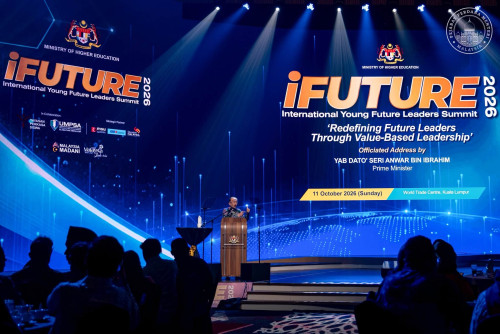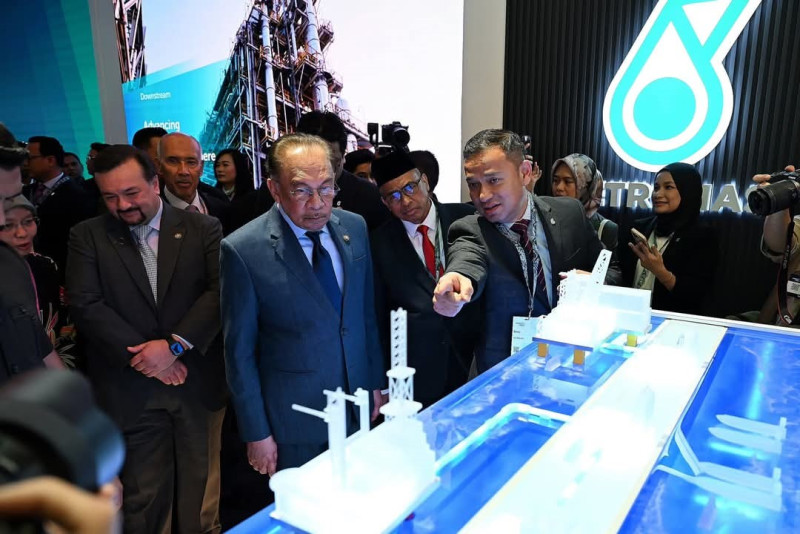
PRIME MINISTER Datuk Seri Anwar Ibrahim has urged the international community to critically reassess the dominant Western-led narrative of globalisation, particularly in the context of Asia’s role in the global energy transition.
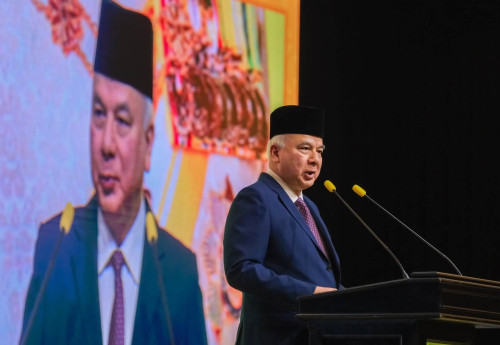
Delivering the opening address at the Energy Asia 2025 conference in Kuala Lumpur on Monday, Anwar asserted that Asia must no longer be seen merely as a recipient of globalisation but rather as a historic architect of civilisation and trade networks.
“From Makkah to Madinah, Melaka to China, all these point to the fact that Asian nations have long been part of the globalisation fabric—not merely beneficiaries of it,” he said.
Anwar voiced concern over the global economic landscape being shaped predominantly through Western ideological lenses, which he said had marginalised Asia’s historical and emerging significance in global energy discourse.
He warned of a growing trend of protectionism and narrow nationalism, which he described as a serious threat to global economic stability and transnational cooperation.
“Trust and cooperation are increasingly under strain when major powers adopt insular policies and impose sanctions on other nations in the name of security or economic competition,” he said.
In the global energy context, he explained, such geopolitical tensions and protectionist policies have disrupted supply chains, heightened market uncertainties, and weakened investor confidence in the sector’s long-term outlook.
In contrast, Anwar said Malaysia and ASEAN champion a more balanced and pragmatic approach to the energy transition, one that is open and cooperative, ensuring that developing countries’ rights to growth are not undermined.
“Diplomacy must prevail over autocracy. We believe in healthy competition that delivers mutual benefits,” he added.
Addressing over 4,000 delegates from around the world, Anwar called for clearer and more consistent policy frameworks to encourage investment in the energy sector and safeguard market confidence.
He highlighted that Asia now accounts for over 50 per cent of global energy consumption and 60 per cent of carbon emissions, making the region’s role pivotal in realising global climate ambitions.
Despite these challenges, he noted that Southeast Asian countries remain firmly committed to the net-zero agenda, with a combined clean energy capacity target of 11,000 GWh by 2030.
Malaysia, he added, continues to lead regionally with the passage of the 2025 Carbon Capture & Storage (CCS) Bill to support national decarbonisation strategies.
Petronas is set to launch three offshore CCS projects and has entered strategic partnerships with companies from Japan, Korea, France, and Italy to position Malaysia as a regional carbon storage hub.
In parallel, the government has earmarked RM43 billion through Tenaga Nasional Berhad (TNB) to strengthen the country’s electrical grid, including the deployment of battery storage and artificial intelligence technologies.
However, Anwar stressed that energy transition must not be viewed solely through the lens of emissions but also as a matter of social justice.
“Energy transition is not just about technology. It must ensure equitable access to affordable, safe energy for all, including the low-income groups,” he said. “It must protect people’s rights to development, employment and basic infrastructure.” - June 16, 2025