BANK Negara Malaysia (BNM) has underscored the pressing need for wage reform to address cost-of-living pressures, warning that monetary policy alone cannot compensate for declining real incomes and a growing disconnect between wage growth and productivity.
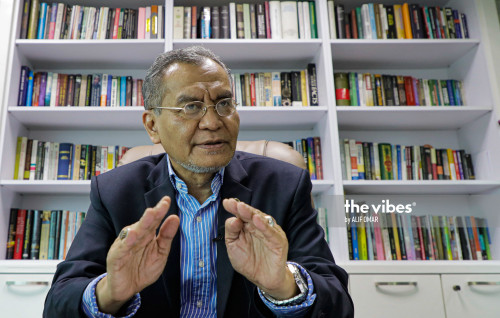
Speaking at the Sasana Symposium 2025 during a panel on ‘Managing Inflation, Easing Cost: A Policy Perspective’, Deputy Governor Datuk Marzunisham Omar (pic) highlighted that while inflation has cooled thanks to prompt policy interventions, price levels remain high, eroding household purchasing power in the face of modest wage growth.
“From the first quarter of 2020 to the first quarter of 2025, the Consumer Price Index rose by 9.8 per cent, with food and beverages increasing by 17.5 per cent,” he said.
“In contrast, nominal private sector wages per worker rose by just 7.9 per cent over the same period… So, in real terms, wages per worker declined by 1.9 per cent, hence why we are feeling the pressure of the rising cost of living.”
Marzunisham noted that from the first quarter of 2022 to the second quarter of 2025, productivity per worker rose by 7.4 per cent, yet real wages fell.
“This clearly illustrates, particularly at the micro level, a structural misalignment between productivity gains and wage growth,” Bernama quoted him saying.
To address this, Malaysia must pivot towards creating more high-skilled, higher-paying employment opportunities, driven by the right mix of investment.
He cited a notable increase in high-skill jobs — now comprising around 30 per cent of the workforce, up from 25 per cent in recent years — alongside strong investment approvals in 2023 and 2024.
However, he acknowledged structural weaknesses in labour market absorption, particularly for graduates.
“Between 2022 and 2023, around 260,000 fresh graduates entered the job market. However, only about 150,000 high-skilled jobs were created annually during that period, resulting in a gap of nearly 100,000.”
This mismatch has resulted in underemployment, with 36 per cent of graduates in mid- or low-skilled roles.
Employers, meanwhile, report difficulties in finding suitably trained workers, pointing to a systemic skills mismatch and deficiencies in training pipelines.
Marzunisham suggested Malaysia explore differentiated minimum wages based on skill levels, as adopted in some other countries, and advocated for a more inclusive approach to wage-setting involving all relevant stakeholders.
“The collaboration and engagement between employers, employees, and government unions, for example, is important, so that all these actors… come into engagement in deciding how wages should be increased in the country, rather than leave it to the public forces,” he said. - June 17, 2025