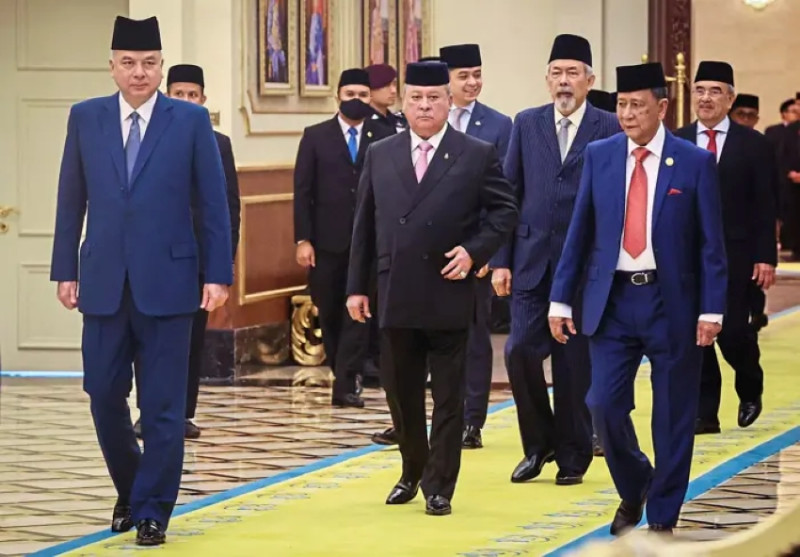
THE 269th Meeting of the Council of Rulers, which convenes today until 17 July, is expected to focus on the pressing issue of appointing successors to the top two posts in the Malaysian judiciary — the Chief Justice and the President of the Court of Appeal — following the recent mandatory retirements of their respective holders.
The positions became vacant after Chief Justice Tun Tengku Maimun Tuan Mat and Court of Appeal President Tan Sri Abang Iskandar Abang Hashim reached the mandatory retirement age of 66 on 2 and 3 July respectively.
Given the gravity of these appointments, the Council of Rulers plays a vital constitutional role in the process, as stipulated under Article 122B(1) of the Federal Constitution.
The Chief Justice is appointed by the Yang di-Pertuan Agong on the advice of the Prime Minister, following consultation with the Council.
This provision also applies to the appointments of the President of the Court of Appeal, Chief Judge of Malaya, and Chief Judge of Sabah and Sarawak.
The process underscores the Council’s role not only as a symbol of national unity but also as a mechanism of constitutional oversight in high-level judicial appointments.
The integrity and credibility of prospective candidates are likely to be central to the deliberations, given public and institutional scrutiny over the judiciary’s independence and reputation.
Commenting on the matter, Professor Datuk Dr Sivamurugan Pandian, a political analyst from Universiti Sains Malaysia, said that while the decision ultimately rests with the Yang di-Pertuan Agong, it is made upon the advice of the Prime Minister and only after consultation with the Council of Rulers.
“Undoubtedly, His Majesty will consider all perspectives before reaching any decision,” he told Sinar Harian.
“When the matter is brought to the Council of Rulers, the meeting may deliberate not only on the appointments but also current issues, including the question of integrity.”
Referring to Article 122B of the Constitution, he added, “The Council of Rulers may offer views and feedback during the consultation process, before any decision is finalised.”
“In my view, any decision must be grounded in the Constitution, be granted royal assent by the Yang di-Pertuan Agong, take into account the Council’s consultation, and reflect the public’s general sentiment,” he said. - July 15, 2025