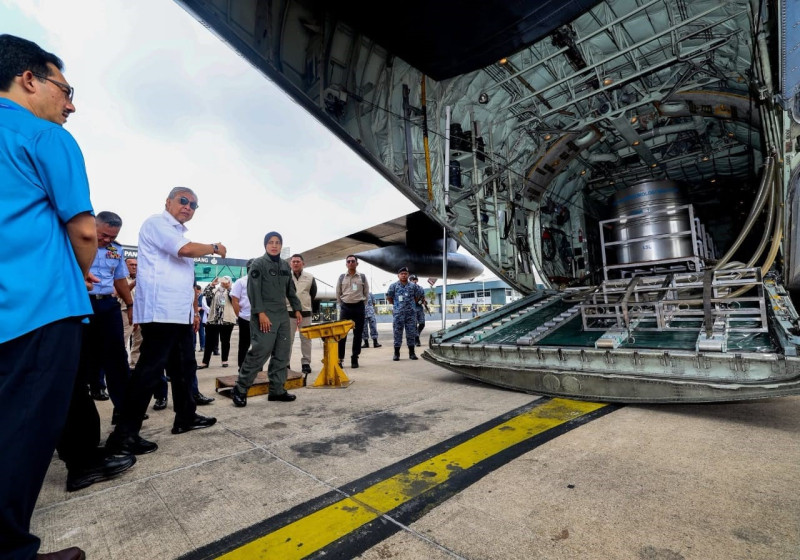
A CLOUD seeding operation was launched over the Bukit Merah Dam in Perak on Monday as water levels at the reservoir plunged to a critically low 12.21 per cent, with authorities warning of a worsening crisis amid the ongoing Southwest Monsoon.
The operation was coordinated by the National Disaster Management Agency (NADMA) in collaboration with the Royal Malaysian Air Force (RMAF), deploying a C-130 aircraft carrying 6,000 litres of sodium chloride solution from Subang Air Base at around 11.30am.
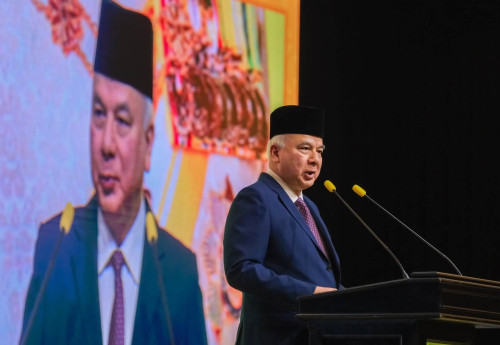
Deputy Prime Minister Datuk Seri Ahmad Zahid Hamidi, who also chairs the National Disaster Management Committee, said the emergency measure was undertaken due to the severe drop in water depth at the dam to just 19.8 feet.
“The situation is extremely critical. Based on the reports we’ve received, surrounding areas—especially paddy fields and domestic water supply zones—are in urgent need,” he said during a press conference following the flight.
Cloud seeding was conducted on towering cumulus clouds moving from the Straits of Malacca towards the northern Peninsula. Zahid confirmed that heavy rain was reported within 45 minutes of the operation, describing the outcome as both scientifically guided and “aided by divine intervention”.
“We hope this will help irrigate the paddy fields, support aquaculture, and mitigate the current water shortage,” he added.
The operation was carried out amid rising national concerns about extreme heat. Zahid revealed that six locations across Malaysia have recorded temperatures reaching 37°C for three consecutive days due to the dry monsoon season.
“These include three districts in Peninsular Malaysia—Bandar Baru in Kedah, Selama in Perak, and Temerloh in Pahang—as well as three in East Malaysia: Limbang in Sarawak, and Tenom and Pitas in Sabah,” he said.
Zahid stressed the government’s readiness to respond to the effects of severe heat and water scarcity. He noted that cloud seeding would be carried out wherever deemed necessary, especially in catchment areas essential for domestic, industrial, and agricultural water supply.
“This isn’t just about waiting for requests. Once conditions are categorised as critical—meaning dam levels fall below 30 per cent—we will act proactively,” he said.
Over 3,300 tube wells are also on standby for use by the Fire and Rescue Department (JBPM) to mitigate fire risks, particularly in peatland areas vulnerable to drought.
“These wells have been in place for some time. I’ve instructed JBPM to conduct cleaning and readiness checks, and to deploy them where needed,” Zahid said.
He also urged the public to limit outdoor activities in areas currently experiencing extreme heat.
The Deputy Prime Minister made these remarks after joining the cloud seeding mission from Subang. - August 4, 2025