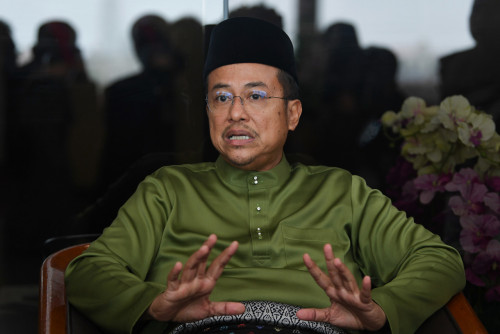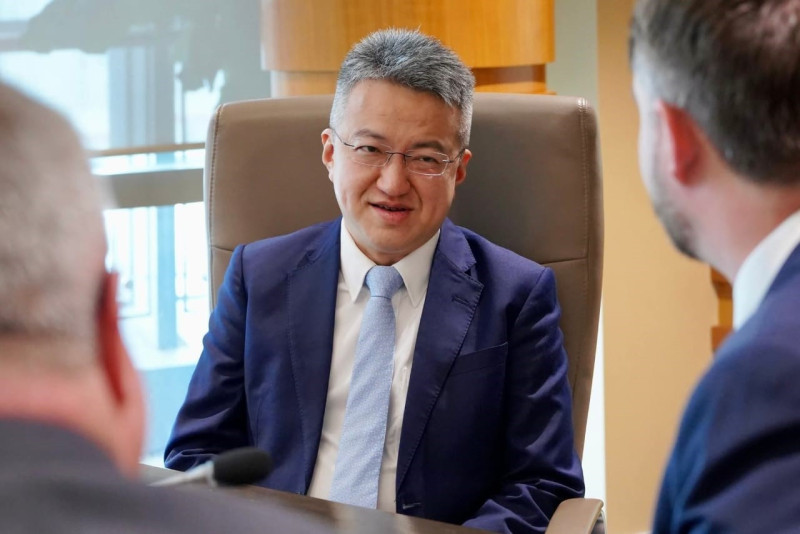
DEPUTY Minister of Investment, Trade and Industry Liew Chin Tong, called for a fundamental reframing of ASEAN’s role amid what he described as “a time of unprecedented crisis and change”.
In a keynote address marking ASEAN’s 58th anniversary and the opening of the 7th ASEAN Economic Integration Forum, Liew began by recounting ASEAN’s origins in 1967—a time shaped by Britain’s military withdrawal from Southeast Asia and the thawing of tensions between Malaysia and Indonesia following Konfrontasi. The regional bloc, he said, was born of necessity, not idealism, in the context of a shifting world order.
“In short, ASEAN was formed to solidify newfound peace between Malaysia and Indonesia, and to avoid wars among member states in a time of chaos,” he said.
The 1971 Kuala Lumpur Declaration, which established Southeast Asia as a Zone of Peace, Freedom and Neutrality (ZOPFAN), was cited by Liew as a guiding principle still relevant today. “ASEAN does not need the ‘security umbrella’ of any superpowers, but to build peace and prosperity among ourselves,” he remarked.
Shifting focus to present-day challenges, Liew described a “polycrisis” marked by regional conflicts, economic fragility, ageing populations, and the accelerating climate emergency. He referenced the recent Cambodia-Thailand border conflict as a reminder of the region’s fragility and praised Prime Minister Anwar Ibrahim’s role in facilitating swift de-escalation.
He warned that ASEAN’s decades-long reliance on export-led industrialisation, underpinned by Western consumer markets, is no longer sustainable. “The United States no longer wants to be the consumer of last resort,” he said.
“ASEAN must become a consumer base in its own right by building a strong middle class.”
Liew also underscored the urgency of addressing inequality, noting the danger posed by a rapidly ageing population across Southeast Asia.
“We cannot afford to have hundreds of millions of people, both poor and old,” he cautioned, calling for more empathetic and inclusive economic policies.
On climate, he highlighted ASEAN’s vulnerability and backed ambitious regional efforts like the ASEAN Power Grid, which he described as “a great idea that needs financing”.
Significantly, Liew said ASEAN’s institutional capacity must be strengthened if the region is to meet its goals. “ASEAN needs much more funding to create common goods, such as a Secretariat with more resources, capacity, and capability,” he urged.
Quoting Prime Minister Datuk Seri Anwar Ibrahim’s remarks in Jakarta last week, he stressed: “We cannot afford an ASEAN that is weak, fragmented, or in conflict with each other – our national fortunes rise or fall with the region.”
He said the ASEAN Community Vision 2045, adopted at the 46th ASEAN Summit in Kuala Lumpur this May, provides a comprehensive roadmap for the decades ahead. The framework centres on resilience, innovation, digital transformation, and sustainable, people-focused development.
“We will strengthen political-security cooperation to sustain peace and stability, accelerate economic integration, and foster socio-cultural development that leaves no one behind,” he said.
Concluding on a hopeful note, Liew echoed the ASEAN anthem’s refrain: “We dare to dream, we care to share.”
“Let us build a peaceful, resilient, inclusive and sustainable ASEAN,” he said. - August 8, 2025