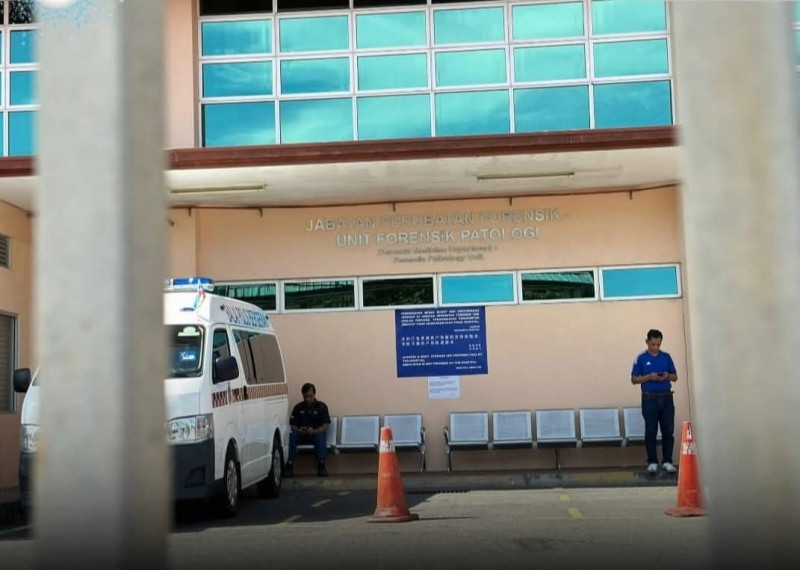
THE post-mortem examination on the body of 13-year-old Zara Qairina Mahathir began today at Queen Elizabeth I Hospital (HQE I) in Kota Kinabalu, assisted by a forensic expert from Peninsular Malaysia.
The post-mortem is being led by Dr Jessie Hiu from HQE I and will be assisted by Dr Khairul Anuar, a consultant forensic specialist from Hospital Sultan Idris Shah (HSIS) in Serdang, according to the family’s lawyer, Hamid Ismail.
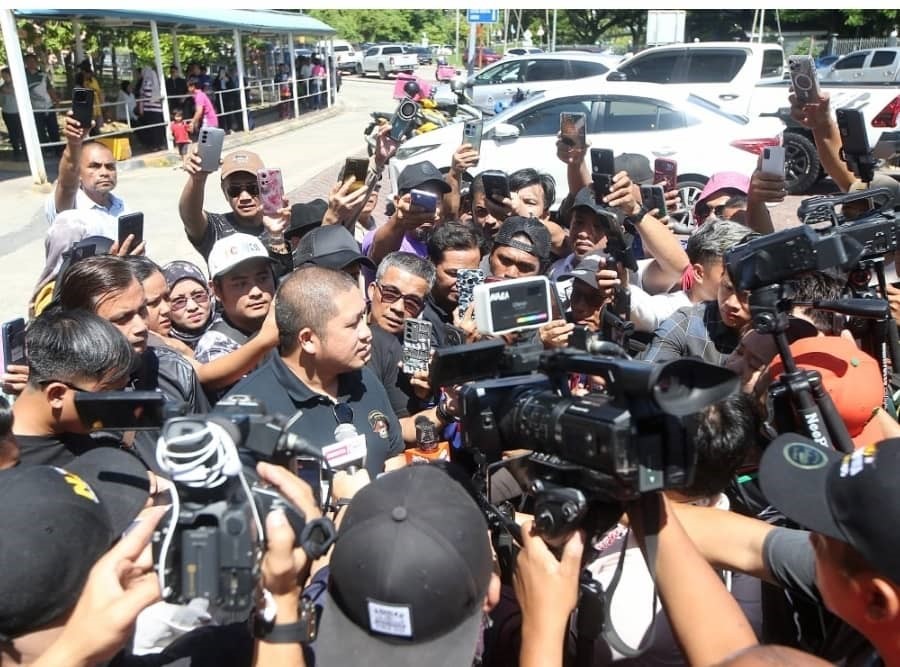
“We’re waiting for Dr Khairul to arrive around 11.30am. Only then will the full autopsy proceed,” Hamid told reporters outside the hospital’s forensic department.
He said the inclusion of a Peninsular-based expert was intended to strengthen the credibility of the investigation and prevent any allegations of bias in the cause of death findings.
Dr Jessie had earlier provided a full briefing to Zara’s mother, Noraidah Lamat, at 9.00am. Noraidah, who had formally requested the exhumation, arrived at the hospital at 8.30am to be present for the procedure.
“The post-mortem could take between four and five hours, depending on the complexity of the examination,” Hamid said, adding that Zara’s body would be returned to Sipitang for reburial once the process concludes.
Zara’s remains had been exhumed from the Tanjung Ubi Muslim Cemetery in Sipitang yesterday evening, following instructions from the Attorney General’s Chambers for further investigation into the circumstances of her death.
Zara, a Form One student at Sekolah Menengah Kebangsaan Agama (SMKA) Tun Datu Mustapha Limauan in Papar, died on 16 July after allegedly falling from the third floor of her dormitory.
She was found unconscious in a drain at around 4am and later succumbed to her injuries in hospital. Police have since said they are not ruling out the possibility of bullying.
The post-mortem is being led by Dr Jessie Hiu from HQE I and will be assisted by Dr Khairul Anuar, a consultant forensic specialist from Hospital Sultan Idris Shah (HSIS) in Serdang, according to the family’s lawyer, Hamid Ismail.
“We’re waiting for Dr Khairul to arrive around 11.30am. Only then will the full autopsy proceed,” Hamid told reporters outside the hospital’s forensic department.
He said the inclusion of a Peninsular-based expert was intended to strengthen the credibility of the investigation and prevent any allegations of bias in the cause of death findings.
Dr Jessie had earlier provided a full briefing to Zara’s mother, Noraidah Lamat, at 9.00am. Noraidah, who had formally requested the exhumation, arrived at the hospital at 8.30am to be present for the procedure.
“The post-mortem could take between four and five hours, depending on the complexity of the examination,” Hamid said, adding that Zara’s body would be returned to Sipitang for reburial once the process concludes.
Zara’s remains had been exhumed from the Tanjung Ubi Muslim Cemetery in Sipitang yesterday evening, following instructions from the Attorney General’s Chambers for further investigation into the circumstances of her death.
Experts say a comprehensive examination of the body is essential to determine the exact cause of death, even if the remains have been buried for some time.
“Forensic teams don’t always require 100 per cent of a perpetrator’s DNA,” said forensic pathologist Amidon Anan. “Even partial traces are often sufficient to implicate individuals involved.”
He added that DNA is highly resilient and can remain intact even after long periods of burial.
“External and internal examinations — including of the skull, chest, abdomen, pelvis and limbs — are key. Tissues, fluids and radiological scans will be taken for further toxicology, microbiology, histology, and forensic photography,” he said.
Amidon noted that some cases may not require a full internal examination if the cause of death can be clearly identified through external injuries or circumstances.
Meanwhile, DNA expert Prof Dr Zafarina Zainuddin of Universiti Sains Malaysia emphasised that DNA traces from third parties could still be detected in decomposed remains, but interpreting such findings can be complex.
“In Zara’s case, identification is not an issue. But if there is third-party DNA, authorities must determine whether it was transferred through force, such as during a struggle, or through prior contact,” she said.
Dr Zafarina added that further analysis, such as toxicology tests on hair or soil samples from the burial site, could reveal drug use or trauma such as falls from height.
“These examinations can help determine whether a foreign substance was introduced into the body, or if bone fractures are consistent with the alleged fall,” she explained.
Police have not ruled out foul play. On 31 July, Sabah Police Commissioner Datuk Jauteh Dikun confirmed that investigators were exploring the possibility that Zara had been bullied. - August 10, 2025