A PRELIMINARY report into the helicopter crash in Bentong, Pahang, which claimed the life of a ground crew member, has found that both the pilot and the ground engineer failed to adhere to prescribed safety procedures during hot refuelling operations.
The Air Accident Investigation Bureau (AAIB), in its initial findings released on 6 March, stated that the unsafe conduct of both personnel introduced serious hazards. However, it noted that the probable cause of the incident would only be determined in the final report.
Hot refuelling—refilling the aircraft with the engine running and rotor turning—is commonly used in operations requiring rapid turnaround times.
According to the AAIB report, a Standard Work Practice (SWP) was issued by a contractor engaged by Tenaga Nasional Berhad (TNB) to its lessee, mandating protocols to ensure the safety of the refuelling crew, the aircraft, and its surroundings.
Part of this agreement required the lessee to oversee and monitor flight operations, ensuring that all subcontracted parties complied with established commercial and safety requirements.
However, video footage from 5 February, the day before the crash, showed that the crew failed to follow the SWP during hot refuelling.
"Based on video footage of PK-ZUV (the helicopter) conducting hot refuelling a day before the accident, it was observed that the crew from the lessor did not adhere to the prescribed SWP for hot refuelling. Such non-compliance poses a potential risk and could lead to unsafe conditions," the report stated.
"The unsafe actions of both the pilot and the ground engineer introduced potential hazards. The helicopter was hovering with its rotor blades still running while moving closer to the ground engineer, who was positioned directly beneath the main rotor disc," it added.
The SWP requires crew members to remain at a safe distance from the landing point and to approach the aircraft only after receiving a clear instruction—specifically, a thumbs-up—from the pilot.
"However, the crew were already positioned beneath the helicopter while it was still hovering and approaching for landing, indicating a clear violation of this procedure," the bureau said.
It further stated that "when the lessor fails to comply with safety regulations, it is the lessee's responsibility to oversee and monitor operations to ensure adherence to established requirements. In this case, the absence of a safety officer from the lessee at the helicopter landing site to supervise the hot refuelling process contributed to crew complacency, further increasing operational risks."
The pilot, who held the necessary qualifications and authorisation for the flight, was also previously involved in an accident in 2019 involving the same type of helicopter. That incident occurred in Indonesia following a suspected engine failure. The AAIB noted it is still awaiting the final report from Indonesian authorities.
As a precaution, the AAIB has recommended that the pilot’s company arrange for a consultation with an aviation medical specialist to conduct a comprehensive mental and physical health evaluation.
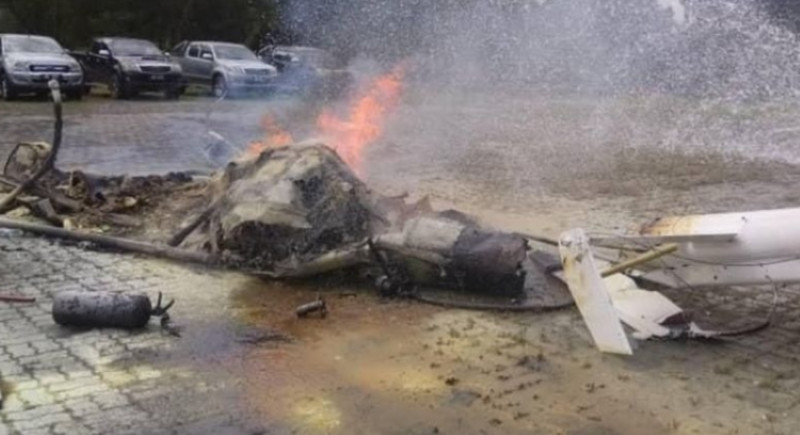
The accident occurred on 6 February at 10.20am, when a Bell 206L4 helicopter, bearing registration PK-ZUV and operated by PT. Zaveryna, crashed near a hot spring pool at Kampung Janda, along the old Kuala Lumpur–Bentong road.
The aircraft had been conducting aerial work for TNB since 21 January. During the incident, a member of the ground crew was fatally struck by the helicopter’s rotor blades. The pilot survived, sustaining only minor injuries. - August 12, 2025