DEPUTY Prime Minister and Minister of Energy Transition and Water Transformation Datuk Seri Fadillah Yusof has called upon ASEAN’s governors and mayors to assume a central role in transforming the region’s urban future, advocating for cities that are sustainable, resilient, and inclusive.
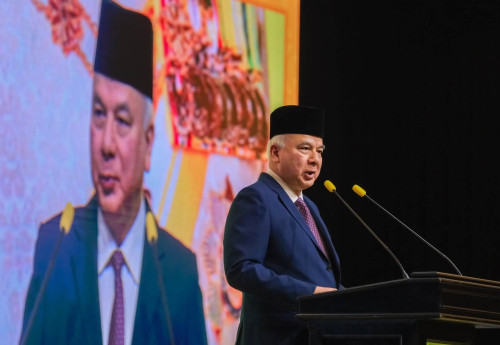
Speaking at the joint opening of the 2025 ASEAN Sustainable Urbanisation Forum (ASUF), the ASEAN Governors and Mayors Forum (AGMF), and the Meeting of Governors and Mayors of ASEAN Capitals (MGMAC) in Kuala Lumpur on Tuesday, Fadillah stressed the importance of local leadership in navigating the complex pressures of urban growth, climate change, and digital transformation.
“Our cities and regions stand at a defining moment. They are the engines of prosperity, the guardians of our culture, and the frontiers of innovation,” he said.
“Yet, as we navigate the powerful currents of rapid urbanisation, climate change, and digital transformation, we must ask ourselves: How do we shape cities that are not only prosperous, but also inclusive, equitable, and resilient?”
Fadillah reaffirmed Malaysia’s role as ASEAN Chair in 2025, noting that this year’s theme, *ASEAN Future Cities and Regions: Inclusivity and Sustainability*, reflects not only a shared aspiration but a regional necessity.
Quoting Prime Minister Datuk Seri Anwar Ibrahim’s remarks at a recent special meeting on regional tensions, he reminded delegates: “ASEAN upholds its role as a credible and principled force on the global stage, guided by diplomacy and a shared commitment to human dignity.”
Fadillah highlighted the scale and stakes of ASEAN’s urban future, with over 370 million people already living in urban areas and that figure expected to rise to 70 per cent by 2050. These cities, he said, are generating 70 per cent of ASEAN’s GDP and powering a regional economy valued at \$3.8 trillion.
“From Jakarta’s thriving tech start-ups to Singapore’s financial leadership, our cities are the engines of ASEAN’s growth,” he said. “But prosperity must be shared. Gleaming skyscrapers should not cast shadows over informal settlements.”
He warned of escalating environmental threats including floods, rising sea levels, and air pollution, noting, “These are not mere warnings – they are rallying calls to action. Sustainability is not optional; it is the very condition for our survival.”
Fadillah argued that inclusive urbanisation must ensure fair access to opportunity and infrastructure. “Inclusivity means that no one is left behind – not women, youth, the elderly, or persons with disabilities. It means affordable housing in Surabaya, accessible public transport in Bangkok, and digital inclusion for rural migrants.”
He called on ASEAN cities to scale up innovation through frameworks such as the ASEAN Smart Cities Network, the ASEAN Sustainable Urbanisation Strategy, and the United Nations Sustainable Development Goals, while remaining sensitive to each city’s local context.
“From Bandung’s digital governance to Brunei’s smart water management, we already have proven innovations. The task before us is to scale them up – and to do so without delay.”
Turning to local governments, Fadillah asserted that mayors and governors must no longer be seen as secondary players but as vital agents of change.
“You are not peripheral actors – you are the frontline architects of ASEAN’s transformation,” he said, urging greater collaboration among regional city leaders, enhanced digital and planning capabilities, systematic cross-border knowledge sharing, and a stronger collective voice in ASEAN-level policymaking.
“Your leadership will determine whether our cities become models of equity and environmental harmony, or cautionary tales of unchecked growth,” he added.
Fadillah urged all stakeholders to build a legacy of urban resilience and shared progress: “We stand at the dawn of a transformative era – where cities are not merely monuments of steel and glass but living testaments to our shared vision: the ASEAN where no voice is unheard, no community forgotten, and no progress made at the expense of our planet.”- August 12, 2025