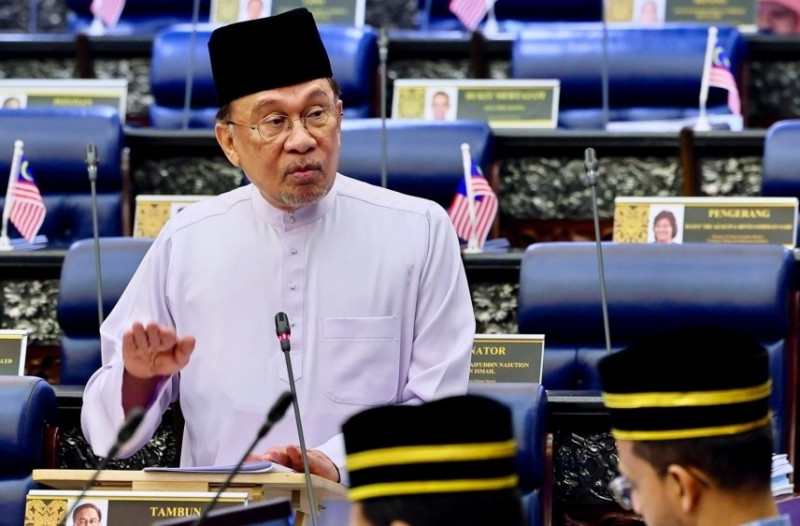
MALAYSIA will scale up its efforts to empower local entrepreneurs and help them break into global markets under Budget 2026, with Prime Minister and Finance Minister Datuk Seri Anwar Ibrahim emphasising that, “Malaysia must dare to penetrate the world market. Our people’s creativity must not remain confined within national borders.”
As part of the Fourth Tranche (Tekad Empat), the fourth strategic thrust of the MADANI Budget, the Government is prioritising the expansion of the country’s export ecosystem and ramping up financing support for local businesses, particularly micro, small and medium enterprises (MSMEs).
To support Malaysian firms exploring new frontiers, Syarikat Jaminan Pembiayaan Perniagaan (SJPP) will guarantee up to 70% of financing for mid-sized export-oriented companies, with a total guarantee value of up to RM5 billion.
MATRADE’s Market Development Grant receives an allocation of RM60 million to help MSMEs export homegrown products to both established and emerging markets, including Africa, Latin America and Central Asia.
In response to global tariff tensions, EXIM Bank will provide RM500 million in soft loans to cushion Malaysian exporters. Meanwhile, the Government will channel RM10 million to launch the Strategic Economic, Trade and Investment Networking Programme to anchor its commercial presence in high-potential markets, following the rationalisation of overseas missions.
RM50 Billion Boost for Local Enterprises
Budget 2026 also commits to strengthening domestic entrepreneurship, with RM50 billion in Government-backed loans and guarantees made available to local businesses—an increase from RM40 billion previously.
SJPP, which has backed over RM100 billion in loans for more than 84,000 SMEs since its inception, will expand its guarantee ceiling from RM20 billion to RM30 billion. Notably, SJPP’s scope will now also cover micro-enterprises.
“Rising demand from businesses for SJPP-backed financing signals the scheme’s growing success, including among Chinese entrepreneurs,” Anwar noted.
In 2024 alone, Bank Simpanan Nasional (BSN) disbursed nearly RM250 million in micro-financing, benefiting over 7,200 entrepreneurs from diverse backgrounds—including Bumiputera, Chinese, Indian, Sabahans, Sarawakians, women, youth, hawkers and vulnerable groups.
More than RM2.5 billion in micro-financing will be channelled through BSN and TEKUN next year. In addition, RM50 million will be allocated to the Malaysian Cooperative Commission to fund cooperative enterprises nationwide.
BNM Shifts to Guarantee-Based SME Support
Since the pandemic, Bank Negara Malaysia (BNM) has disbursed over RM29 billion in SME funding to 86,000 businesses. Going forward, the central bank’s SME Fund will shift from direct lending to guarantee-based support—focusing on underserved segments and high-impact sectors like digitalisation, automation, innovation and green transition.
To help SMEs embrace Industry 4.0, development financial institutions (DFIs) will provide nearly RM1 billion in grants and loans for business automation and digitalisation.
The Malaysian Communications and Multimedia Commission (SKMM) will allocate RM350 million to strengthen Pusat NADI centres, with the goal of equipping rural entrepreneurs for success in e-commerce and online enterprise.
Reducing Operational Costs for SMEs
In a move to lower business costs, the Government proposes to raise the salary threshold for stamp duty exemption on employment contracts from RM300 to RM3,000 per month, effective 1 January 2026.
This adjustment aims to ease the financial burden on SMEs while encouraging formal employment contracts, particularly in the lower-income bracket.
Together, these initiatives underscore the Government’s drive to turn Malaysia into both a competitive export hub and a fertile ground for innovation-driven enterprise. - October 10, 2025