THE inclusion of Malay reserve land in urban areas such as Bandar Malaysia could serve as a powerful driver of economic growth for the Malay community, provided it is managed with transparency, foresight and inclusive policies, a senior media and academic figure has said.
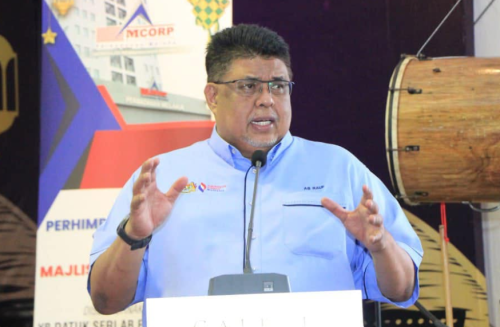
Dr Mohd Safar Hasim, a member of the Malaysian Press Institute’s Board of Trustees and former Universiti Kebangsaan Malaysia academic, said a properly executed urban development strategy could elevate the Malay community’s asset ownership and participation in the modern economy.
“With proper management, such land can increase the asset value of the Malay community and ensure their continued presence in the mainstream of modern development, thereby preventing marginalisation in urban spaces,” he said in an interview with Bernama.
However, he warned that treating urban Malay reserve land merely as a symbolic gesture, without producing real economic returns, risks entrenching inequality—especially if such assets are monopolised by elites or government-linked companies, leaving ordinary Malays behind.
He called for a comprehensive master plan for urban Malay reserve development, with clear targets for job creation, affordable housing, and the integration of small and medium Malay enterprises (SMEs).
“The government must ensure Malay reserve land is not merely presented as a ‘quota’ in planning documents but truly functions as an economic driver,” he said.
Mohd Safar proposed the establishment of a statutory body or independent trust to professionally manage these lands, free from political interference. He also suggested a profit-sharing framework to ensure original landowners and local communities receive equitable returns from developments.
“All transactions, leases and projects should be made public to prevent manipulation, while a public consultation mechanism should be adopted to ensure that the voices of local Malays are heard,” he added.
He also argued that the legal framework governing Malay reserve land—the Malay Reservation Enactment 1913—no longer reflects modern economic realities, having been designed during the colonial era to preserve a rural, agrarian Malay society.
“The objective was to keep Malays as farmers and villagers, not participants in the urban economy. As a result, when Malay reserve land is incorporated into urban developments like Bandar Malaysia, a clear disconnect emerges,” he said.
Among the main constraints of the existing law are transaction restrictions that depress market value, prevent commercial use, and limit financing options—since such land cannot be used as collateral or sold to non-Malays.
“Amending an old law is like renovating an old house. Even if you repaint the walls or replace the roof, the foundation remains weak and cannot support new ambitions such as technological progress, the digital economy or global integration,” he said.
He advocated for entirely new legislation that preserves Malay ownership while allowing commercial and market-oriented uses, including syariah-compliant investments and leasing or joint ventures with non-Malay entities.
“We need a new law, one built from scratch with objectives and principles that reflect the realities of today. Although it may take time to develop and pass, such legislation will be more resilient and effective.
“It’s not about repairing an old house, but constructing a new one that is solid, modern and aligned with the aspirations of the urban Malay generation,” he said.
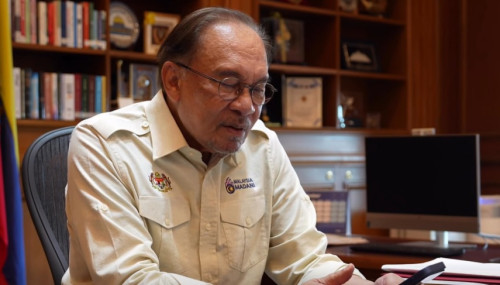
In his 2026 Budget speech last Friday, Prime Minister Anwar Ibrahim announced that an additional 20.23 hectares of land in Bandar Malaysia would be designated as Malay reserve land.
Anwar, who also serves as Finance Minister, said the land’s owner, Petronas, is preparing a master plan and expects to begin the first phase of development by the end of 2026. - October12, 2025