THE Sabah Government remains steadfast in its efforts to ensure a stable and sufficient electricity supply across the state, with a dual approach that balances immediate solutions with long-term sustainable energy development.
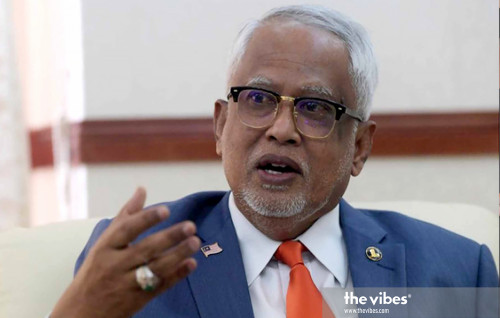
State caretaker Finance Minister Datuk Seri Masidi Manjun underscored the importance of energy security not only for the people of Sabah but also to attract foreign and domestic investment into the state.
“To stabilise the state’s power supply, the government is encouraging renewable energy generation from sources such as solar, hydro and river systems as part of its long-term plan,” Masidi said in an interview with Sabah Media.
In the short and medium term, the state is introducing a series of pragmatic measures to address the existing shortfall in energy reserve capacity. Among these is a policy shift allowing management bodies of new industrial zones to construct their own power plants or to engage Independent Power Producers (IPPs).
“This approach enables industrial zones to generate their own electricity instead of depending solely on a single entity — Sabah Electricity. The excess electricity saved can then be redirected for domestic consumption,” he explained.
The move, Masidi said, is designed to boost investor confidence, particularly in the manufacturing and heavy industry sectors, by reducing risks of power disruption.
“One of the main concerns among potential investors has always been the shortage of electricity supply. By allowing industrial zone management and major investors to develop their own IPPs, energy continuity at their sites will be better guaranteed,” he said.
Masidi stressed that the initiative is a critical part of Sabah’s broader strategy to build a robust and resilient energy ecosystem, supporting the state’s industrial growth trajectory.
He also addressed public concerns regarding electricity outages, clarifying that while the state government is actively involved in addressing supply challenges, Sabah Electricity Sdn Bhd (SESB) remains a Federal Government-linked entity owned by Tenaga Nasional Berhad (TNB).
“People often blame the state government when there are power outages, when in fact Sabah Electricity is owned by TNB. In other words, electricity generation remains under federal control.
“That said, it does not mean the state government is washing its hands of the issue. We continue to assist and will keep doing so — this is a shared responsibility,” he stated.
In a decisive step towards energy autonomy, the Sabah State Legislative Assembly last year passed three key Bills — the Sabah Energy Commission (Amendment) Bill 2024, the Electricity Supply Bill 2024, and the Renewable Energy Bill 2024 — formally enabling the state government to take over regulatory control of the electricity and renewable energy sectors from the Federal Government.
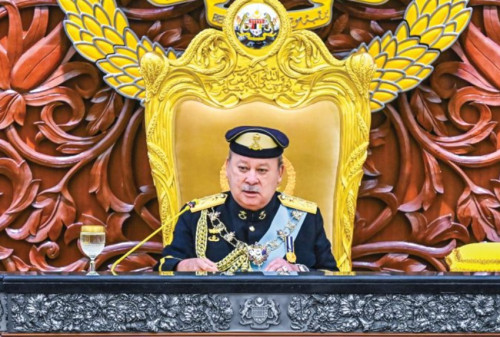
Caretaker Chief Minister Datuk Seri Hajiji Noor, during the winding-up speech on the Sabah Energy Commission (Amendment) Bill, announced the state’s intention to assume full ownership of SESB within the next seven years, as part of a long-term goal to reclaim Sabah’s energy sovereignty.
Currently, 83 per cent of SESB shares are held by TNB, with the remaining 17 per cent owned by the Sabah Government.
The state’s energy policies are aligned with the Sabah Energy Roadmap and Masterplan 2040 (SE-RAMP 2040), which charts a path towards a low-carbon, energy-resilient future by the year 2040. - October 16, 2025




.jpeg)