PAKATAN Harapan (PH) faces mounting pressure to rebuild public trust in its anti-corruption stance after its recent defeat in the recent Sabah election.
Pandan MP Datuk Seri Rafizi Ramli urged the coalition to begin restoring confidence by refusing to renew Tan Sri Azam Baki’s contract as Chief Commissioner of the Malaysian Anti-Corruption Commission (MACC).
“One of the main factors influencing voter decisions is disappointment with the performance of reforms and government renewal efforts, particularly in efforts to cleanse the nation of corrupt practices,” Rafizi said in a Facebook post on Wednesday.
The former PKR deputy president highlighted that the issue of Azam’s contract was raised during the Dewan Rakyat session this week, questioning whether it would be extended for a fourth term.
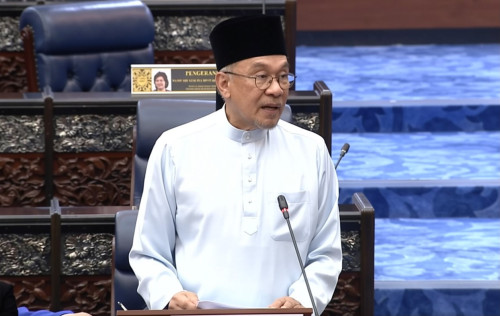
“However, the response from Prime Minister Datuk Seri Anwar Ibrahim on this matter was vague,” he noted.
Rafizi warned that any decision by the Prime Minister would have a direct impact on public perception of the government’s commitment to fighting corruption.
“Not for the second time. Not the third. But the fourth. If the contract is renewed again, the decision will continue to tarnish the credibility of PH and PKR as parties committed to anti-corruption,” he said, emphasising that controversies surrounding Azam make it imperative that his contract not be extended.
Acknowledging that his call alone may not suffice, Rafizi suggested that Nurul Izzah Anwar and DAP leadership, including Anthony Loke, publicly join the demand to demonstrate coalition unity in strengthening anti-corruption resolve.
“It would be better if Nurul Izzah also made the demand publicly. Better still if Anthony Loke and DAP did the same,” he said.
Rafizi underlined that PH and PKR’s previous advantage lay in voters’ hope for a corruption-free system, particularly among middle-class constituents.
He pointed to longstanding public concerns over the effectiveness of corruption prevention, citing data he has repeatedly shared with Anwar since last year.
“The perception is confirmed by statistics on corruption cases resulting in convictions. The proportion of charges filed relative to investigation papers opened fell from 56 per cent in 2020 to 39 per cent last year.
Convictions also decreased, from 300 cases or 36 per cent of investigation papers in 2021 to only 256 cases or 22 per cent in 2024,” he said.
Rafizi noted that high-profile cases frequently ended with decisions of discharge not amounting to acquittal, case withdrawals, or defendants released after paying fines, reinforcing public concern over accountability and the efficacy of Malaysia’s anti-corruption framework. - December 3, 2025