THE spread of child sexual abuse material (CSAM) is increasingly moving into encrypted, private channels on social media, raising alarms over the effectiveness of current monitoring systems.
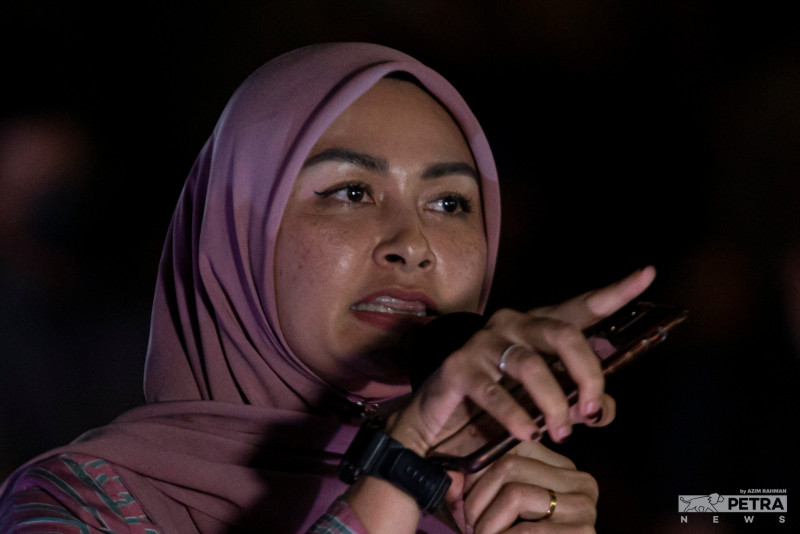
Bentong Member of Parliament Young Syefura Othman warned that offenders are using fake accounts and applications such as Telegram to create private groups and closed channels, making harmful content harder for authorities to detect.
“That is why we must make it mandatory for platforms to carry out content filtering. Platforms must take responsibility to screen anything uploaded through their systems,” she told Sinar Harian.
Young Syefura explained that most existing digital filters rely on databases of previously identified content, leaving room for modified material to bypass detection.
“These CSAM distributors are cunning. They use artificial intelligence (AI), make slight modifications, and paste someone else’s face onto another person’s body, which often allows this content to escape filtering.”
The MP stressed that digital platforms urgently need to upgrade their security and filtering systems to keep pace with rapidly evolving technology.
“It is unrealistic to expect the government alone to monitor the hundreds of thousands of uploads each day, which far exceed the capacity of manual oversight,” she said.
She further emphasised that early intervention is critical, with the primary responsibility resting on platform providers, while the government can impose stricter licensing requirements. Young Syefura also highlighted the essential role of parents in safeguarding children online.
“Children today are savvy. We block websites, and they know how to use virtual private networks (VPNs). So, parents must monitor, carry out surprise checks, and see who their children are interacting with online,” she said.
Children under the age of 16 are particularly vulnerable to exploitation due to their psychological and social immaturity.
Young Syefura warned that young users can easily be manipulated and ‘groomed’ via social media without their parents’ knowledge.
“We often advise children not to talk to strangers in person, but we don’t know who our children are interacting with online. This is even more dangerous and requires monitoring.”
She urged platforms to restrict social media use for those under 16 as a preventive measure in line with global standards, stressing that such regulations must be implemented clearly and consistently.
She also advised parents not to use children to promote products or gain online popularity, noting that early exposure could negatively impact their development.
Highlighting the speed at which online content spreads, she insisted that screening must be proactive rather than waiting for complaints.
“By the time we detect it, the content has already spread widely and been reproduced. Any perpetrator we catch must be banned.”
Young Syefura proposed that the Sexual Offenders Review System be made publicly accessible online to allow transparent checks on offenders, who may come from any background, including individuals close to the victims.
Her warnings underline the urgent need for a multi-layered approach involving upgraded platform safeguards, legislative action, and active parental supervision to protect children from online exploitation. - December 10, 2025