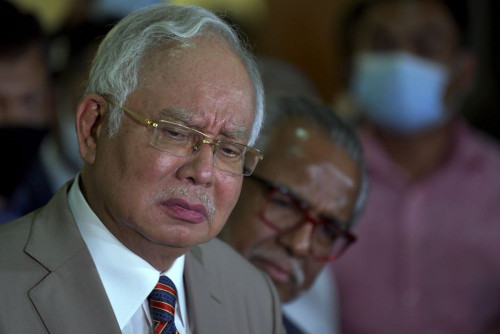
THE Attorney General’s Chambers (AGC) has stressed that the High Court’s ruling dismissing Datuk Seri Najib Razak’s judicial review application linked to the alleged Addendum Order does not in any way curtail the powers of the Yang di-Pertuan Agong, the Malay Rulers or the Yang di-Pertua Negeri in granting pardons.
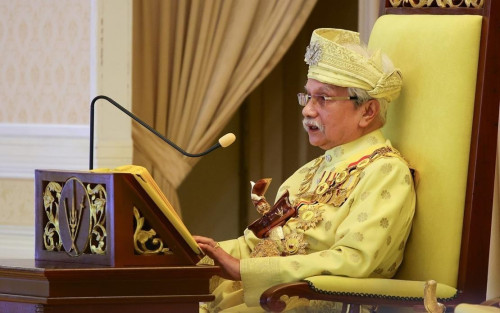
In a statement issued today, the AGC said High Court judge Alice Loke Yee Ching, in her oral judgment delivered yesterday, expressly recognised the prerogative powers of the Yang di-Pertuan Agong, the Rulers and the Yang di-Pertua Negeri in matters of pardon.
“This power of pardon cannot be exercised by any other party,” the statement said.
“However, in line with the concept of a constitutional monarchy, this power must be exercised in accordance with the constitutional requirements as provided under Article 42 of the Federal Constitution.”
The AGC said the High Court decision clearly and comprehensively explained the constitutional process governing how the Yang di-Pertuan Agong, the Rulers and the Yang di-Pertua Negeri exercise their powers in deciding on applications for pardon, thereby reinforcing and affirming the authority of the royal institutions, particularly in matters relating to clemency.
“Therefore, this department wishes to emphasise that any action which seeks to incite or disturb public order through a misinterpretation of the court’s judgment is highly inappropriate, and all parties must respect the appeal process that has been undertaken by Datuk Seri Najib,” it said.
The AGC was responding to reports published yesterday by a news portal and several other media outlets quoting Najib’s lawyer as claiming that the High Court’s dismissal of the judicial review application relating to the alleged Addendum Order had reduced the powers of the Malay Rulers and the Yang di-Pertua Negeri in matters of pardon.
The AGC said such claims were entirely untrue and did not reflect the actual reasons given by the High Court in its decision.
It said that in dismissing Najib’s application, the High Court reaffirmed that the power of pardon is a prerogative of the Yang di-Pertuan Agong guaranteed under Article 42(1) of the Federal Constitution, as established by binding decisions of the superior courts.
“However, Article 42 also provides that in exercising this prerogative power, the Yang di-Pertuan Agong, the Malay Rulers and the Yang di-Pertua Negeri shall deliberate together with the Pardons Board in deciding on any application for pardon,” the statement said.
With regard to Najib’s case, the AGC said the minutes of the 61st meeting of the Pardons Board for the Federal Territories of Kuala Lumpur, Labuan and Putrajaya clearly showed that the issue of house arrest was never discussed nor ordered by the 16th Yang di-Pertuan Agong during the meeting.
“The meeting only deliberated on Datuk Seri Najib’s application for a full pardon, and the command of the 16th Yang di-Pertuan Agong at that time was solely that the term of imprisonment and fine be reduced by 50 per cent,” it said.
“As such, the High Court decided that the alleged additional order for house arrest was not made pursuant to Article 42 of the Federal Constitution, as the matter was never discussed or decided at the same meeting.”
Yesterday, the High Court dismissed the judicial review application filed by the former prime minister seeking to compel the government and six others to implement the alleged Addendum Order to allow him to serve the remainder of his prison sentence under house arrest.
The application arose from Najib’s conviction over the misappropriation of RM42 million belonging to SRC International Sdn Bhd, for which he is currently serving a prison sentence. Najib is also a former UMNO president.
Justice Alice Loke ruled that the court was satisfied that the issue of house arrest was never mentioned, discussed or decided at the Pardons Board meeting held on 29 January last year.
She further held that the alleged Addendum Order was invalid and could not be enforced for the purpose of allowing Najib to serve his sentence under house arrest in Malaysia. - December 24, 2025