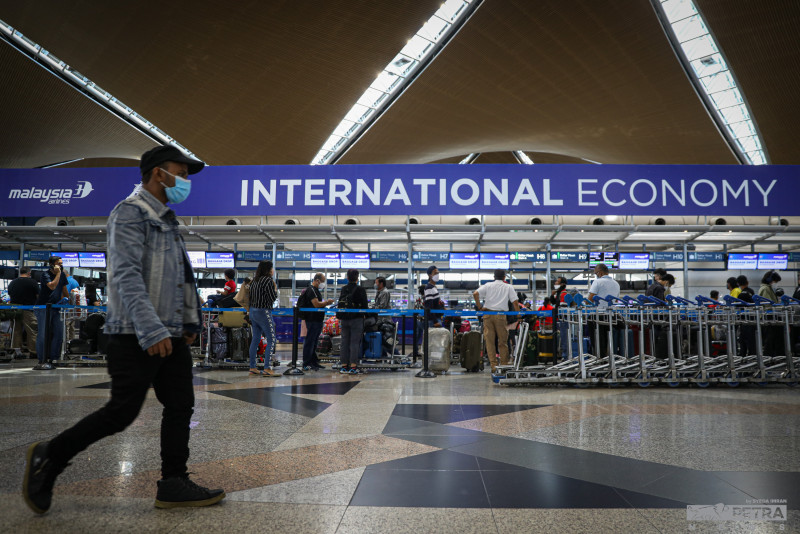
THE death of a Myanmar national who collapsed at Kuala Lumpur International Airport has raised renewed questions about the adequacy of emergency medical response and health facilities at the country’s main international gateway, which handles close to 90,000 visitors daily.
The man collapsed while walking with his child at Block B of the terminal on the way to the parking area, an incident witnessed by members of the media on the scene. Nearly half an hour passed before health personnel arrived, but the victim was pronounced dead.
Berita Haian, on Sunday, reported that witnesses described a chaotic situation in which no immediate assistance was provided despite several airport staff being present. Although an automated external defibrillator, or AED, was eventually brought to the scene, none of the personnel appeared to know how to operate it.
A male bystander later stepped forward voluntarily and attempted chest compressions on the victim.
The incident has intensified concerns about the level of emergency healthcare preparedness at KLIA, particularly given its status as a major international airport with heavy daily passenger traffic, including large numbers of foreign tourists.
A post-incident check by local media found that airport workers have long raised similar concerns, including repeated requests for the Health Ministry to open a government clinic to complement the single private clinic currently operating at the airport. Those requests, workers said, have yet to receive any response.
Linda, a restaurant manager who has worked at KLIA for seven years and asked to be identified only by her first name, told Berita Harian that the latest incident reopened old trauma from a similar case she witnessed several years ago.
She recalled a woman who collapsed near a restaurant on the lower floor after returning from overseas and remained unattended for almost two hours before medical personnel arrived.
“The incident happened near a restaurant on the lower floor when the victim suddenly collapsed, but medical assistance only arrived after two hours.
“We, who had no basic emergency aid training, tried to help the victim, including fanning her, but she could not be saved.
“For me, the victim could have been saved if emergency assistance had arrived on time,” she said.
High cost at private clinic
An enforcement officer working at the airport said he was forced to drive 15 kilometres to Klinik Kesihatan Salak for treatment after developing a fever while on duty, citing the high cost of treatment at the airport’s only private clinic.
“Imagine, I was already weak and unable to even walk to the parking area in this huge KLIA complex, let alone drive to the clinic.
“But I forced myself because I needed a doctor’s confirmation to check my condition.
“We are not asking for a sophisticated hospital at KLIA, just a small health clinic that can provide an early response if anything happens,” he said.
It is understood that the nearest government clinic to KLIA is located at the KLIA Quarters, about four kilometres from the main terminal.
Anita, a civil servant who has worked at KLIA for 10 years and asked to be identified by a pseudonym, said health ministry personnel are present at the airport, but their role is limited to managing potential infectious disease cases at entry points into the country.
She added that delays in ambulance arrivals could also be linked to difficulties navigating the vast airport complex.
“I have seen minor accidents happen here, but ambulances were slow to arrive because they said they did not know the route to the incident location.
“I hope health personnel, especially ambulance drivers, memorise every entry and exit point at KLIA to make it easier for emergency assistance to be delivered, because every second at that moment is extremely valuable,” she said.
Calls for assurance on emergency care
Another airport worker, Vanita Subramanian, 33, said she hoped a government health clinic would be established near KLIA to serve the large workforce stationed there.
“Others may be able to afford treatment at the private clinic here, but for those of us on low wages, we will definitely think twice about seeking treatment if an emergency occurs.
“If a government health clinic exists, it would certainly be a relief because government services are the best,” she said.
The latest fatality has intensified calls for authorities to reassess emergency medical readiness at KLIA, with workers and witnesses warning that without timely intervention, preventable deaths may continue to occur at the country’s busiest airport. - January 4, 2025


.JPG)