THE Defence Ministry has firmly rejected claims that the appointment and promotion of top leaders in the Malaysian Armed Forces are influenced by external parties, stressing that the process is conducted professionally, objectively and strictly within established legal and institutional frameworks.
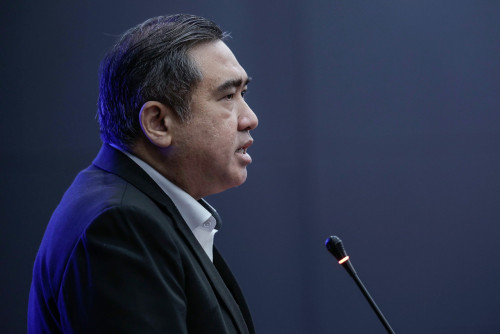
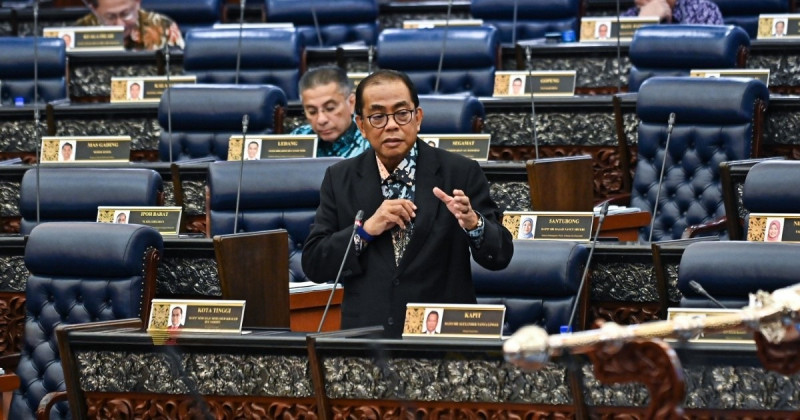
Defence Minister Datuk Seri Mohamed Khaled Nordin said the appointment of Armed Forces leadership is carried out in accordance with the law and guided by principles of professionalism and the rule of law, without any form of outside interference.
He was responding to a question raised by Datuk Khlir Mohd Nor (PN-Ketereh), who alleged that recent leadership transitions within the Armed Forces did not follow internal succession plans and that promotions to top posts were controlled by external parties rather than the Armed Forces’ own senior leadership.
“The appointment of Armed Forces leadership is implemented based on principles of strong institutional governance and existing legal provisions.
“This appointment process is carried out in an orderly manner and with integrity through the Armed Forces Council, in line with its roles and functions as provided for under Article 137 of the Federal Constitution,” he said in a written reply published on the Parliament website.
Khaled acknowledged that while the Armed Forces maintains its own leadership succession planning, the implementation of such plans remains subject to government approval in accordance with the Constitution and prevailing laws.
“The transition of Armed Forces leadership is also influenced by governance and current policy factors, including assessments of national security interests and the implementation of integrity reforms.
“In this matter, the government, through the Ministry of Defence, remains committed to ensuring that the process is transparent in order to preserve professionalism and public confidence in the Armed Forces institution,” he said in the same written reply.
At its core, he explained, the Armed Forces identifies and shortlists eligible candidates based on merit, experience, rank and the specific requirements of the post concerned. He stressed that this process is conducted professionally and objectively, without any external intervention or influence.
All considerations and decisions related to appointments, he added, are made collectively by the Armed Forces Council, which comprises the Defence Minister, the Chief of Defence Force, the Secretary-General of the Defence Ministry, the Army Commander, the Navy Commander, the Air Force Commander, the Chief of Staff of Armed Forces Headquarters, the Assistant Chief of Staff for Personnel Services, the Deputy Director-General of Public Service (Development) and a representative of the Malay Rulers.
The Deputy Defence Minister and the Judge Advocate General also attend meetings of the Armed Forces Council as members.
“This mechanism functions as a system of checks and balances to ensure that every appointment is made in a transparent, fair and accountable manner.
“Once agreed at the level of the Armed Forces Council, the appointment recommendation is then submitted for the consent of the Yang di-Pertuan Agong. Clearly, the appointment of Armed Forces top leadership is carried out in accordance with the prescribed legal and institutional framework, and in line with the principles of professionalism and the rule of law,” he said. - January 29, 2026