THE Government has formally launched the National Food Security Policy 2030, marking a strategic shift towards a more resilient, sustainable and self-reliant food system as global volatility increasingly threatens supply chains and affordability.
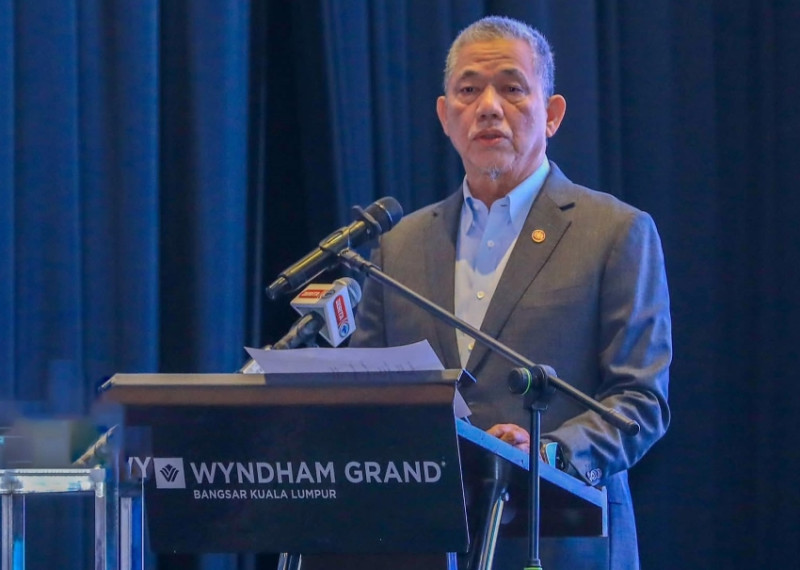
Speaking at the launch ceremony in Kuala Lumpur, Deputy Prime Minister II and Minister of Energy Transition and Water Transformation Datuk Seri Fadillah Yusof said the policy is not merely a framework document but a decisive statement of national direction on food security.
He described the initiative as a critical pillar of Malaysia’s long-term development agenda, aimed at protecting future generations from supply shocks and nutritional insecurity.
He said the world is currently operating in an environment defined by volatility, uncertainty, complexity and ambiguity, driven by extreme climate events, geopolitical tensions and disruptions to global supply chains.
Citing international assessments, he noted that global food security gaps are widening, with hundreds of millions worldwide still facing hunger and malnutrition, underscoring the urgency for countries to strengthen domestic food systems.
Against this backdrop, Fadillah said Malaysia remains comparatively fortunate, with stable food supplies and manageable affordability levels relative to many neighbouring countries.
He pointed to strong self-sufficiency ratios in key sectors such as poultry and eggs, as well as fruits and vegetables, while acknowledging that milk and rice production remain at moderate levels that require continued improvement.
He stressed, however, that current achievements cannot be taken for granted and must be supported by comprehensive long-term policies.
The National Food Security Policy 2030 is designed to serve as the central compass for transforming the agri-food sector, ensuring sufficient food availability, guaranteed food safety for all Malaysians, and environmental sustainability to protect the integrity of the national food system.
The policy places equal emphasis on productivity, resilience and inclusivity, with a focus on strengthening farmers’ livelihoods, modernising agriculture and positioning the agri-food sector as a dynamic contributor to national economic growth.
Fadillah said the policy prioritises sustainable and regenerative farming practices, the adoption of smart agriculture technologies and the expansion of circular economy initiatives, including converting food waste into organic fertiliser.
These measures, he said, are intended to optimise input use while preserving soil health and ecosystems for future generations.
He added that improving the welfare and income of farmers, fishermen and smallholders is a core objective, alongside efforts to elevate food safety and nutritional standards nationwide.
Addressing food loss and waste is also a key component, with greater emphasis on efficient supply management, food banks and organic waste recycling to ensure responsible use of national food resources.
Digital transformation will play a central role in achieving these goals, with the government encouraging the use of drones, the Internet of Things and artificial intelligence to improve crop monitoring, resource efficiency and early disease detection.
Fadillah said these technologies are essential to making agriculture more attractive, modern and profitable, particularly for younger generations.
He stressed that food security cannot be the responsibility of a single ministry and requires a whole-of-government and whole-of-society approach.
This includes coordinated roles for investment, finance, domestic trade, higher education and health authorities, alongside close collaboration with the private sector and industry players to build a crisis-resilient food ecosystem.
At the regional level, Fadillah said Malaysia has demonstrated leadership within ASEAN, having secured collective support for the ASEAN Leaders’ Declaration on Vision for Food, Agriculture and Forestry towards 2045.
He described this as a key element of Malaysia’s food diplomacy, aimed at positioning the region as a robust food security hub.
He also revealed that the government is in the process of drafting a National Food Security Act, which will provide a strong legal foundation to protect Malaysia’s food sovereignty and ensure uninterrupted access to food supplies for the population.
Fadillah called on all stakeholders to work collectively to build a more prosperous, resilient and food-secure Malaysia. - January 29, 2026




.JPG)