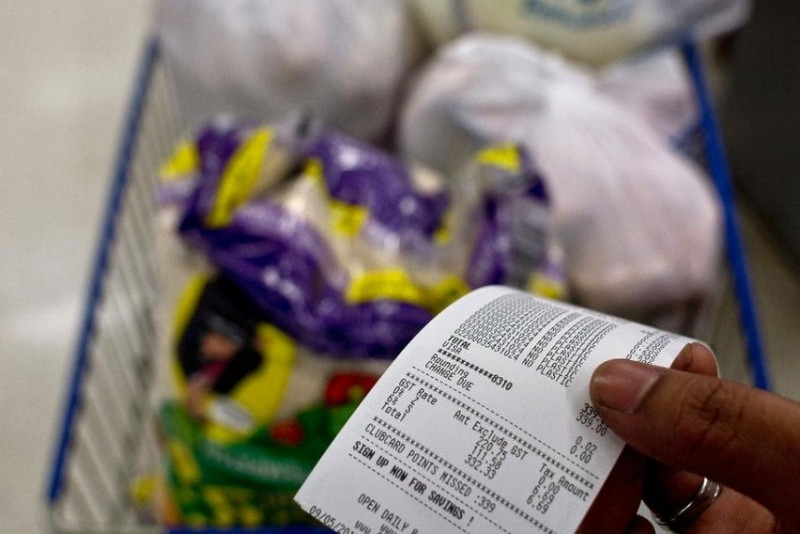
MALAYSIANS are paying more for their daily meals despite essential food items being exempt under the expanded sales and service tax, as higher operating costs imposed earlier in the supply chain are passed on to consumers.
The expanded SST, which came into effect on July 1, 2025, widened the tax net to include a broader range of services such as transportation, logistics, rental and other operational inputs.
While food itself may not be taxed at the point of sale, these additional levies have raised business costs upstream, resulting in higher prices at the checkout.
Institute of Strategic Analysis and Policy Research (Insap) director Woon King Chai described the impact as unavoidable.
“The impact of the expanded SST was undeniable,” he told The Star, pointing to visible price increases in common food items.
Based on Insap’s observations, the price of iced Milo has risen to RM3.70 from RM3.30 a year earlier, while nasi lemak has increased from RM2.50 to RM2.90 at some outlets, representing a jump of about 16%.
Woon said such increases stem from how the SST is imposed on critical inputs rather than on the final food item itself.
“We are levying the SST on transportation, rental, on all these other sectors, and yes, KK Mart may not charge the SST for that can of baked beans, but the cost of that baked beans from the supply would have gone up by at least, by our estimates, 9%,” The Star cited him saying at a panel discussion at the Malaysia Outlook Conference 2026 organised by the Institute for Democracy and Economic Affairs (Ideas).
He argued that the structure of the SST creates a cascading effect, where taxes are layered repeatedly as goods and services move along the supply chain, a problem he said could be addressed by reinstating the goods and services tax.
While acknowledging that the government has turned to the expanded SST and e-invoicing to broaden its revenue base, Woon said these measures effectively operate as “GST-like mechanisms” without offering the same safeguards.
Unlike the GST, the SST does not allow businesses to claim input tax credits, meaning taxes paid on inputs cannot be recovered and are instead embedded in final prices.
Under the GST system, Woon explained, every transaction is recorded, allowing businesses to reclaim taxes paid earlier in the chain, improving transparency and limiting cost escalation.
“With the GST, it ensures transparency all throughout the supply chain. Today, we do not even know why that packet of nasi lemak costs 16% more,” he said.
Institute of Strategic and International Studies Malaysia analyst Qarrem Kassim echoed this view, saying the SST results in repeated taxation that is often invisible to consumers.
“Under the GST, you have a more competitive system because it is only taxed once at the point of consumption. Everyone competes, and competition is what brings down prices,” he said during the same panel.
Woon also argued that public discourse around broad-based consumption taxes should move beyond political sensitivities.
“The public must stop treating conversation on broad-based taxes like the GST like it is a political suicide,” he said.
He noted that while the GST was abolished following Pakatan Harapan’s manifesto pledge in the 14th General Election in 2018, the economic landscape has since shifted.
“Eight years on, Malaysia has seen a general election and multiple administrations, yet the same argument keeps coming up: our tax base is too small,” he said.
Malaysia’s tax-to-gross domestic product ratio stands at about 12.5%, significantly lower than the Asia-Pacific average of roughly 19%, according to Woon. He also dismissed the notion that Malaysia’s income levels make it unready for the GST.
“There are 170 other countries around the world that have already done so. The issue with the GST is not that it is a bad policy. It was just poorly implemented before.
“The global economy at the time added a lot of pressure onto consumers and businesses too.”
Addressing concerns over delayed tax refunds under the GST, Woon said such problems often arose because collections were channelled into the Federal Consolidated Fund, with refunds subject to later budgetary approval.
He proposed the creation of a dedicated fund for tax collection and refunds to ensure timely reimbursement to taxpayers.
The discussion was moderated by Ideas chief executive Aira Azhari, who said that reintroducing the GST would require significant political capital, which has continued to cloud serious debate on the issue.
On the political challenges involved, International Islamic University Malaysia political science professor Syaza Farhana Mohamad Shukri said Malaysia’s governance landscape has become more complex following the end of single-coalition dominance.
“We are not talking about parties coming together, we are talking about coalitions working together,” she said, adding that “there is another layer to that, not just bringing parties together.”
She noted that identity politics has become “part and parcel of our Malaysian politics”, creating divisions that make cooperation and consensus-building more difficult, particularly on contentious policy issues such as taxation. - February 11, 2026