THE Government has formalised a strategic collaboration with ARM Holding PLC to accelerate the nation’s semiconductor industry, a move dating back to initial discussions at the KL20 Summit in April 2024, which brought together start-ups and high-tech companies.
During the summit, ARM representatives met with the Prime Minister to explore a partnership that would enhance Malaysia’s semiconductor capabilities.
This was followed by meetings between ARM and the Minister of Economy in November 2024, and another session with the Prime Minister in February 2025.
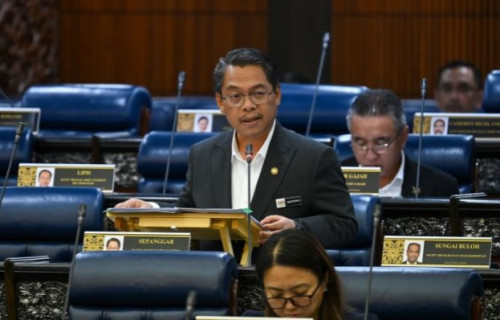
Economy Minister Akmal Nasrullah Mohd Nasir, during the winding up debate in the Dewan Negara today, said the initiative was reviewed twice by the Cabinet, on 24 January and 28 February 2025, where the Ministries of Finance and Investment, Trade and Industry initially held differing views.
After further deliberations and agreement on key conditions including phased payments and termination clauses, Cabinet formally approved the collaboration on 28 February 2025, with the agreement signed on 5 March 2025.
ARM, headquartered in the United Kingdom, is a pioneer in advanced chip architecture, designing chips and system-on-chip (SoC) solutions.
Nearly 95 per cent of ARM architectures are widely used globally, particularly by leading technology firms such as Qualcomm, Apple, Samsung, AWS, and Nvidia, and in high-performance computing and automotive sectors.
The Government sought access to ARM technology tokens to enable domestic firms to develop proprietary high-value products and intellectual property, Akmal explained.
The strategic collaboration represents an unprecedented investment in Malaysia’s semiconductor sector, accompanied by comprehensive due diligence, including cost-benefit analyses, industry consultations, and compliance with governance procedures.
The global semiconductor market is projected to expand 26.3 per cent to reach US$1 trillion in 2026, underscoring the need for Malaysia to seize opportunities in high-tech manufacturing, particularly in the assembly and testing segments where the country currently ranks sixth globally.
Turning to domestic welfare, the Government emphasises that economic growth alone is insufficient unless it improves citizens’ living standards.
Rising living costs are a key concern, prompting integrated measures under RMK13 to manage household expenditure and incomes.
The Ministry of Domestic Trade and Consumer Affairs will introduce a National Cost of Living Action Plan, while initiatives such as the RAHMAH MADANI sales programme are being expanded, especially in rural areas.
“Immediate interventions include the Sumbangan Tunai Rahmah (STR) and Sumbangan Asas Rahmah (SARA) programmes, with allocations exceeding RM15 billion for over 8 million recipients, targeted social welfare aid of RM3.1 billion for 500,000 households, and price stabilisation programmes in Sabah, Sarawak, and Labuan worth RM67 million,” Akmal said.
Efforts to reduce poverty have shown progress
The 2024 Household Income and Expenditure Survey reports a national absolute poverty rate of 5.1 per cent, including 416,500 households, while extreme poverty stands at 0.09 per cent, or 7,200 households.
Urban poverty has decreased, and in Sabah and Sarawak, absolute poverty dropped to 17.7 per cent and 8.4 per cent, respectively, with extreme poverty falling sharply.
Household incomes have also risen, reflecting effective social mobility policies aligned with Malaysia MADANI’s “raising the floor” approach to uplift living standards.
Akmal added that RMK13 allocates RM430 billion for 2026–2030, with RM81 billion earmarked for 2026 projects, prioritising national impact and readiness over traditional labels of developed or less-developed states.
Sabah and Sarawak receive the largest allocations for 2026, at RM6.49 billion and RM5.58 billion, respectively, supporting infrastructure, high-value industrial clusters, digital economy, green technologies, and knowledge-intensive services.
Rural infrastructure improvements focus on roads, clean water, electricity, and internet access to narrow the urban-rural divide.
“The Government will also develop Sabah and Sarawak’s natural resource and maritime potential through integrated blue economy initiatives, supporting fisheries, aquaculture, shipping, and renewable energy, while fostering industrial zones such as Kota Kinabalu and Samalaju to create employment and retain skilled workers,” he said.
Emphasising equitable development, the Government stresses that balanced regional growth is essential for national stability and unity. RMK13 is designed not only as a development and spending plan, but as a mechanism to ensure GDP growth translates into higher household incomes, more employment opportunities, and improved quality of life across all regions, particularly in Sabah and Sarawak.
The Ministry of Economy affirms its commitment to transparent, focused, and high-impact allocation of resources to narrow regional disparities and ensure that the benefits of development are enjoyed by all Malaysians, he added. - March 3, 2026