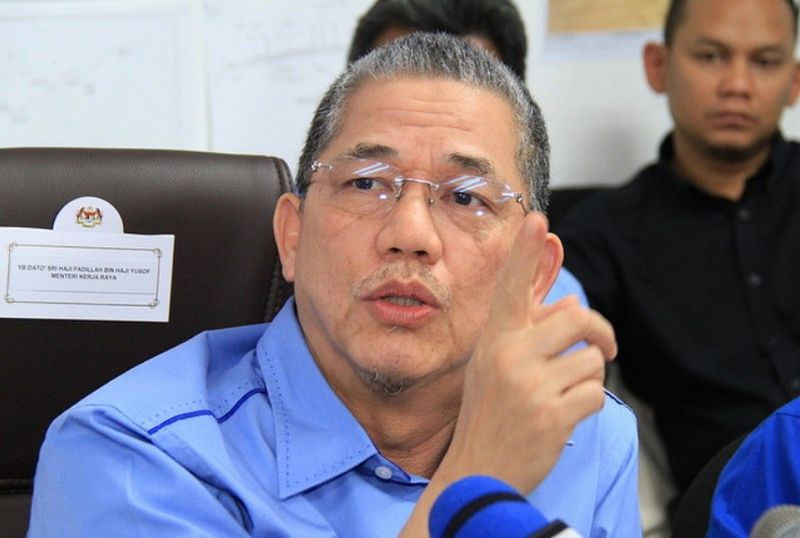
ENERGY security has become a strategic necessity rather than an option for nations amid rising global uncertainty, Deputy Prime Minister II and Minister of Energy Transition and Water Transformation (PETRA), Datuk Seri Fadillah Yusof, has said.
He said the global energy landscape has grown increasingly complex, shaped by geopolitical tensions and disruptions in supply chains that continue to affect energy markets worldwide.
Fadillah cited developments such as disruptions in the Strait of Hormuz, saying they have had a significant impact on global energy markets and contributed to fluctuations in oil prices.
The situation is directly impacting electricity costs, business operating costs, and the overall economy, thereby requiring a more strategic approach to national energy management.
“In such circumstances, energy security is no longer an option but a strategic priority for the nation.
“Therefore, we must continue to strengthen our position by developing stable and sustainable domestic energy sources to ensure long-term resilience,” he said.
He made the remarks while speaking at the Corporate Green Power Programme (CGPP) completion ceremony.
On Malaysia’s energy transition progress, Fadillah said the country had achieved another milestone through the completion of two solar projects under the CGPP, namely Setia Kawan Energy (SKE) and Selarong Pertama Energy (SPE), which together contribute about 60 megawatts alternating current (MWac) to the national grid.
He said the projects demonstrated Malaysia’s ability to translate energy policy into large-scale clean energy infrastructure, while encouraging private sector participation in renewable energy development.
“The successful implementation of these projects proves Malaysia’s capability in translating energy policy into high-impact clean energy infrastructure development.
“Projects such as SKE and SPE serve as examples of how policy frameworks can encourage private sector participation and accelerate the large-scale adoption of renewable energy,” he said.
Fadillah added that with the additional capacity from the two solar farms under the CGPP, Malaysia’s installed renewable energy capacity had surpassed 12 gigawatts in 2025.
He said the country was steadily advancing towards the targets outlined under the National Energy Transition Roadmap (NETR), which aims for 40 per cent renewable energy by 2035 and 70 per cent by 2050.
He also noted that clean energy supply has become a key factor influencing global investment decisions, particularly among multinational corporations and high-growth industries such as semiconductors, data centres and advanced manufacturing, which are increasingly driven by decarbonisation commitments.
“Through the supply of clean energy via initiatives such as the CGPP and the Corporate Renewable Energy Supply Scheme (CRESS), Malaysia is now recognised as a leading green investment destination for future industries,” he said. - April 14, 2026