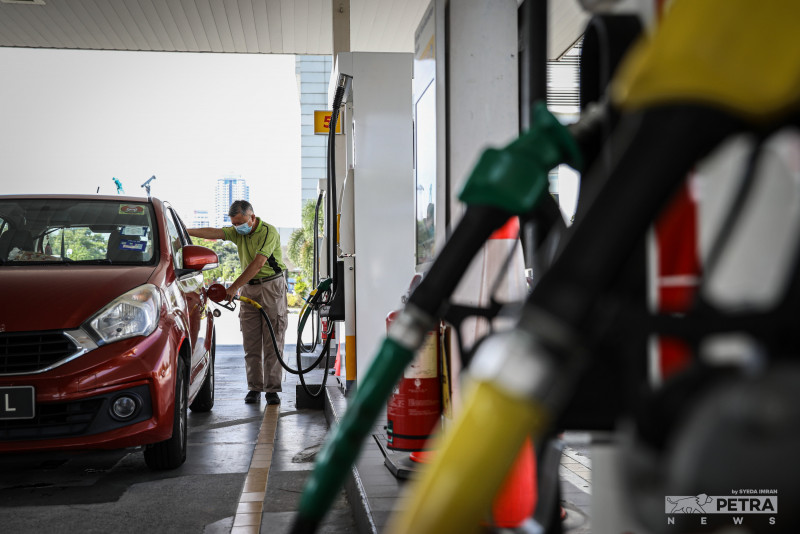
MALAYSIA could lose as much as RM5 billion annually through poorly targeted subsidy policies if the government continues relying on broad household income categories that fail to accurately reflect the real financial pressures facing citizens, an economist has warned.
Economic analyst Barjoyai Bardai said simplistic classifications such as B40, M40 and T20 were increasingly inadequate for designing fair subsidy mechanisms because they overlooked major differences in living costs, debt burdens and disposable income among households within the same income bracket.
He said the estimated RM5 billion in leakages stemmed partly from subsidies continuing to benefit higher-income groups that may no longer require government assistance.
“Without more detailed classifications, the implementation of targeted subsidies risks creating injustice because there are significant differences in living capability even among those within the same income category,” he said.
The warning comes amid renewed debate over Malaysia’s subsidy rationalisation plans after Economy Minister Akmal Nasrullah Mohd Nasir recently stated that the government was no longer strictly categorising Malaysians according to conventional income groupings such as T20 when formulating subsidy policies.
Instead, the ministry said it was adopting a broader and more holistic approach in discussions surrounding targeted subsidies.
Barjoyai said the government now faced a difficult balancing act between the urgency of implementing subsidy reforms and the reality that building a comprehensive national household database required considerable time.
Although efforts had been made to strengthen the country’s centralised data system through Pangkalan Data Utama, commonly known as PADU, he said important gaps remained, particularly involving residential costs, family obligations and personal financial commitments.
As a result, he argued that Putrajaya should avoid rushing into fully targeted subsidy mechanisms and instead continue with transitional approaches while data systems are refined.
“If subsidies are not fully targeted, the government may bear additional costs of around RM5 billion, but that amount can be offset through reductions in leakages and abuse, including smuggling activities and subsidies given to non-citizens.
“If these problems can be addressed, the savings achieved could exceed RM5 billion. This means the government does not need to rush the implementation of targeted subsidies,” he said.
Barjoyai also proposed that the government explore temporary revenue-generating measures aimed at industries currently enjoying exceptional profits.
He identified sectors such as oil and gas, palm oil and semiconductors as potential candidates for temporary taxation mechanisms designed to strengthen government revenue without directly burdening ordinary households.
“Among them are the oil and gas, palm oil and semiconductor sectors. Similar approaches were implemented previously, for example when rubber and palm oil prices surged.
“Measures like these can help increase government revenue without directly affecting the people’s welfare,” he said.
The debate over subsidy reform has intensified as Malaysia grapples with rising living costs, widening fiscal pressures and demands for more equitable assistance distribution, particularly among middle-income households increasingly squeezed by inflation and stagnant wage growth. - May 18, 2026
.jpeg)