MALAYSIA’S improved standing in the 2025 Corruption Perceptions Index (CPI) demonstrates growing effectiveness in the country’s anti-corruption efforts and reflects the sustained commitment of the Malaysian Anti-Corruption Commission (MACC), according to Commander (Honorary) Datuk Seri Dr Irmohizam Ibrahim.
The former member of the Special Committee on Corruption (JKMR) said the rise in Malaysia’s CPI ranking to 54th place from 57th last year, alongside an improved score of 52 points compared with 50 in both 2024 and 2023, should be interpreted as a positive indicator of institutional reform and enforcement progress.
He argued that public perception often wrongly equates the exposure of corruption scandals with failure, when in reality the uncovering of such cases reflects stronger enforcement capabilities and more aggressive investigative action by the MACC.
“People see corruption from the perspective that it is becoming worse. Exposure after exposure, and stern action after stern action taken by the MACC, are labelled as not serious and as failures in preventing corruption,” he said.
“This is the situation currently faced by the MACC. We should be proud of the MACC’s actions. We should view the commission’s legal duties and functions as something positive.”
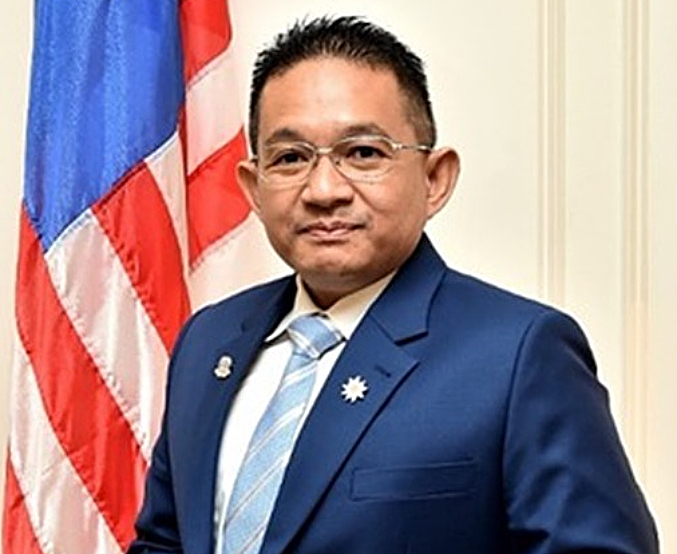
Irmohizam said the current anti-corruption momentum was the result of years of institutional transformation initiated under former prime minister Tun Abdullah Ahmad Badawi, who upgraded the Anti-Corruption Agency (BPR) into the MACC in 2009 as an independent anti-corruption body.
He also highlighted Abdullah’s earlier efforts in establishing the Malaysian Institute of Integrity in 2004 and introducing the National Integrity Plan.
Drawing on arguments from political scientist Bo Rothstein’s book Controlling Corruption: The Social Contract Approach, Dr Irmohizam said many global anti-corruption programmes fail because they misunderstand the true nature of corruption and focus excessively on legalistic or cultural explanations rather than institutional trust and governance structures.
He quoted Rothstein’s observation that despite extensive international development efforts, “we only see a few valuable successes in combating corruption,” while corruption often remains a “resilient and robust enemy”.
He also referenced Francis Fukuyama’s criticism of international development approaches, saying the global community “wants to turn Afghanistan, Somalia, Libya and Haiti into ideal places like Denmark” without understanding how to create the institutional foundations necessary to achieve that outcome.
Returning to the Malaysian context, Irmohizam stressed that continuous investigations, arrests and prosecutions involving officials from both the public and private sectors should be viewed as evidence of long-term investment and commitment by the MACC rather than proof of institutional weakness.
“If we look at action after action involving investigations, arrests and prosecutions of officers from various agencies and ministries in both the public and private sectors as the impact of efforts undertaken by the authorities, then it is a success resulting from the MACC’s long-term efforts,” he said.
He added that bringing corrupt individuals before the courts represented a national success and not a failure of anti-corruption policy.
“The success in bringing corrupt individuals before justice is not the MACC’s failure or a failure in anti-corruption efforts. On the contrary, it is the success of the commission and the country as a whole.”
Irmohizam urged Malaysians to continue supporting anti-corruption institutions and to strengthen a collective national resolve towards building a high-integrity and corruption-free society.
“We need to give moral support to the MACC. The process may take a long time, but a new collective determination must be formed that Malaysia should possess a new identity as a corruption-free nation and a country with high integrity,” he said.
He also expressed confidence in the commission’s leadership, praising officers and staff for continuing to demonstrate strong commitment in line with the government’s broader governance agenda.
“Malaysia should be known as a corruption-free nation, not because of corruption. Believe in the MACC. I believe we can achieve the mission of preventing and combating corruption,” he said. - May 20, 2026