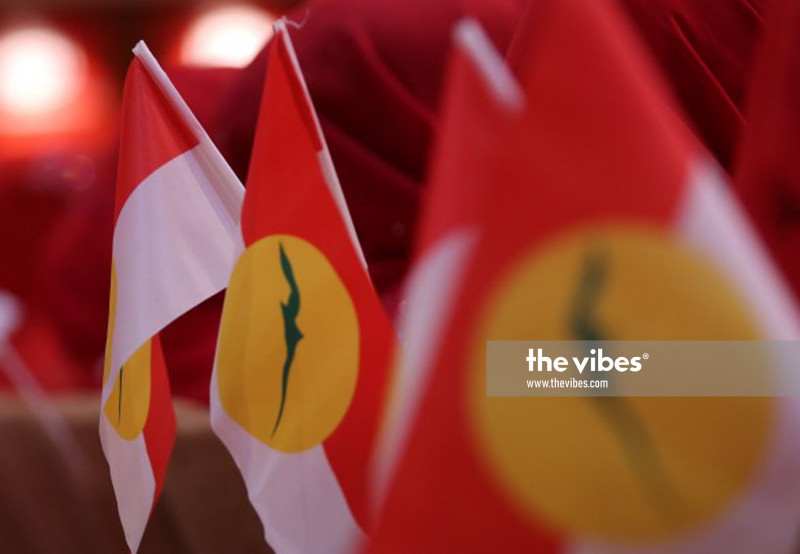

UMNO’s apparent confidence in going solo for the next Johor state election may project strength—but beneath that bold posture lies a strategy that risks exposing more cracks than it conceals.
At first glance, the move seems logical. Johor has long been considered Umno’s fortress, reinforced by its commanding performance in the 2022 state election.
But that victory, while decisive on paper, came under conditions that are unlikely to be replicated. Voter turnout was unusually low, opposition parties were fragmented, and the broader political mood was shaped by post-pandemic fatigue.
In many ways, Umno’s dominance then was as much about circumstance as it was about strength. Relying on that result as a benchmark for a solo run today could be a misreading of the ground reality.
More importantly, Umno’s decision raises uncomfortable questions about its commitment to the unity government framework it currently benefits from.
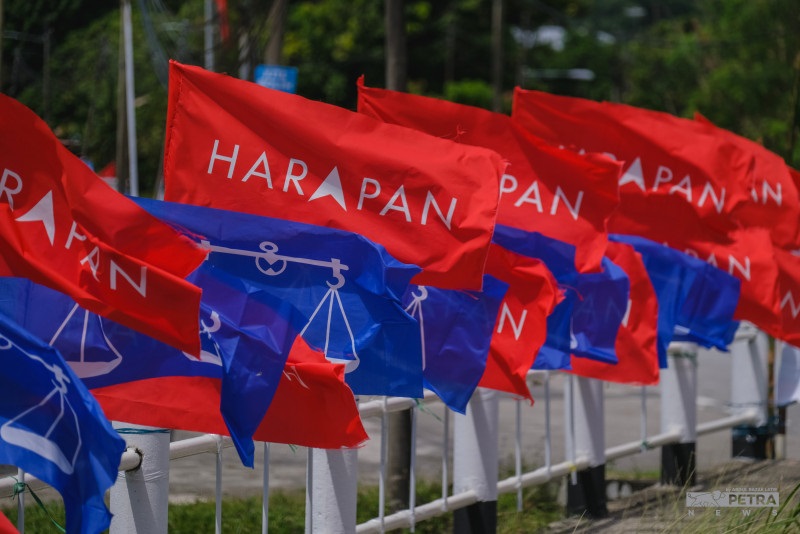
In Johor, Umno governs alongside Pakatan Harapan, presenting a united front of stability and cooperation.
Choosing to contest alone in the same political landscape risks sending mixed signals to voters—government cooperation, competition at the ballot box.
This contradiction may not go unnoticed. For voters who supported the idea of political stability after years of turmoil, a solo move could appear less like strategic clarity and more like opportunism.
There is also the undeniable risk of vote-splitting. Multi-corner fights have historically produced unpredictable outcomes, and Johor is no exception.
Without electoral coordination, Umno risks dividing the vote with its own allies, opening the door for Perikatan Nasional to capitalise on fractured support bases.
Seats that would otherwise be safely retained under a cooperative arrangement could suddenly become vulnerable. The challenge becomes even more pronounced in urban and semi-urban constituencies.
Johor is no longer defined solely by rural strongholds. Areas like Johor Bahru and Iskandar Puteri have increasingly diverse and younger electorates, many of whom are less tied to traditional party loyalties.
In these constituencies, Umno’s brand alone may not carry the same weight without the broader appeal of a coalition. Going solo in such seats is not just a test of strength—it is a gamble. Beyond electoral math, perception also matters.
A unilateral move could reinforce the narrative that Umno is seeking to consolidate power rather than build consensus.
In a political environment where voters are increasingly wary of dominance politics, this could alienate moderates and provide ammunition to both allies and opponents.
Ultimately, Umno’s solo strategy in Johor may deliver short-term gains if the gamble pays off. But the longer-term costs—strained alliances, eroded trust, and heightened electoral volatility—could outweigh any immediate victories.
In attempting to prove its strength, Umno risks revealing its vulnerabilities. And in a political landscape as fluid as Malaysia’s, that is a risk that may not be easily contained.
Are Malaysians ready for a one-party era?
Some veteran Umno members also expressed concern over the party’s decision to go solo, saying Malaysians are not ready to return to the one-party era with Umno as the dominant party that determines everything for the people.
“Umno must not be quick to forget how the electorate rejected it at one time. Also, it should not turn its back on PH, for without its support, Umno would not even be in the government anymore,” they said.
The veterans said Umno should focus on uniting the Malays and not causing further divisions among them.
What about Bersama?
According to political observers, the question is not whether Parti Bersama can articulate public frustrations, but whether it can transform those frustrations into political power capable of delivering meaningful reform.
They said Malaysian political history suggests that the success of reform movements depends not merely on the strength of their ideas, but on their ability to build broad coalitions capable of winning and exercising power.
“On this front, Parti Bersama faces its greatest challenge. Datuk Seri Rafizi Ramli has built a reputation as PKR’s top firebrand.
“But successful politics requires more than persuasive rhetoric and political agitation. Building a governing force demands coalition management, grassroots mobilisation, organisational discipline, and the ability to reconcile competing social and political interests,” they said.
Political change is rarely achieved by individuals alone; it is the product of collective work.
KEADILAN did not become one of Malaysia’s mainstream political parties because it possessed the most sophisticated reform manifesto.
It became influential because it built a broad social coalition that united the urban middle class, wage earners, social moderates, minorities, civil society activists, and voters searching for an alternative model of governance.
In the Malaysian political system, small parties that refuse to cooperate are usually destined to become marginal or spoilers.
“Rafizi is certainly aware of this. Perhaps this is a long-term strategy to build from the bottom up.
“Or perhaps this is a way to remain relevant as a critical voice without having to take responsibility for any government.
“One must remember that this 'new politics' narrative emerged right after internal defeats and when space within PKR was shrinking. Not when he was still in power and could prove that vested interests could be challenged from within.”
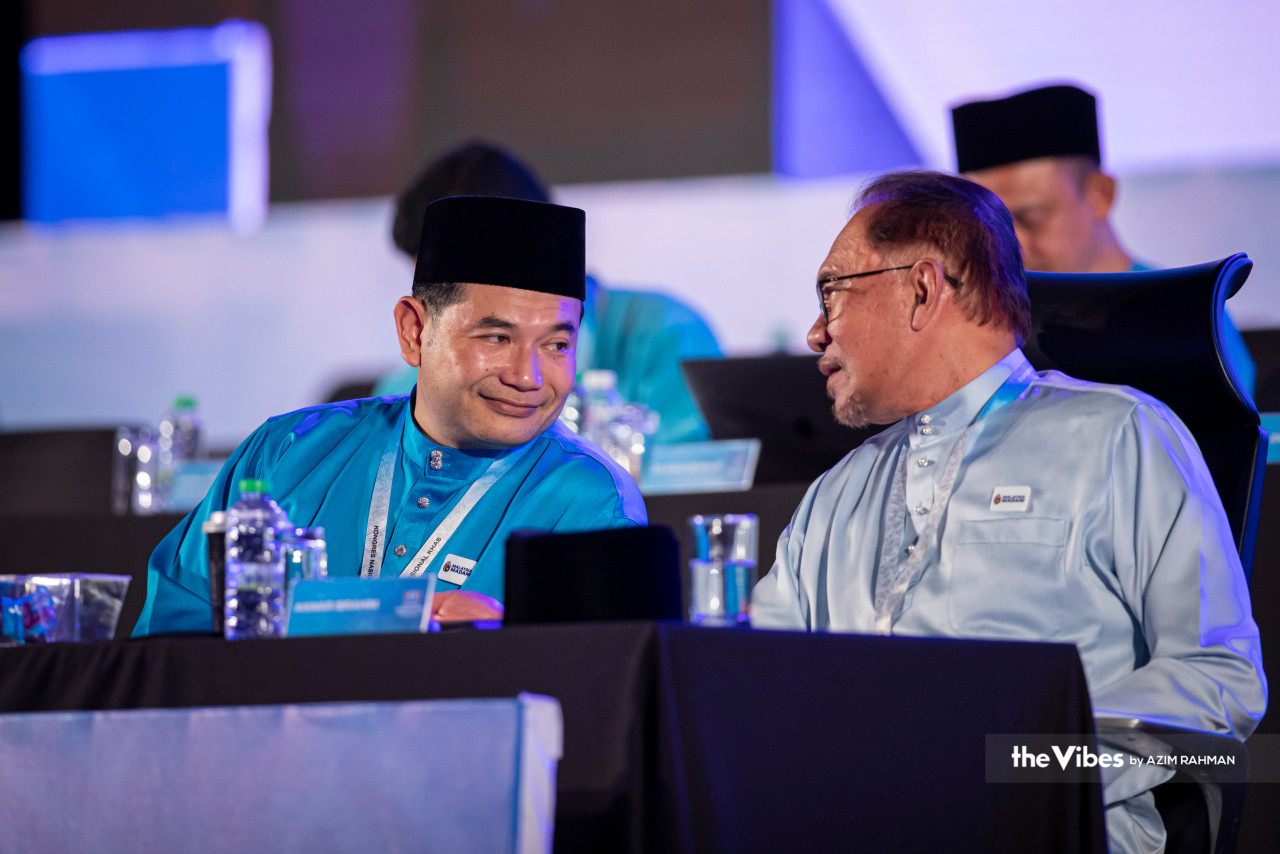
Genuine reform is usually measured by one’s willingness to make sacrifices when it is most difficult and least popular, not when other options have run out.
Parti Bersama Malaysia may attract some reformist voters who are disillusioned with PKR.
It may also split the vote and make way for other forces.
“What is certain is that the people are no longer easily fooled by slogans and logos. They have learned to read the record.
“And the record, for now, still speaks louder than a wise mouse deer.
“If Bersama really wants to be considered new, then the proof will not come from press conferences or rapid membership growth.
“It will come from truly quality candidates, concrete and bold policies, and a consistency in refusing to compromise — even when power is on the verge of being achieved.
“Until then, this still looks like a new packaging for an old game,” claimed the observers. – June 4, 2026