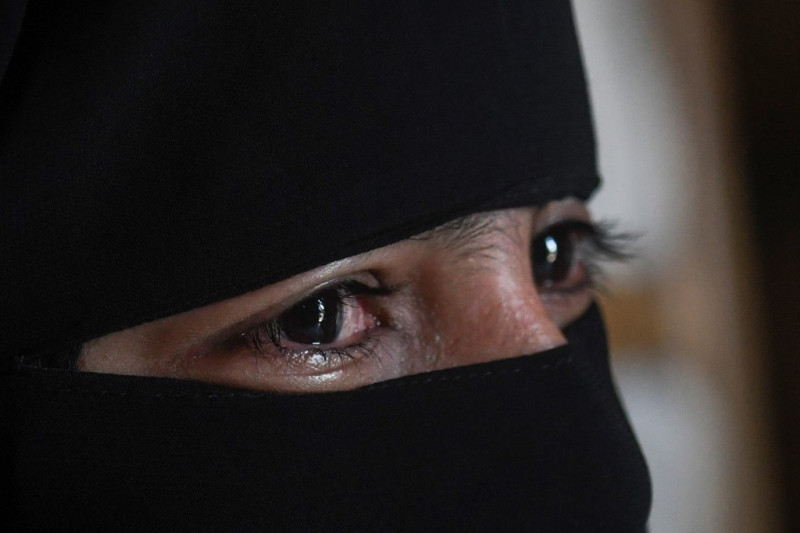

WHAT’S happening in this debate is a dangerous collapse of nuance—where a humanitarian catastrophe is being flattened into social media rage, and where anger is being redirected at people fleeing violence instead of the systems that produced their suffering.
The Rohingya crisis did not begin in Malaysia. It began in Myanmar, where decades of persecution, statelessness, and systematic violence have been widely documented.
UN fact-finding missions have described the military campaign against them in terms that meet the threshold of genocidal intent.
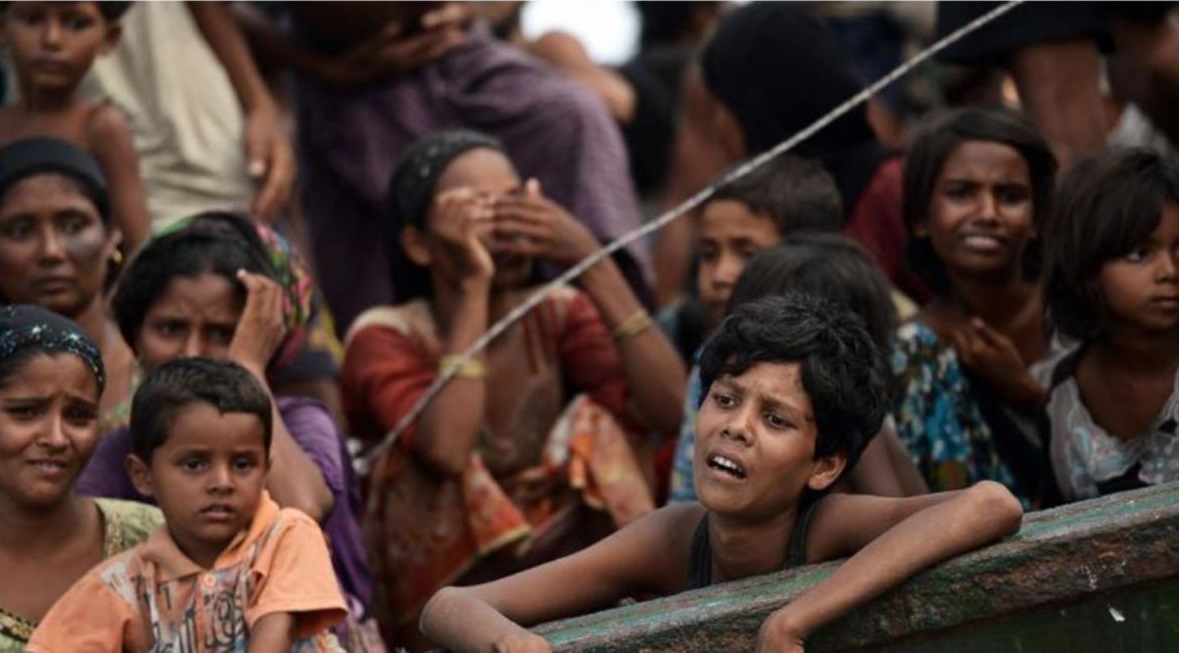
These are not people who “chose” displacement. They fled burning villages, mass killings, and trafficking routes that exist precisely because desperation creates profit.
That reality matters. Because without it, the conversation starts in the wrong place.
But none of this removes the realities faced by host countries. Malaysia, like any state, carries pressure when large numbers of undocumented or displaced people are present.
Law enforcement matters. Public order matters. And when individuals commit crimes, they must be investigated and held accountable as individuals.
No society can function if responsibility is erased.
The problem begins when those individual cases are stretched into a collective identity.
When “some people did this” quietly becomes “this group is like this.”
That is the turning point.
Because once a community is treated as inherently suspicious—criminal, dirty, dangerous, incompatible—the discussion is no longer about policy.
It becomes about identity. And identity, once weaponised through fear, stops being a rational debate. It becomes instinct.
That is where xenophobia survives. Not always in slogans or slurs, but in repetition. In framing. In headlines that lean too heavily on association.
In commentary that replaces evidence with assumption. In content that treats vulnerability as proof of threat.
At that stage, the language often sounds harmless. Even reasonable.
“Safety.”
“Security.”
“Cleanliness.”
“Public order.”
But language does not stay neutral when it is repeatedly attached to a single vulnerable group. Over time, it stops describing problems and starts defining people.
And this is where the media carries responsibility it cannot outsource.
Media is not just a mirror of public sentiment. It is an amplifier. What it chooses to platform, what it repeats, what it frames as “debate-worthy” versus “clearly fringe,” shapes the boundaries of acceptable thought.
When outlets give space—uncritically or repeatedly—to voices that generalise, dehumanise, or disguise xenophobia in the language of concern, they are not just reporting tension. They are legitimising it.
This is how prejudice becomes socially fluent.
Not through one headline. But through accumulation.
A clip without context.
A headline without proportion.
A panel discussion that treats stereotypes as “one side of the argument.”
A viral sentiment recast as public truth.
And slowly, what should have been challenged becomes normalised.
At that point, xenophobia no longer looks like xenophobia. It looks like “common sense.”
That is the most dangerous stage.
Because once prejudice feels like realism, it becomes self-sustaining.
This is also where selective empathy exposes itself.
Many voices that speak with urgency about injustice in one part of the world become silent—or inconsistent—when the victims are displaced, stateless, and politically inconvenient.
The moral language is not wrong. It is just unevenly applied.
But human rights cannot function on selective geography.
Compassion cannot be reserved for causes that are visible, symbolic, or widely shared online. Whether it is Palestine, Al-Aqsa, Myanmar, Sudan, or any other crisis, the principle does not change: human dignity is not conditional on attention.
And that is the standard being tested here.
Rejecting xenophobia does not mean rejecting responsibility. It is entirely possible—necessary, even—to hold both truths at once: refugees deserve dignity and protection from collective punishment, and host societies have the right to enforce laws, maintain order, and expect accountability from individuals.
One does not cancel the other.
What must be rejected is the shortcut that replaces governance with identity blame.
Because that shortcut always ends in the same place: entire communities reduced to suspicion, and structural problems reduced to stereotypes.
The Rohingya did not become a talking point because they are a threat. They became a talking point because they are visible, vulnerable, and politically easy to frame.
And that is precisely why media discipline matters. Not to soften reality—but to stop distorting it.
Journalism is not supposed to validate the loudest framing in the room. It is supposed to test it. To challenge it. To refuse easy narratives that turn human beings into categories of fear.
Because once the media stops doing that, it stops being a check on power and becomes a conveyor belt for prejudice dressed as concern.
And at that point, the question is no longer what society thinks about refugees.
It becomes what society has been taught to see them as. – July 1, 2026