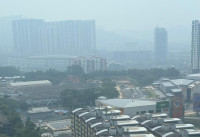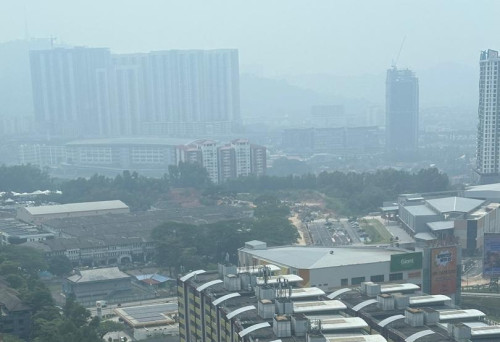
THE Super El Niño phenomenon is predicted to start this November, thus increasing the risk of warmer weather, reduced rainfall and haze incidents in Malaysia, especially after the end of the Northeast Monsoon season next year.
Deputy Director General (Operations) of the Malaysian Meteorological Department (METMalaysia), Ambun Dindang, said the expectation is based on data monitored by the US National Oceanic and Atmospheric Administration (NOAA) through the Climate Prediction Centre (CPC).
“The current El Niño phenomenon has already occurred, but the Super El Niño status is only expected to begin around November 2026 and continue until January 2027.”
“The phenomenon occurs in the middle of the Pacific Ocean, but its effects can be felt all over the world, including Malaysia. However, its impact on the country is expected to occur a little later than in the original area,” he said.
According to Ambun, Malaysia is expected to experience a significant reduction in rainfall and an increase in temperature early next year if the forecast comes true.
He added that experience showed that strong El Niño phenomena had caused the country to record its highest temperatures, including a reading of 40.1 degrees Celsius in Chuping on April 9, 1998 and 39.3 degrees Celsius in Batu Embun in 2016.
Commenting on reports that put Malaysia, along with Singapore, Indonesia and Brunei at risk of facing transboundary haze in the coming months, Ambun said the projection was made following the development of the El Niño phenomenon and dry weather conditions during the Southwest Monsoon season.
According to him, monitoring through the ASEAN Specialised Meteorological Centre (ASMC) also showed the existence of several hotspots in neighbouring countries that risk affecting regional air quality.
However, Ambun stressed that it was still too early to confirm that Malaysia would face a serious haze episode as the situation depended on weather developments and wind direction from time to time.
He said METMalaysia will continue to monitor the development of the El Niño phenomenon and global climate data continuously to ensure that any weather changes that could affect the country can be informed in advance to the public and relevant agencies.
Meanwhile, the Malaysian Fire and Rescue Department (JBPM) said it is strengthening its preparedness to face the Super El Niño phenomenon through the addition of land and air assets.
Its director (Fire and Rescue Operations), Nordin Pauzi, said the additions include 200 Light Operation Vehicle (LOV) units, 26 drones and two new helicopters to increase monitoring and firefighting operations capabilities, especially in risk areas.
The use of the additional assets can also help reduce the burden on the air force in identifying fire locations, thus enabling more effective operational planning. – July 7, 2026