MALAYSIA’S transition towards cleaner energy will have far-reaching implications for Malaysians, affecting future electricity security, economic growth and the creation of new industries, as the government accelerates efforts to reduce reliance on fossil fuels.
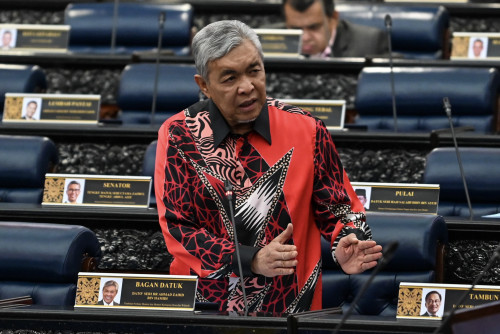
Prime Minister Datuk Seri Anwar Ibrahim said the energy transition was not merely about adopting new technologies or cutting carbon emissions, but a strategic effort to safeguard Malaysia’s energy future, protect consumers from global price shocks and strengthen national competitiveness.
He said achieving the transition at scale would require massive, sustained and structured investment to develop renewable energy projects, modernise electricity grids, expand battery storage systems and equip workers with skills for emerging green industries.
Anwar said governments alone could not bear the financial burden, stressing the need for stronger partnerships between the public sector, private investors and project developers to mobilise the capital required.
"Fossil fuel resources have powered industrial growth and helped increase living standards for Malaysia and many other countries in the world.
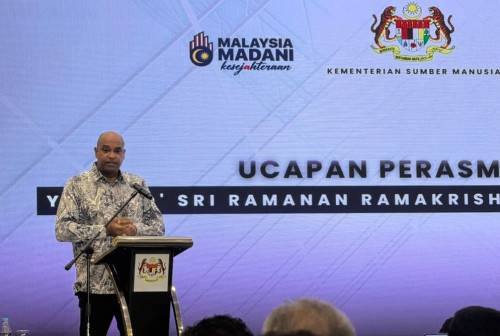
"But it is also undeniable that today this model is increasingly exposed to new global realities, not least the geopolitical tensions and eruptions I have just alluded to, which are disrupting supply chains and driving volatile prices," he said in his keynote address at the Greater Bay Area (GBA)-ASEAN Conference on Energy Transition and Integration.
Anwar said cleaner energy adoption was both an environmental responsibility and a national security priority, as countries faced growing risks from geopolitical conflicts, disrupted supply chains and fluctuating fuel prices.
"It is central to strengthening Malaysia and the region’s energy security. Equally, the transition is about economic competitiveness," he added.
For ordinary Malaysians, the transition is expected to influence the long-term reliability and affordability of electricity supply while opening opportunities in renewable energy, electric vehicles, energy storage, green manufacturing and other technology-driven sectors.
Through the National Energy Transition Roadmap (NETR), Anwar said Malaysia remained committed to ensuring a stable energy supply, driving economic growth and accelerating decarbonisation without compromising environmental protection.
He said the transformation required decisions based on scientific evidence, innovation and regional cooperation, with ASEAN needing to develop an energy system that is secure, affordable and sustainable.
"ASEAN needs to strengthen cooperation in building an energy system that is secure, affordable and sustainable. Alongside accelerating renewable energy development, every viable option, including nuclear energy, should be assessed objectively based on the highest safety standards," he said.
Anwar also highlighted China’s rapid expansion in clean energy, noting that the sector now accounts for more than one-tenth of its gross domestic product.
He said Malaysia and ASEAN should deepen cooperation with China and other partners through ASEAN-led initiatives, including the ASEAN Power Grid, to strengthen regional electricity connectivity and improve energy resilience.
"Energy transition does not proceed on a straight line, nor can integration proceed in isolation," he said.
He noted that ASEAN’s historical dependence on fossil fuels had accelerated the search for alternatives such as solar and wind energy, while emphasising that all viable energy options, including nuclear power, should be evaluated objectively based on safety standards, technical capability and regulatory readiness.
"Even before the current energy crunch, overdependence on fossil fuels has drawn much of Asean’s attention to alternatives such as solar and wind. And yet, nuclear power appears to be relegated to a lesser significance.
"This is rather unfortunate considering that the region has substantive regulatory experience as well as the requisite technical expertise to proceed on a course of action that could significantly contribute towards the realisation of the Asean Plan of Action for Energy Cooperation’s pillars," he said.
The GBA-ASEAN Conference on Energy Transition and Integration, supported by the United Nations Sustainable Development Solutions Network, served as a platform to strengthen cooperation between Southeast Asia and China’s Guangdong-Hong Kong-Macao Greater Bay Area (GBA).
The GBA, a Chinese government initiative, integrates 11 cities into a major economic and innovation hub.
Malaysia aims to leverage its RM4.3 trillion financial market and leadership in green sukuk, alongside GBA’s technological expertise, to attract sustainable investments and accelerate the development of green projects.
The government expects these investments to support the creation of high-value jobs, strengthen Malaysia’s industrial competitiveness and position the country as a regional hub for clean energy development.
A key component of ASEAN’s energy strategy is the expansion of the ASEAN Power Grid, supported by the Regional Connectivity Fund for Energy.
The successful implementation of the Laos-Thailand-Malaysia-Singapore Power Integration Project has shown that cross-border clean electricity trading is already achievable, paving the way for deeper regional cooperation and a more resilient energy future for Malaysia and ASEAN. - July 29, 2026