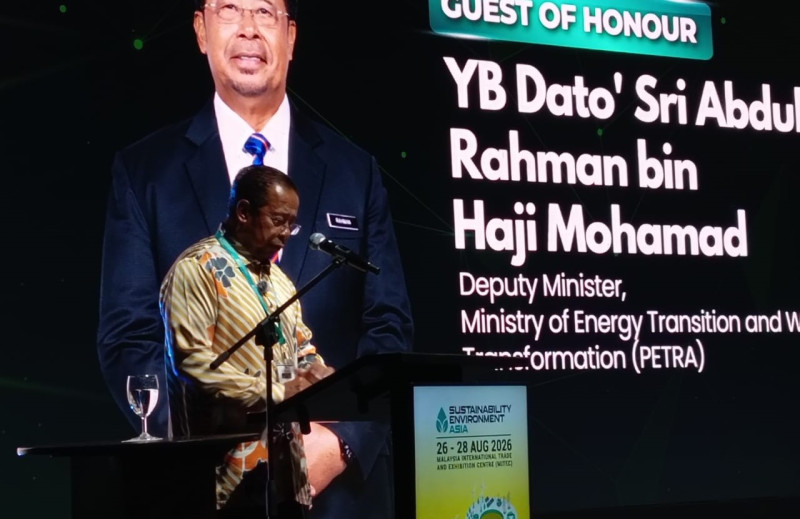
MALAYSIA is preparing to expand water reuse and strengthen national water security as rapid industrial and digital growth, including the expansion of data centres, increases pressure on the country’s water resources.
Deputy Energy Transition and Water Transformation Minister Datuk Seri Abdul Rahman Mohamad said the government was developing a Water Reuse Policy to support water-intensive industries while protecting treated water supplies for domestic use.
The move is particularly significant as Malaysia continues to emerge as a major destination for digital infrastructure investment in the Asia-Pacific, with industries such as data centres requiring reliable and potentially substantial water supplies.
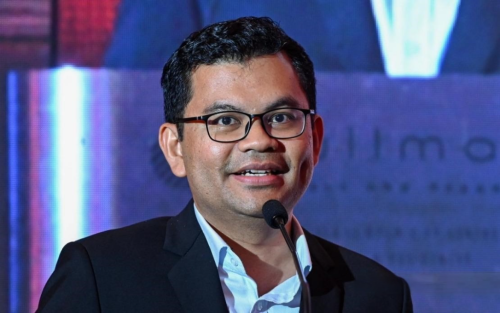
Speaking at Sustainability Environment Asia (SEA) 2026 at the Malaysia International Trade and Exhibition Centre (MITEC), Abdul Rahman said water security, resource efficiency and energy sustainability had become strategic priorities for the country’s economic resilience and competitiveness.
He said sustainability could no longer be treated solely as an environmental issue, but had to be integrated into Malaysia’s economic and infrastructure planning.
The government’s approach centres on three interconnected priorities: strengthening water security, increasing the productivity of existing water resources and accelerating the transition towards cleaner energy.
For water security, Abdul Rahman highlighted AIR2040, a national roadmap aimed at transforming the water sector into a more resilient, intelligent and future-ready system.
The roadmap includes efforts to reduce water losses, accelerate digitalisation and strengthen water infrastructure and service delivery.
Abdul Rahman said the second priority — improving the productivity of water resources — would be supported by the proposed Water Reuse Policy.
The policy is intended to enable industries with high water requirements to safely reuse water, reducing pressure on treated water supplies and allowing economic expansion to proceed without placing additional strain on domestic needs.
“This change brings a new perspective on economic growth,” he said, as Malaysia moves away from the traditional “take, use and dispose” approach towards a circular economic model that preserves and regenerates value.
The third priority is Malaysia’s energy transition under the National Energy Transition Roadmap (NETR), which seeks to expand clean energy use, strengthen energy security and generate higher-value economic opportunities.
Abdul Rahman said integrating water and energy planning would create what he termed a “Regenerative Water-Energy Nexus”, linking the two critical resources to strengthen national resilience and support sustainable growth.
For Malaysia, the implications extend beyond environmental protection, as the ability to secure sufficient water and energy supplies will increasingly influence the country’s attractiveness to investors and its capacity to sustain industrial expansion.
“The challenges ahead are complex, but they also bring many new possibilities. Countries and industries that embrace innovation and use resources wisely will be better prepared to compete, grow and prosper,” he said.
Abdul Rahman said stronger cooperation between the government, industry and other stakeholders would be essential to turning sustainability policies into practical solutions.
“Malaysia remains committed to working with partners at home and abroad to turn innovation into practical solutions that benefit our people, support our economy and protect the future of the next generation,” he said.
He was representing Deputy Prime Minister Datuk Seri Fadillah Yusof, who was unable to attend the conference due to health reasons. - August 27, 2026