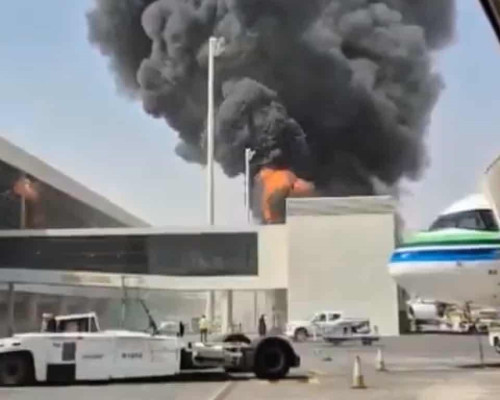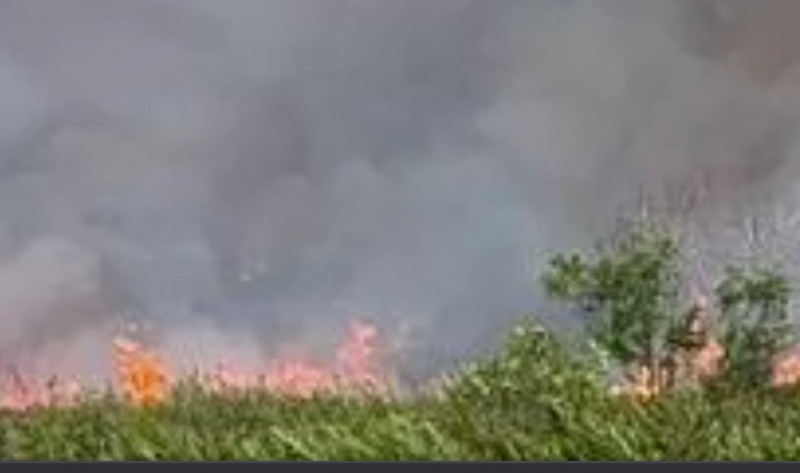
MALAYSIA has recorded 18,432 bush, forest, grassland and agricultural fires in the first seven months of this year, almost twice the 9,941 cases reported throughout 2025, as the Fire and Rescue Department keeps 183 recurrent hotspots under close watch.
Department director-general Datuk Seri Dr Mohd Hisham Mohd Anip said the hotspots were being actively monitored, particularly during the current dry spell.
Sarawak recorded the highest number with 30 hotspots, followed by Penang with 21, Perak and Pahang with 20 each, and Johor with 18.
“These are hotspots where fires have occurred at least five times over three consecutive years. The Malaysian Borneo region accounts for 45 locations, with the highest concentration in Sarawak, followed by eight in Sabah and seven in Labuan,” he said.
Nor Hisham said Malaysia was not immune to rapidly spreading fires, particularly in areas where dry forests, peatlands, plantations or bushland were located close to settlements, industrial premises or critical infrastructure.
“Prolonged dry weather, low humidity and strong winds can cause fires to spread quickly and may require the temporary evacuation of nearby communities,” he said.
He said the level of risk depended on factors including vegetation, terrain, weather conditions, accessibility, water availability and proximity to populated areas.
The department recorded 16,294 such fires in 2024 and 11,318 in 2023, highlighting a sharp rise in fire incidents in recent years.
“Most of the fires this year involved bush and grassland, which accounted for 84.2% of all open fires nationwide,” he said, adding that most cases occurred in Kedah, Johor, Kelantan, Terengganu and Selangor.
Nor Hisham said firefighters were also dealing with recurring fires at known high-risk locations, with flames spreading more rapidly through dry vegetation under hot and windy conditions.
“Our operations are also increasingly affected by difficult access, limited nearby water sources, extensive fire areas and the need for additional pumps, water tankers, heavy machinery and logistical support,” The Star quoted him saying.
Peatland fires were particularly challenging as they could continue burning beneath the surface and reignite even after visible flames had been extinguished, he added.
For the 183 hotspots, the department has mapped and ranked recurrent fire locations according to risk, identified access routes and nearby water sources, and conducted patrols and periodic monitoring.
Personnel and logistical resources are also being pre-positioned in high-risk areas.
“We also mobilise personnel in phases and coordinate with landowners, local communities, police, local authorities, environmental agencies and other relevant departments,” he said.
Aerial support or heavy machinery would be deployed when terrain, fire size or access conditions required additional resources.
“The priority is early detection and aggressive initial action before a small fire develops into a large and difficult-to-control incident,” he added.
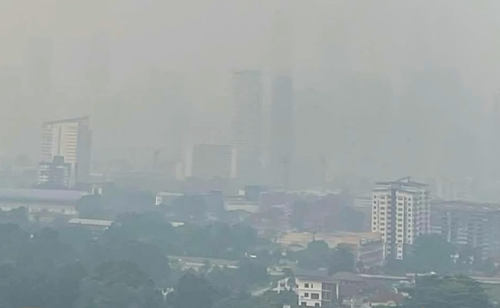
The heightened fire risk comes as transboundary haze continues to affect parts of Malaysia ahead of National Day on Aug 31.
The Malaysian Meteorological Department (MetMalaysia) has warned that southwest winds carrying smoke from high concentrations of hotspots in southern Sumatra and western Kalimantan could further deteriorate air quality and reduce visibility in several states.
Mohd Hisham said haze dispersion simulations from the Malaysian Community Multiscale Air Quality model indicated that Sarawak was likely to be the worst affected, with several districts expected to record unhealthy air quality.
"Several districts in Sarawak are also at risk of reaching Very Unhealthy levels on August 30 and 31," Mohd Hisham said in an official statement.
Hazy conditions were also forecast to spread into Sabah from Saturday, while haze concentrations were expected to increase across Johor, Melaka, Negeri Sembilan, Selangor, Kuala Lumpur and Putrajaya through National Day.
MetMalaysia said it was continuing to monitor atmospheric conditions and would issue updated forecasts as weather patterns evolved.
The deteriorating air quality has also prompted the government to consider contingency measures for National Day celebrations, including whether the main parade should be scaled down or venues relocated to protect public health.
Prime Minister Datuk Seri Anwar Ibrahim has meanwhile called on Malaysians to pray for improved weather conditions ahead of the National Day and Malaysia Day celebrations, noting that extensive government machinery and resources had already been mobilised for the annual events.
Despite the mounting operational demands, Nor Hisham said fire and rescue personnel nationwide remained in good spirits and committed to carrying out their duties.
“To manage fatigue and maintain the welfare of personnel during prolonged operations, the department has been implementing planned personnel rotations, generally at intervals of three to five days,” he said.
The department also emphasises adequate rest, meals and refreshments, clear operational briefings, safety supervision, medical monitoring, and access to welfare and psychosocial support for personnel involved in prolonged firefighting operations. - August 28, 2026