NEARLY 70 per cent of Malaysia’s M40 household income is absorbed by housing, food and transport, leaving little at the end of the month and prompting the government to review how financial assistance is distributed.
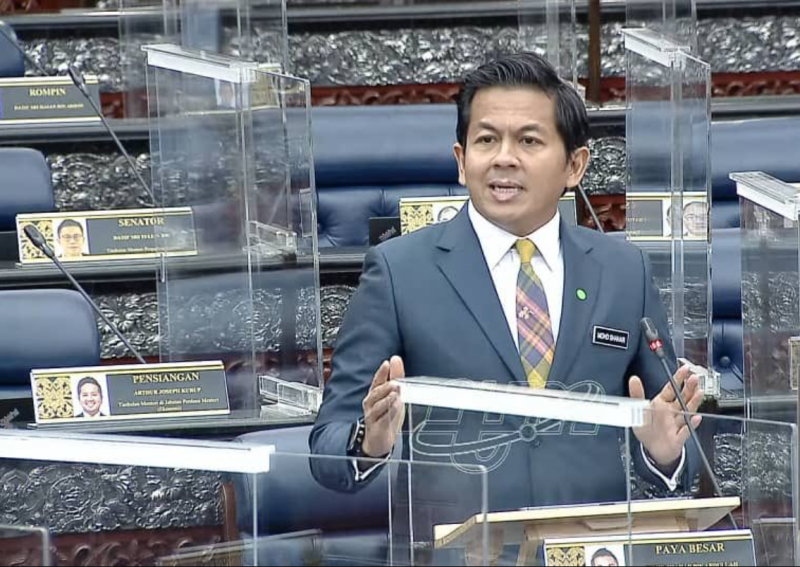
Deputy Economy Minister Datuk Seri Mohd Shahar Abdullah said the government was studying the use of net disposable income (NDI) to assess household eligibility, as gross income alone might not accurately reflect the financial pressure faced by middle-income families.
Department of Statistics Malaysia data show that M40 households spend 34.1 per cent of their income on food, 22.7 per cent on housing and utilities, and 10.6 per cent on transport.
“After deducting education and medical commitments, the balance left at the end of the month is very slim. This is the ‘middle-class squeeze’ phenomenon that the government is taking into account,” he said during the oral question-and-answer session in the Dewan Rakyat on Monday.
Mohd Shahar was responding to Datuk Seri Jalaluddin Alias (BN-Jelebu), who raised concerns about middle-income households facing rising housing, education, healthcare and family expenses despite not necessarily qualifying for government aid.
He said the proposed NDI approach would account for essential expenditure according to household demographics and location, providing a more realistic assessment of their financial circumstances.
“The government recognises that policies cannot rely solely on gross income figures. As a way forward, the government is studying the use of NDI in the distribution of assistance.
“NDI is fairer because it takes into account essential expenditure according to demographics and locality,” he said.
The Economy Ministry is discussing a pilot project with relevant agencies to assess the impact of the proposed method on the country's fiscal position before finalising a new measurement system.
According to DOSM's Household Income Survey 2024, M40 households earn between RM5,860 and RM12,679 in gross monthly income, with an average of RM8,744.
While the government evaluates the new approach, it is continuing measures under Budget 2027 to ease financial pressures on households.
These include raising individual tax relief from RM9,000 to RM12,000 and cutting income tax rates by one percentage point for chargeable incomes between RM70,001 and RM150,000. Expanded parental-care tax relief is also expected to provide additional disposable income of up to RM1,600 for five million taxpayers.
For families with school-going children, the Early Schooling Assistance has been increased to RM200 for 5.3 million pupils, regardless of household income. Eligible borrowers who make regular repayments will also receive a 10 per cent discount on National Higher Education Fund Corporation (PTPTN) loans.
First-time homebuyers can access housing credit guarantees of up to RM360,000 under SJKP Madani and RM500,000 under SJKP Inklusif.
Mohd Shahar said the affordable medical insurance and takaful scheme MediAsas would be launched in January 2027, while the Progressive Wage Policy would continue.
The living-wage benchmark at government-linked investment companies and government-linked companies will rise from RM3,100 to RM3,400 a month in 2027, benefiting 230,000 workers.
He added that some assistance for essential needs was moving towards a more universal approach, citing the Early Schooling Assistance and BUDI95 fuel subsidy programme as measures benefiting Malaysians more broadly, including the middle-income group. - October 26, 2026