MALAYSIA climbed eight places to 15th among 70 economies in the World Competitiveness Ranking (WCR), with improvements in government efficiency and bureaucracy indicators attributed to reforms aimed at reducing red tape.
Chief Secretary to the Government Shamsul Azri Abu Bakar said Malaysia’s government efficiency ranking rose to 14th from 25th previously, while its bureaucracy indicator climbed to sixth globally.
He said the improvements over the past two years had helped restore investor confidence, reflected in approved investments of RM218.5 billion in the first half of 2026, an increase of 11.7% from the same period last year.
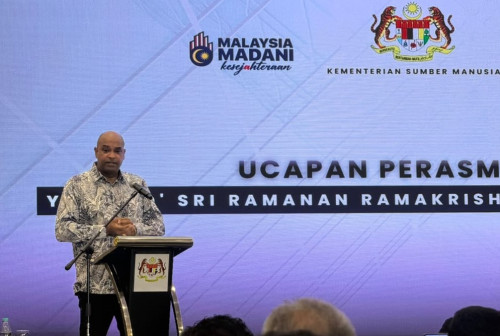
“An improvement of this magnitude over two years restores investor confidence in the country,” he said at the National Conference on Bureaucratic Red Tape Reform 2026, organised by the Malaysian Productivity Corporation (MPC) in Kuala Lumpur today.
Shamsul Azri said efforts to improve public service delivery had also been strengthened by the Government Service Efficiency Commitment Act 2025 (Act 867), which came into force on Dec 1 last year.
The Act requires regulations to be reviewed every three years to address rules that are no longer relevant and reduce the burden on the public and businesses.
Under the Government Service Efficiency Commitment Circular, each agency must reduce its regulatory burden by at least 25% every three years, with bureaucratic red tape reform serving as a key mechanism to achieve the target.
Implementation is also supported by the Public Service Performance Index (I-PPA) and the Demerit Performance Evaluation System (DEEP) for senior management, aimed at improving leadership and service delivery.
The government’s commitment is also reflected in Budget 2027, themed “Reaching for the Sky, Rooted in the Earth”, which allocates RM376.8 billion for federal operating expenditure and RM83 billion for development expenditure.
Shamsul Azri said Malaysia aimed to break into the world’s top 12 in the competitiveness ranking by 2030.
To achieve this, he urged federal and state agencies, as well as local authorities, to abandon silo-based working practices and strengthen inter-agency cooperation.
“I want to see more ambitious red tape reform projects, not merely reducing processing times from 30 days to seven, but enabling applications to be processed immediately,” he said.
“We need to look at processes from the customer’s perspective, rather than solely from the internal viewpoint of agencies.”
He said reducing bureaucratic barriers and compliance costs was particularly important for micro, small and medium enterprises, which contribute about 40% of the national economy and employ half of the workforce.
More than 1,000 participants from state governments, local authorities, government agencies and the private sector attended the conference to discuss ways to reduce red tape and improve national productivity. - October 28, 2026