MALAYSIA’S e-Invoicing system has prompted more than 97,000 taxpayers to voluntarily declare income from previous assessment years, involving RM1.68 billion in tax payable, as the government steps up efforts to tackle tax evasion.
Prime Minister Datuk Seri Anwar Ibrahim said the disclosures were made through stronger compliance measures supported by e-Invoice data, which has improved the Inland Revenue Board’s (IRB) ability to detect non-compliance.
As at Nov 2, about 269,900 taxpayers had submitted 2.14 billion e-Invoices, he said.
The development comes as gross direct tax collection rose 5.8 per cent to RM174.48 billion in the first 10 months of this year, from RM164.92 billion in the corresponding period last year.
Anwar said e-Invoicing was intended to strengthen compliance and improve tax administration, not to introduce new taxes or increase the public’s tax burden.
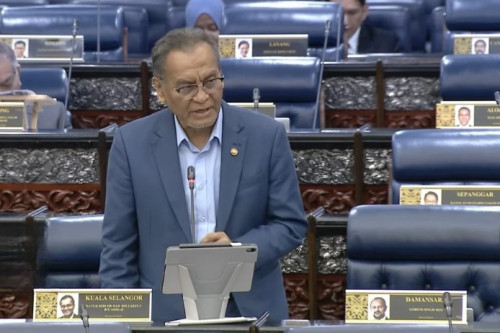
His speech was read out by Finance Minister II Datuk Seri Amir Hamzah Azizan at HASiL’s 2026 Innovation and Integrity Day celebration at Menara HASiL in Ctberjaya on Tuesday.
Anwar, who is also Finance Minister, called for firm action against deliberate tax evasion, particularly by wealthy individuals and businesses concealing income through complex transactions and accounting practices.
He said it was unfair for salaried workers to pay taxes honestly while those with greater financial resources avoided their obligations.
“Tax justice demands that tax laws be enforced fairly,” he said.
However, he said IRB officers should exercise discretion within the law when assisting taxpayers who require guidance.
Anwar cited former British finance minister David Lloyd George’s 1909 People’s Budget, which imposed higher taxes on wealthy individuals and property owners to fund old-age pensions, as an example of efforts to promote tax fairness.
He also referred to Caliph Umar al-Khattab’s approach to land taxation, saying the kharaj system took into account land conditions and farmers’ ability to pay.
Anwar said e-Invoicing provided more transparent transaction records and helped identify tax non-compliance.
“In this way, technology upholds human values rather than replacing human judgement,” he said. - November 3, 2026