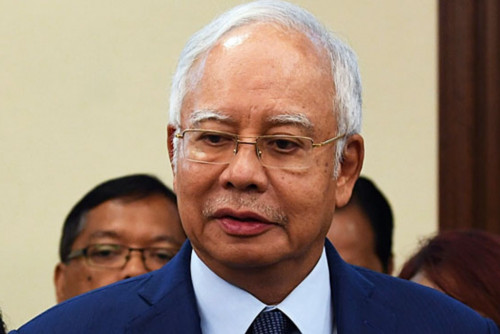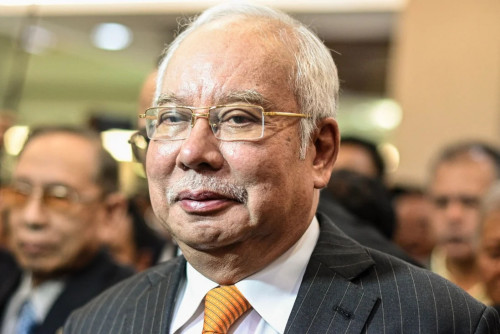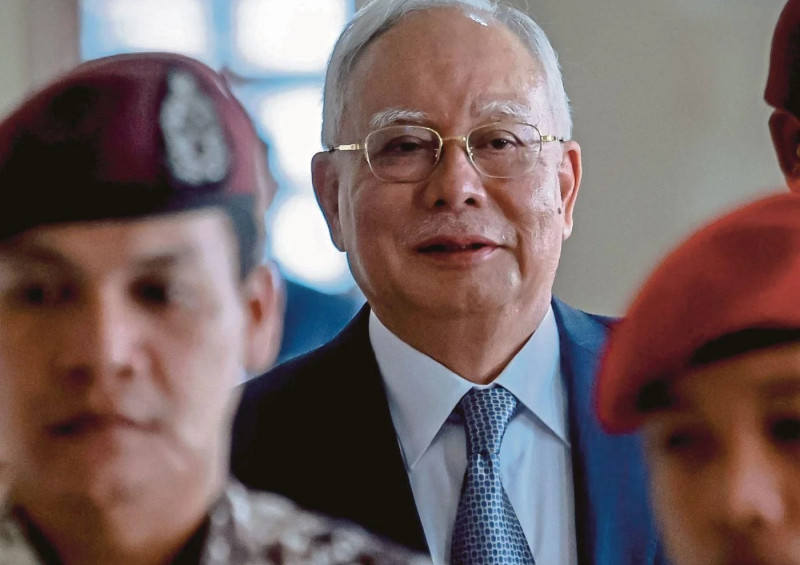
FORMER prime minister Datuk Seri Najib Razak's High Court discharge order must be clarified before he is allowed to return home, as its wording could have implications for where he serves his separate 1MDB prison sentence, says Ramkarpal Singh.
The Bukit Gelugor MP said the Nov 6 order, issued after payment of Najib's RM50 million fine, could be interpreted as requiring his immediate and unconditional release from the SRC International sentence.
He said this could conflict with the conditional pardon granted by the Yang di-Pertuan Agong on Sept 18, 2026, which allows Najib to serve the remainder of his SRC sentence under house arrest until 2028.
Ramkarpal said the issue was not a challenge to the King's prerogative but concerned the interpretation and enforcement of the High Court's order.
He explained that the term "discharge" could carry the meaning of releasing a prisoner, citing provisions under the Prisons Act 1995, including Sections 41(b)(i), 44(4) and 45.
"This is clearly contrary to the said Conditional Pardon Order itself which requires Najib to be placed under house arrest to continue serving the remainder of his sentence for the SRC case which ends in 2028, once the RM50 million fine is paid," he said in a statement dated Nov 9.
Ramkarpal said the matter was further complicated by Najib's separate prison sentence for his 1MDB conviction, which is scheduled to take effect after completion of his SRC sentence.
He noted that no stay of execution had been granted for the 1MDB sentence.
He also questioned whether the gazette designating Najib's residence as a prison covered only his SRC sentence, as the arrangement arose from the conditional pardon relating specifically to that case.
Should the discharge order be interpreted as meaning Najib had completed his SRC sentence, Ramkarpal said he would have to begin serving his 1MDB sentence at Kajang Prison rather than at his residence.
He said the High Court should therefore clarify or revise its order before Najib was permitted to return home, to prevent uncertainty over the enforcement of both sentences.
Ramkarpal stressed that the proposed clarification would not seek to alter the terms of the conditional pardon, which he said were clear, but to address a potential error in the discharge order.
He said the AGC was justified in seeking clarification and should file the necessary application with the High Court immediately. - November 10, 2026