MALAYSIA must explain why it is prepared to help Myanmar regain its place in Asean despite a landmark international court ruling finding the country responsible for genocide against the Rohingya, former Klang MP Charles Santiago said.
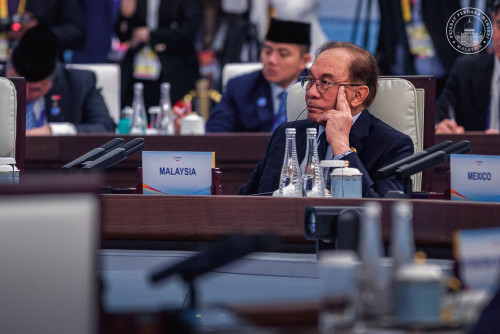
He questioned the government’s diplomatic approach towards Myanmar’s military leadership, pointing to Prime Minister Anwar Ibrahim’s meeting with junta chief Min Aung Hlaing on Oct 8 and his assurance that Malaysia would explore ways to facilitate the country’s return to the regional bloc.
For Santiago, the International Court of Justice’s (ICJ) findings have made that commitment increasingly difficult to justify.
“What exactly is Malaysia seeking to rehabilitate: a military regime whose conduct has now been recognised as genocide by an international court?” he said in a statement.
Santiago, co-chairman of Asean Parliamentarians for Human Rights, said Malaysia could not offer the junta a path back into regional diplomacy without addressing the atrocities committed against the Rohingya.
“The ICJ has spoken. Now the world must act. And Malaysia, having chosen to extend a state welcome to Min Aung Hlaing and promised to help bring his regime back into Asean, must decide which side of history it intends to stand on,” he said.
The court found that Myanmar’s military had committed acts including the killing of Rohingya civilians, widespread sexual violence, extreme violence against children, attacks on people fleeing their homes and the destruction of villages.
It also found that these acts were carried out with the specific intent to destroy a substantial part of the Rohingya population.
In its orders, the court, led by President Yuji Iwasawa, directed Myanmar to allow and facilitate the safe, voluntary and dignified return of Rohingya who had fled the violence.
Myanmar was also ordered to investigate and punish those suspected of committing genocide, while compensation is to be determined at a later stage.
Santiago said any consideration of Myanmar’s return to Asean must be preceded by tangible political and institutional reforms, an end to violence, meaningful engagement with all stakeholders and compliance with international obligations.
“Offering legitimacy before accountability is not diplomacy but appeasement. For Asean, the ICJ judgment must be a turning point,” he said.
He said Asean would undermine its own response if it welcomed the court’s decision but continued dealing with Myanmar as usual.
The regional bloc, he added, must use its collective diplomatic and political influence to ensure Myanmar complies with the court’s orders. - November 20, 2026