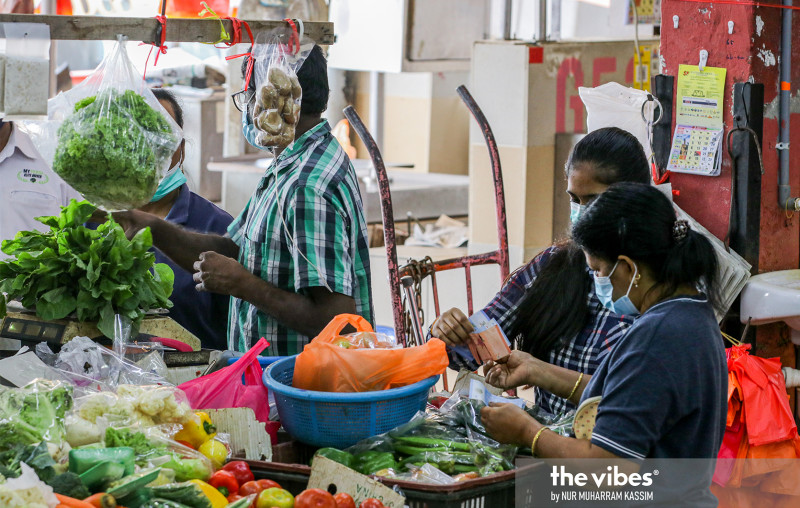

GEORGE TOWN – Today you can get one kilogramme of chicken at RM10 but a packet of lady’s fingers of the same weight will likely cost you RM13.
The Consumers Association of Penang (CAP) today said it is high time for the Agriculture Department or the Federal Agricultural Marketing Authority (FAMA) to look into the role of middlemen who are causing prices of vegetables to soar.
In a statement today, its president Mohideen Abdul Kader said rising prices of certain popular vegetables are burdening consumers.
“He (middleman) buys vegetables from the farmers at the cheapest price and sells it for a higher price to the seller,” Mohideen said.
“In the end, consumers are paying more to the middleman. If he gets the price at RM4 from the farmers and sells it for RM10, he makes the most money from this transaction.”
Citing CAP’s survey, Mohideen noted that the chili padi, which used to cost RM8 per kg, is now sold at RM12. Lady’s fingers used to be RM6.50 per kg but are now RM13 and long beans’ prices have increased from RM3.50 per kg to RM7.50.
He added that green brinjals are now retailing for RM8.50 per kg, and spinach – which used to be one of the cheapest vegetables – is now RM4.50 per kg.
He said that housewives usually cook two types of vegetables at home per meal, but are now only able to afford one type of cheap vegetable due to the price hikes.
A check by The Vibes showed Universiti Putra Malaysia reporting on its portal that while fluctuation in the prices of food is a market norm, excessive increases raise public anxiety.
Its director of the Institute of Agricultural and Food Policy Studies, Prof Datin Paduka Dr Fatimah Mohamed Arshad is quoted as saying that pointing fingers at middlemen is the easy way out to justify the price increase.
However, a study on the dynamics of the current environment explains that the price rise is due to a combination of fundamental and technical factors, she said.
“The fundamental factor refers to the interaction between supply and demand. The technical factors, on the other hand, refers to the perceptions of the producers, entrepreneurs and consumers on the market trend and, what is more important, the action that they take,” she said.
“When demand chases supply, the price will rise. And when supply exceeds demand, the price will drop. This is the law of the free market.”
With the coming Chinese New Year, coupled with the movement control order (MCO) and price hikes, those planning to have a more vegetarian diet may find it to be more daunting on their pockets. – The Vibes, January 24, 2021

.jpeg)