

KOTA KINABALU – Terror groups in Sabah are believed to no longer be using villages in east coast districts as their hideouts, but moving into the state’s interior to escape detection, said police.
They are also found to be living among local communities, posing as ordinary Malaysians while working at plantations and factories, as they slowly recruit and raise funds to keep their terror campaigns alive.
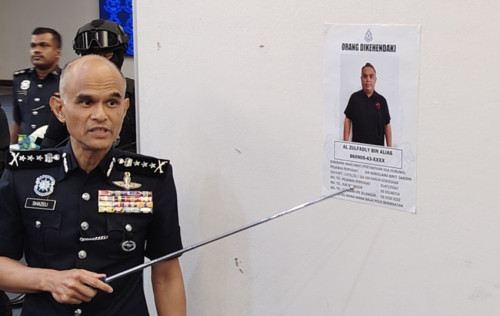
Commenting on the presence of militant network Jemaah Islamiyah (JI) in the state, Sabah police commissioner Datuk Hazani Ghazali said members are getting cleverer with their modus operandi, with more individuals being radicalised and recruited through social media platforms.
“Many of them were radicalised or influenced (via) social media, and for the same reason, (security) officers had to be assigned to monitor these groups’ activities online,” he said in an interview with The Vibes.
“We are able to identify those who are involved in this way. This also signals a clear shift in the militant groups – from undertaking regular face-to-face radicalisation to using online platforms.”
Thirty-eight individuals from Sabah were arrested between 2014 and 2020 over their alleged links with JI. They are among 84 people detained in a nationwide crackdown on terror groups in that period.

Hazani said some JI members who have been released from jail have returned to militant groups in the network.
He said they continue their radicalisation and recruiting activities through social media platforms in a bid to escape detection, as their movements and activities are constantly under police watch.
Hazani, a former commander of the Eastern Sabah Security Command (ESSCom), added it has become evident that they have shifted their locations from the east coast to rural inland districts like Sipitang, Tenom, Papar and Keningau.
“They are largely migrants, and are already on the wanted list in their respective home countries.”
He said Sabah is no longer a transit point for militant groups, but has become a safe haven where they can escape the law.
JI members who used to hide in the state’s east coast districts feel that these areas are no longer safe for them due to ESSCom’s presence, said Hazani.
“Most of them have gone to rural Sabah areas and are blending in with the local communities there, working at factories and construction sites.”
He said the likelihood of them being hired by companies in “dirty, dangerous and difficult” sectors is high.
He believes this is the reason some of them are successful in raising funds for their militant causes, and in being mobile, moving from one place to another. – The Vibes, February 17, 2021
















.jpg)