
Malaysia

Can Sarawak achieve herd immunity? Two politicians crunch the numbers

State’s small population points to yes, simple maths shows no, argue local leaders

Updated 5 years ago · Published on 25 Feb 2021 1:00PM

Can Sarawak achieve herd immunity? Two politicians crunch the numbers
Aspirasi Parti president Lina Soo says the Sarawak government must not force the Covid-19 vaccine upon those of the population reluctant to take it. – Negara Sabah Facebook pic, February 25, 2021

by Joseph Masilamany

KUCHING – Two politicians in Sarawak disagree when it comes to the herd immunity target in August.

“Yes, it is doable,” said Aspirasi Parti president Lina Soo, although Bukit Assek assemblyman Irene Chang of DAP begged to differ.

“Simple maths will tell us that it is impossible to achieve the target of vaccinating 70% of Sarawak’s population by August to achieve herd immunity,” said Chang.

Soo, on the other hand, said it is not an “overzealous plan” by the state to set a target for vaccinating 70% of its population by August.

She lauded the state government for this initiative, saying it can be done, and flexed some numbers to prove her point. 

“Our population is small, 70% is only about two million Sarawakians.

“So yes, it is achievable,” Soo told The Vibes, adding that the government “must target to vaccinate two million Sarawakians”.

“If not, life cannot return to normalcy.”

However, Chang, also crunching some numbers, told The Vibes: “I understand that to achieve herd immunity against Covid-19, at least 70-80% of the population in the state needs to be vaccinated.”

Quoting an online survey conducted on February 18 by state Assistant Housing and Local Government Minister Annuar Rapaee, she said it was revealed that only some 44% of the respondents agreed to be vaccinated.

“More than half are either indecisive or disagreed to participate in the vaccination programme,” she said.

Assuming that the online survey was not exclusive to Sarawakians, then the percentage falls even far less than the minimum requirement of 70%.

“Also, in Sarawak, around 45% of the population live in rural areas. That leaves around 55% in urban areas.

“Simple math will tell us that it is impossible to achieve 70%, because the survey only involved those with access to the internet, which means it only asked those in urban or semi-urban/rural areas.

“The state government will need to do a lot more work to educate and spread awareness on the efficacy of the vaccine in order to get at least 90% of the people in urban areas on board the vaccination programme,” she said.
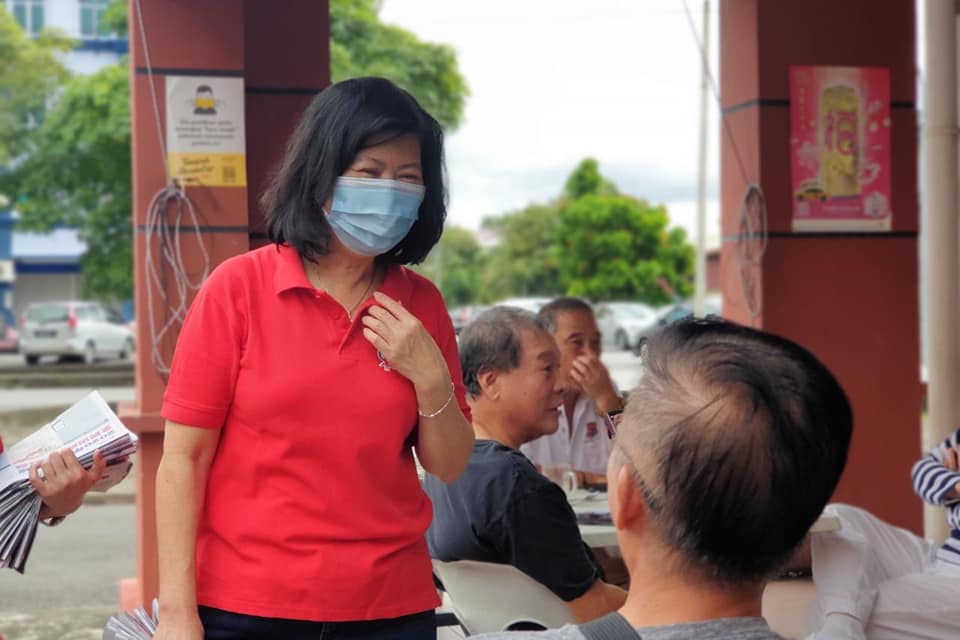
Bukit Assek assemblyman Irene Chang says the Sarawak government needs to do a lot more work to educate and spread awareness on the efficacy of the Covid-19 vaccine in order to get at least 90% of those staying in urban areas on board its vaccination programme. – Irene Chang Facebook pic, February 25, 2021

Chang said there are also logistical problems with reaching the interior, as the vaccine needs to be preserved under certain conditions.

“Assuming that the 70-80% includes those in the rural areas, what is the government’s plan to include these them in the inoculation programme?”

Choice of vaccine

Meanwhile, Soo said the state government must not force the vaccine on those who are reluctant to take it.

“The people have to be fully informed and make informed decisions without coercion, as this will go against the grain of human rights.”

She added that since there are two types of vaccines available, people must be allowed to choose the one they prefer.

“Both types of vaccines, the conventional one formulated from the inactivated virus and the latest mRNA-type, must be made available for people to choose.

“This option should be made available for those who wish for a choice, even if they are required to pay for being selective.” – The Vibes, February 25, 2021

Related News

Malaysia / 1w

Abang Jo: Bintulu Port strengthens Sarawak’s position as strategic maritime, industrial hub

Malaysia / 2w

Minister: Sarawak made right decision to reject entry of Rohingya refugees in 2017

Malaysia / 3w

Sarawak seeks China collaboration to fix growing doctor shortage

Malaysia / 1mth

What matters: Policies that truly understand the rakyat

Malaysia / 1mth

Sarawak wants to take over several more strategic entities from the Federal Government

Malaysia / 1mth

Author warns against taking Sabah, Sarawak harmony for granted

Spotlight

Malaysia

Bella Astillah offers emotional support as Federal Court set to decide Syed Saddiq’s fate

Sports & Fitness

Germany crashes out as Paraguay end penalty curse to claim historic World Cup upset

Malaysia

PN bets on hung Johor assembly

Malaysia

Johor election shapes up as first major test ahead of GE16, with young voters expected to hold the balance

By Alfian Z.M. Tahir

Malaysia

Puad Zarkashi claims secret UMNO–PAS talks for Johor polls fuelled overconfidence within BN

Food

From gastronomic haven, Penang also wants to be a fruits paradise

By Ian McIntyre

Malaysia

Malaysians hurt in Thailand bomb blast (video)

Malaysia

Govt extends MH370 search contract with Ocean Infinity for another year

You may be interested

Malaysia

BN-PAS quiet backing may signal an emerging Malay vote strategy in Johor polls

Malaysia

Home Ministry: Over 4,500 child missing cases recorded between 2021 and 2025

Malaysia

Pakatan Harapan finalises Johor poll manifesto with focus on youth welfare

Malaysia

EC issues nearly 25,000 postal ballots ahead of Johor state election

Malaysia

Johor election shapes up as first major test ahead of GE16, with young voters expected to hold the balance

By Alfian Z.M. Tahir

Malaysia

Woman found dead in suitcase died from head wounds, police confirm

Malaysia

Final appeal decision in Syed Saddiq case to be decided on July 13

Malaysia

Anwar rebuts state marginalisation claims, says allocations driven by development needs, not tax returns